




NASA Creates a Better Electric Aircraft Battery
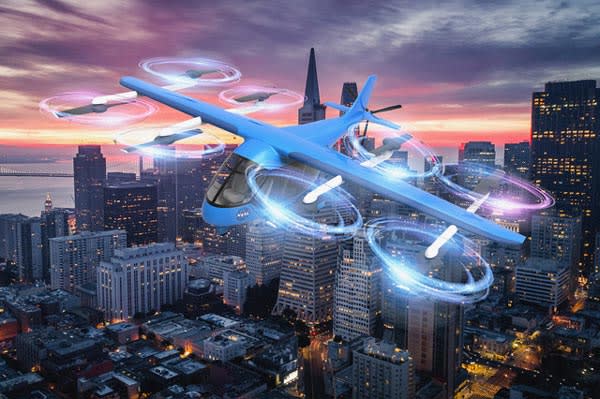
With increasing emphasis on aviation sustainability, interest in using batteries to partially or fully power electric propulsion systems on aircraft of all sizes is growing each day. A NASA activity called SABERS, or “Solid-state Architecture Batteries for Enhanced Rechargeability and Safety,” is researching how to create a safer battery by using brand-new materials and novel construction methods.
The goal is to create a battery that has significantly higher energy than the lithium-ion batteries currently used. This battery also would not lose capacity over time, catch fire, or endanger passengers if something goes wrong.
The project has examined using a unique combination of the elements sulfur and selenium to hold electric charge. The project also seeks to use elements that have never been combined before to form a battery; for instance, a NASA-developed component called holey graphene (named for the holes in its surface to allow air to pass through) has a very high level of electrical conductivity. It is ultra-lightweight and environmentally friendly.
More From SAE Media Group
Aerospace Manufacturing and Machining INSIDER
Amprius Eyes Mass Production for Next Generation Electric Aircraft Battery

NASA Spinoff
Battery Innovations Power All-Electric Aircraft
Aerospace INSIDER
Airbus’ High-Voltage Battery Technology Prepares for Flight Test
Aerospace & Defense Tech Briefs
Engineering an Aircraft Hydrogen Powertrain
Aerospace & Defense Tech Briefs
The Future of Aircraft Electrification
Tech Briefs
Solid-State Lithium-Sulfur Battery Tech
Power Management INSIDER
Prize-Winning Technology for Large-Scale Energy Storage

NASA Spinoff
Swinging the HAMR

Tech Briefs
Products of Tomorrow
Battery & Electrification Technology
Developing High-Energy-Density Batteries Using Aluminum Foil

Battery & Electrification Technology
New Products
Battery & Electrification Technology
Safe and Energy-Efficient Quasi-Solid Battery for Electric Vehicles and Devices
Aerospace & Defense Tech Briefs
Is Aviation on the Verge of an Electric Propulsion Disruption?
Tech Briefs
Test Your Knowledge About Batteries

Battery & Electrification Technology
Testing the Engineering Limits for eVTOL Battery Power
Aerospace & Defense Tech Briefs
Improving Battery Design for eVTOL Aircraft With Simulation
Battery & Electrification Technology
Researchers Unveil Scalable Graphene Technology to Revolutionize Battery Safety and Performance
Aerospace INSIDER
Why Hybrid-Electric is a Key Solution for Decarbonizing Aviation

Tech Briefs
Where Better Batteries Meet Real-World Mobility
Tech Briefs
NASA’s Pursuit of Power
Automotive Engineering
Scaling the Solid-State Battery FEST
Top Stories
NewsRF & Microwave Electronics
 Microvision Aquires Luminar, Plans Relationship Restoration, Multi-industry Push
INSIDERAerospace
 A Next Generation Helmet System for Navy Pilots
INSIDERDesign
 New Raytheon and Lockheed Martin Agreements Expand Missile Defense Production
INSIDERMaterials
 How Airbus is Using w-DED to 3D Print Larger Titanium Airplane Parts
NewsPower
 Ford Announces 48-Volt Architecture for Future Electric Truck
ArticlesAR/AI

Webcasts
Electronics & Computers
 Cooling a New Generation of Aerospace and Defense Embedded...
Automotive
 Battery Abuse Testing: Pushing to Failure
Power
 A FREE Two-Day Event Dedicated to Connected Mobility
Unmanned Systems
 Quiet, Please: NVH Improvement Opportunities in the Early Design Cycle
Automotive
 Advantages of Smart Power Distribution Unit Design for Automotive &...
Energy
 Sesame Solar's Nanogrid Tech Promises Major Gains in Drone Endurance