Superstrong Al Alloys May Change Aerospace Manufacturing Processes
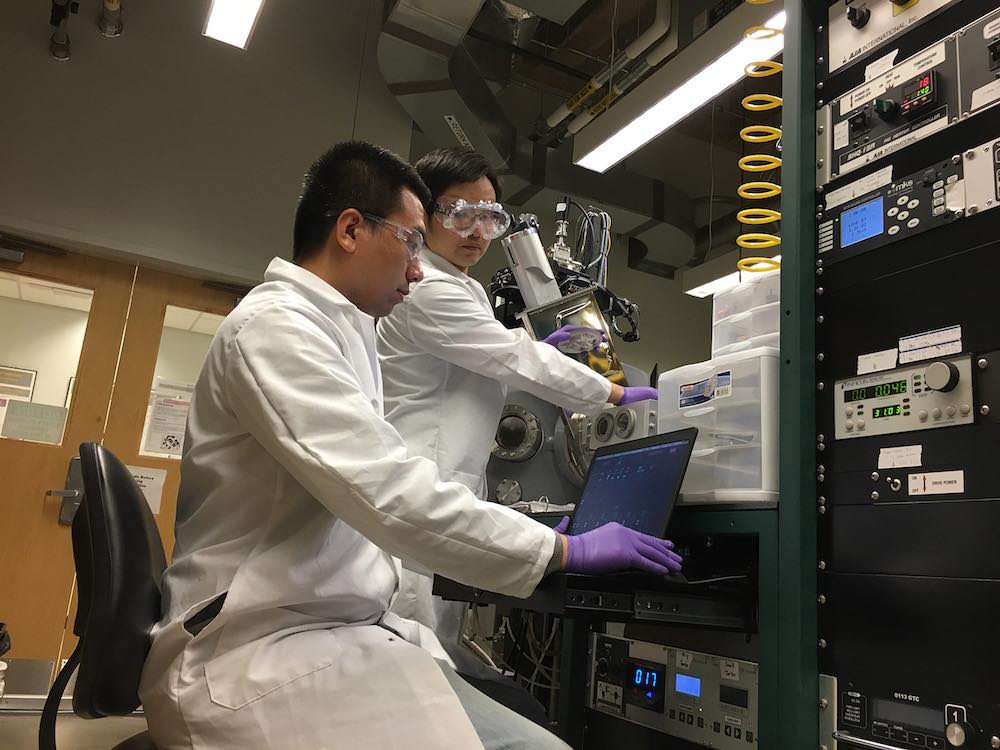
Purdue University researchers have developed a superstrong material that may change some manufacturing processes for the aerospace and automobile industries.
The Purdue team, led by Xinghang Zhang, a professor in Purdue’s School of Materials Engineering, created high-strength aluminum alloy coatings. According to Zhang, there is an increasing demand for such materials because of their advantages for automakers and aerospace industries.
“We have created a very durable and lightweight aluminum alloy that is just as strong as, and possibly stronger than, stainless steel,” Zhang said. “Our aluminum alloy is lightweight and provides flexibility that stainless steel does not in many applications.”
Another member of the Purdue team, Yifan Zhang, a graduate student in materials engineering, said the aluminum alloy they created could be used for making wear- and corrosion-resistant automobile parts such as engines and coatings for optical lenses for specialized telescopes in the aerospace industry.
Purdue researchers create the super-strong aluminum alloy by introducing “stacking faults,” or distortions in the crystal structure of aluminum. Such distortions can lead to so-called nanotwins and complex stacking faults, such as 9R phase.
“The 9R type of stacking fault is usually rare in aluminum,” said Qiang Li, a doctoral student and member of the research team. “We introduce both twin boundaries and 9R phase within nanograins to the lightweight Al alloys that are both strong and highly deformable under stresses. Besides coating applications, we are also looking into scale-up potentials of bulk high-strength Al alloys.”
The team also created a way to develop the superstrong alloy coatings by introducing iron or Ti atoms into aluminum’s crystal structure. The resulting “nanotwinned” aluminum-iron alloy coatings proved to be one of the strongest aluminum alloys ever created, comparable to high-strength steels.
The Purdue Office of Technology Commercialization helped secure a patent for the technology. It is available for licensing.
More From SAE Media Group


Aerospace & Defense Tech Briefs
Plasma Electrolytic Oxidation: The Future of Lightweight Designs in Aerospace and Defense
Aerospace & Defense Tech Briefs
Equispheres Accelerates Additive Manufacturing Innovation with $5M from Lockheed Martin
Tech Briefs
Copper Strengthens 3D-Printed Titanium
Aerospace & Defense Tech Briefs
Evaluation of Additively Manufactured Ultrahard Steels
Medical Design Briefs
What Medical Device OEMs Should Know About Outsourced MIM
Aerospace & Defense Tech Briefs
Aerospace Aluminum Laser Welding: Advancing Material Performance for the Future of Flight
Photonics & Imaging Technology
Deformation Fingerprints Will Help Researchers Identify, Design Better Metallic Materials

Aerospace & Defense Tech Briefs
The Science of Joining Dissimilar Metals in Aerospace Manufacturing
Aerospace Manufacturing and Fabrication
New Products & Services
Aerospace & Defense Tech Briefs
These Speedy Cold Spray Machines Can 3D Print Vehicle Parts in War Zones

Medical Manufacturing and Machining
Ultrasound Helps Make 3D Printed Alloys Stronger
Aerospace & Defense Tech Briefs
Low Distortion Titanium in Laser Powder Bed Fusion Systems
Automotive Engineering
Lightweight Steel on a (Cold) Roll


NASA Spinoff
Rocket Manufacturing Meets Science Friction
Aerospace INSIDER
A New Platform for Developing Advanced Aerospace Metals at Scale
Aerospace & Defense Tech Briefs
Pulse Plasma Nitriding for Aerospace Applications
Aerospace & Defense Tech Briefs
Finding the Perfect Aluminum for Additive Manufacturing

Off-Highway Engineering
MELD Exploits Plastic Deformation of Metals with Non-Melt Additive Manufacturing
Tech Briefs
Method 3D-Prints Marine-Grade Stainless Steel
Tech Briefs
Nanoprecipitates Toughen Structural Alloys
Top Stories
NewsRF & Microwave Electronics
 Microvision Aquires Luminar, Plans Relationship Restoration, Multi-industry Push
INSIDERAerospace
 A Next Generation Helmet System for Navy Pilots
INSIDERDesign
 New Raytheon and Lockheed Martin Agreements Expand Missile Defense Production
INSIDERMaterials
 How Airbus is Using w-DED to 3D Print Larger Titanium Airplane Parts
NewsPower
 Ford Announces 48-Volt Architecture for Future Electric Truck
ArticlesAR/AI

Webcasts
Electronics & Computers
 Cooling a New Generation of Aerospace and Defense Embedded...
Automotive
 Battery Abuse Testing: Pushing to Failure
Power
 A FREE Two-Day Event Dedicated to Connected Mobility
Unmanned Systems
 Quiet, Please: NVH Improvement Opportunities in the Early Design Cycle
Automotive
 Advantages of Smart Power Distribution Unit Design for Automotive &...
Energy
 Sesame Solar's Nanogrid Tech Promises Major Gains in Drone Endurance
Similar Stories
INSIDERNanotechnology
 Army, ASU Collaboration Produces Alloy with Superhero-Like Strength
INSIDERMaterials
 3D-Printed Titanium Alloy for Aerospace
NewsDefense
 3-D Manufacturing of Titanium Components Takes Off