




Drones Learn Autonomous Flying by Imitating Cars and Bikes

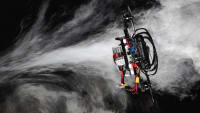
The algorithm DroNet allows drones to fly completely by themselves through the streets of a city and in indoor environments. It produces two outputs for each single input image: a steering angle to keep the drone navigating while avoiding obstacles, and a collision probability to let the drone recognize dangerous situations and promptly react to them.
The algorithm learns to solve complex tasks from a set of ‘training examples’ that shows the drone how to do certain things and cope with difficult situations, much like children learn from their parents or teachers. In this case, cars and bikes are the drones’ teachers.
More From SAE Media Group
Aerospace INSIDER
Training Drones to Avoid Obstacles at High Speeds
Aerospace & Defense Tech Briefs
Creating and Verifying Stable AI-Controlled Systems in a Rigorous, Flexible Way
Aerospace INSIDER
Automated Flight Control System for Drone Swarms
Aerospace INSIDER
Air Force Launches New NIPRGPT Generative AI Tool
Aerospace & Defense Tech Briefs
5 Startups Developing AI for Defense Application
Tech Briefs
Autonomous Drones Learn Challenging Acrobatics


Tech Briefs
My Opinion: How about HI?
Tech Briefs
Design Your Own Drone Kit
Aerospace INSIDER
Algorithm Flies Drones Faster than Human Pilots
Motion Design INSIDER
A Step Toward Safe and Reliable Autopilots
Aerospace & Defense Tech Briefs
Robust MADER: Decentralized Multiagent Drone Trajectory Planner
Motion Design INSIDER
Automating the Design of Soft Robots
Air Force Research Laboratory Technology Horizons
Dynamic Air Battle Planning
Aerospace & Defense Tech Briefs
Researchers Help Robots Navigate Efficiently in Uncertain Environments
Tech Briefs
Executive Forum: Machine Learning & AI
Aerospace INSIDER
The Future of Avionics: Machine-Learned and Certified
Motion Design INSIDER
Charting a Safe Course Through a Highly Uncertain Environment
Aerospace & Defense Tech Briefs
AI Co-Pilot Enhances Human Precision for Safer Aviation
Defense INSIDER
Algorithms for Autonomous Marine Vehicles



Top Stories
INSIDERManufacturing & Prototyping
 How Airbus is Using w-DED to 3D Print Larger Titanium Airplane Parts
INSIDERManned Systems
 FAA to Replace Aging Network of Ground-Based Radars
NewsTransportation
 CES 2026: Bosch is Ready to Bring AI to Your (Likely ICE-powered) Vehicle
NewsSoftware
 Accelerating Down the Road to Autonomy
EditorialDesign
 DarkSky One Wants to Make the World a Darker Place
INSIDERMaterials
 Can This Self-Healing Composite Make Airplane and Spacecraft Components Last...
Webcasts
Defense
 How Sift's Unified Observability Platform Accelerates Drone Innovation
Automotive
 E/E Architecture Redefined: Building Smarter, Safer, and Scalable...
Power
 Hydrogen Engines Are Heating Up for Heavy Duty
Electronics & Computers
 Advantages of Smart Power Distribution Unit Design for Automotive...
Unmanned Systems
 Quiet, Please: NVH Improvement Opportunities in the Early Design...
