




NASA Tests Engines That Reduce Drag and Fuel Burn
Boundary Layer Ingestion (BLI) is a promising idea NASA researchers are studying to reduce fuel burn in jet engines, thus reducing emissions and the cost of operating the aircraft. Thrust makes an airplane go forward, while drag tries to slow it down. Lift offsets the weight to keep an airplane in the sky. BLI deals specifically with the drag part of the equation by trying to reduce the total drag an airplane experiences in the sky.

When the airplane’s engines are put at the extreme rear of the airplane, the slower, boundary layer air is ingested into the engine and is then accelerated with the rest of the air passing through the engine and exhausted out the back. With less total drag, the engines need less thrust to push the airplane forward, which means they don’t have to burn as much fuel.
More From SAE Media Group
Tech Briefs
Novel Turboelectric Aircraft Design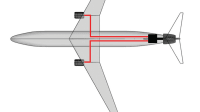


Tech Briefs
Bio-Inspired Wing Design for Small Drones
Aerospace & Defense Tech Briefs
New Research on Noise Reduction for Next Generation Aircraft Engines
Tech Briefs
Winglet with Injected Flow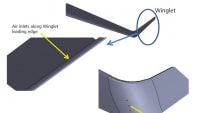
Aerospace INSIDER
NASA Tests Aircraft Wing Coatings that Slough Bug Guts
Aerospace INSIDER
NASA Tests Green Aviation Technology
Tech Briefs
AUVSI XPONENTIAL 2019: A Real Thrill Ride
Motion Design INSIDER
Tailless Jet Flies Free with Novel Control Technique
Aerospace INSIDER
Slim Wing Can Reduce Aircraft Fuel Use and Emissions by 50%

Tech Briefs
Fixed-Wing Angle eVTOL
Aerospace & Defense Tech Briefs
Microturbine Propulsion for UAVs
Tech Briefs
Novel Control Method in Tailless Aircraft
Aerospace INSIDER
Wing Configuration Could Reduce Fuel Consumption

Tech Briefs
Multirotor Aircraft Noise Reduction

Aerospace & Defense Tech Briefs
Hybrid Electric Aircraft Demonstrator

Aerospace INSIDER
Engineers Assess Flow Quality in Wind Tunnel Test Facility
Aerospace Manufacturing and Machining INSIDER
GE Concludes Phase 1 Testing on XA100 Adaptive Cycle Engine
NASA Spinoff
Flying (Not Quite) Blind

Top Stories
INSIDERDefense
 New Raytheon and Lockheed Martin Agreements Expand Missile Defense Production
NewsAutomotive
 Ford Announces 48-Volt Architecture for Future Electric Truck
INSIDERManufacturing & Prototyping
 Active Strake System Cuts Cruise Drag, Boosts Flight Efficiency
ArticlesTransportation
 Accelerating Down the Road to Autonomy
INSIDERMaterials
 How Airbus is Using w-DED to 3D Print Larger Titanium Airplane Parts
Road ReadyTransportation

Webcasts
Electronics & Computers
 Cooling a New Generation of Aerospace and Defense Embedded...
Power
 Battery Abuse Testing: Pushing to Failure
Connectivity
 A FREE Two-Day Event Dedicated to Connected Mobility
Automotive
 Quiet, Please: NVH Improvement Opportunities in the Early Design Cycle
Transportation
 Advantages of Smart Power Distribution Unit Design for Automotive &...
Aerospace
 Sesame Solar's Nanogrid Tech Promises Major Gains in Drone Endurance