




New Ice-Repellant Material Could Improve Aviation Safety
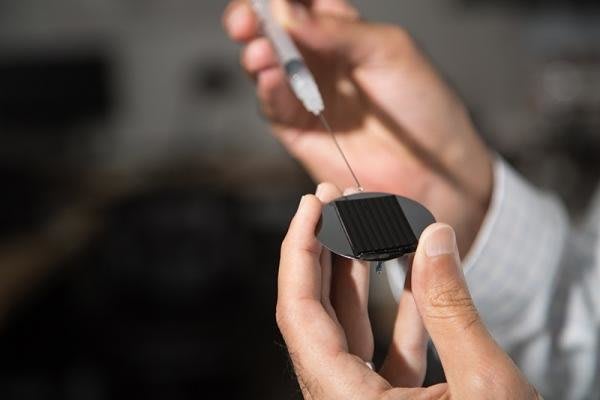
Icy conditions can be deadly when flying into bad weather. Researchers at the University of Houston have discovered a material that can be applied to any surface to repel ice. The material, known as a magnetic slippery surface (MAGSS), could be applied to aircraft wings.
One side of the surface is coated with a magnetic material, while a thin layer of magnetic fluid is deposited on the other side. The magnetic fluid faces outside. When a droplet of water hits the surface, the magnetic fluid acts as a barrier, stopping the droplet from reaching the solid surface. The MAGSS has a lower freezing threshold than the best ice-phobic technology currently available – about -29 degrees Fahrenheit, compared to -13 degrees Fahrenheit for current technology.
More From SAE Media Group
Tech Briefs
Method Enables Wings to be De-Iced in Flight
Aerospace INSIDER
New Material Eliminates the Need for Aircraft Deicers


Aerospace INSIDER
A New Quantum Materials Research System
Aerospace & Defense Tech Briefs
Cold Spray Technology
Aerospace & Defense Tech Briefs
Beyond Boundaries: Elevating Aerospace Design with Fluorosilicones

Tech Briefs
Copolyimide Surface-Modifying Coating
Aerospace & Defense Tech Briefs
Hybrid Ultra-Low VOC and Non-HAP Rain Erosion Coatings
Tech Briefs
Extrans Permeation Measurement System
Tech Briefs
5 Ws of Ice-Shedding Coating

Aerospace & Defense Tech Briefs
Development of Hydrophobic Coatings for Water-Repellent Surfaces Using Hybrid Methodology
Aerospace & Defense Tech Briefs
Outsourcing Plasma Treatments for Surface Modification
Aerospace INSIDER
Dual-Function Aircraft De-Icer Also Prevents Freezing

Aerospace Manufacturing and Fabrication
Developing a Conformal Coating Process for Aerospace Applications
Aerospace & Defense Tech Briefs
How Lightweight Coatings Protect Aerospace and Defense Electronics
Aerospace INSIDER
New Coating Repels Ice from Any Surface
Aerospace INSIDER
Controlling Heat Spikes in Electric Aircraft at Takeoff
Photonics & Imaging Technology
Large Format Windows: From Material to Mission

Aerospace Manufacturing and Machining
Aerospace Work Platforms — More than Meets the Eye
Aerospace INSIDER
Composites Self-Heal at Very Low Temperatures

Aerospace INSIDER
Air Force Explores Use of Thermoplastic Fin for F-16
Top Stories
INSIDERManufacturing & Prototyping
 How Airbus is Using w-DED to 3D Print Larger Titanium Airplane Parts
INSIDERManned Systems
 FAA to Replace Aging Network of Ground-Based Radars
NewsTransportation
 CES 2026: Bosch is Ready to Bring AI to Your (Likely ICE-powered) Vehicle
NewsSoftware
 Accelerating Down the Road to Autonomy
EditorialDesign
 DarkSky One Wants to Make the World a Darker Place
INSIDERMaterials
 Can This Self-Healing Composite Make Airplane and Spacecraft Components Last...
Webcasts
Defense
 How Sift's Unified Observability Platform Accelerates Drone Innovation
Automotive
 E/E Architecture Redefined: Building Smarter, Safer, and Scalable...
Power
 Hydrogen Engines Are Heating Up for Heavy Duty
Electronics & Computers
 Advantages of Smart Power Distribution Unit Design for Automotive...
Unmanned Systems
 Quiet, Please: NVH Improvement Opportunities in the Early Design...
