




Royal Navy Uses Pilotless Aircraft to Navigate Through Ice
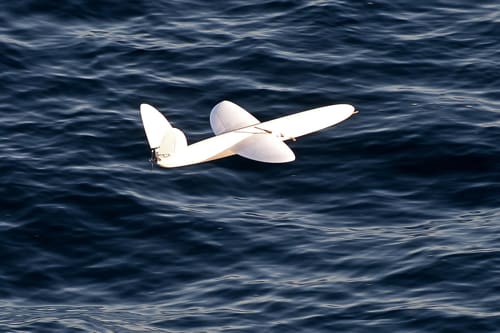
A tiny pilotless aircraft, built by the University of Southampton, launched from the Royal Navy’s ice patrol ship HMS Protector for the first time to assist with navigating through the Antarctic. The 3D-printed aircraft, along with a quadcopter, scouted the way for the survey ship so she could find her way through the thick ice of frozen seas. It’s the first time the Royal Navy has used unmanned aerial vehicles in this part of the world.
The ScanEagle craft provided the icebreaker with real-time, high-quality information courtesy of a detailed picture of the surrounding environment from a perspective that is only available from the air. The aircraft is made of nylon, printed in four major parts, and assembled without the use of any tools. The world’s first ‘printed’ airplane, it cruises at nearly 60 mph.
More From SAE Media Group
Aerospace INSIDER
NASA Technologies Improve Drone Design
Aerospace & Defense Tech Briefs
MUSHER Demonstrates Manned-Unmanned Aircraft Teaming Applications
Tech Briefs
Novel Control Method in Tailless Aircraft
Aerospace INSIDER
Two Startups Partner to Expand Hydrogen-Powered Drone Production
Aerospace INSIDER
GA-ASI Announces Gray Eagle 25M for Multi-Domain Operations
Aerospace INSIDER
Platform Converts Standard Aircraft to UAV, and Back


Aerospace INSIDER
Army’s “Robo-Raven” UAV Flies with Flapping Wings
Aerospace INSIDER
Crashing Into Safe Autonomous Flight
Tech Briefs
Insect-Inspired Arms Improve Drones
Aerospace INSIDER
Hermeus Rolls Out First Quarterhorse Hypersonic Test Aircraft
Aerospace & Defense Tech Briefs
MQ-25 Vehicle Management Computer Upgrade
Aerospace Manufacturing and Machining INSIDER
Small Low-Cost Engines for Drones and Collaborative Combat Aircraft
Aerospace & Defense Tech Briefs
Lithium-Ion Batteries
Motion Design INSIDER
Tailless Jet Flies Free with Novel Control Technique
Aerospace & Defense Tech Briefs
Intelligent Parachute Rescue System
Podcasts
A.I. in the Air
Aerospace & Defense Tech Briefs
AI Algorithms Fly Valkyrie XQ-58A
Motion Design INSIDER
AI-Powered Vision System Helps Drones Navigate Safely
Aerospace & Defense Tech Briefs
Vertical Takeoff and Landing Drone
Aerospace Manufacturing and Machining INSIDER
Dowty Propellers Opens New Headquarters and Production Facility
Aerospace INSIDER
VSR700 Unmanned Helicopter Performs Autonomous Flight Testing with DGA
Tech Briefs
A Drone Takes Off in UCSD's 'Aerodrome'
Aerospace & Defense Tech Briefs
Effectiveness of Inter-Vehicle Communications and On-Board Processing for Close Unmanned Autonomous Vehicle Flight Formations
Top Stories
NewsSensors/Data Acquisition
 Microvision Aquires Luminar, Plans Relationship Restoration, Multi-industry Push
INSIDERRF & Microwave Electronics
 A Next Generation Helmet System for Navy Pilots
INSIDERWeapons Systems
 New Raytheon and Lockheed Martin Agreements Expand Missile Defense Production
NewsAutomotive
 Ford Announces 48-Volt Architecture for Future Electric Truck
INSIDERAerospace
 Active Strake System Cuts Cruise Drag, Boosts Flight Efficiency
ArticlesTransportation

Webcasts
Aerospace
 Cooling a New Generation of Aerospace and Defense Embedded...
Energy
 Battery Abuse Testing: Pushing to Failure
Power
 A FREE Two-Day Event Dedicated to Connected Mobility
Automotive
 Quiet, Please: NVH Improvement Opportunities in the Early Design Cycle
Electronics & Computers
 Advantages of Smart Power Distribution Unit Design for Automotive &...
Unmanned Systems
 Sesame Solar's Nanogrid Tech Promises Major Gains in Drone Endurance