




“Second Skin” Protects Soldiers from Chemical and Biological Agents

The U.S. Army Natick Soldier Research, Development and Engineering Center is working with the Massachusetts Institute of Technology, the University of California at Santa Barbara, the Air Force Civil Engineering Center, and the U.S. Army Edgewood Chemical Biological Center to develop second skin, the next generation of chemical-biological protection for the warfighter.
The second skin will be a protective “skin” engineered with textile materials as a substrate that will adapt to the soldier’s environment. The material is based on the use of responsive polymer gels, and will be able to sense chemical and biological agents, which will trigger a response within the gels. The second skin not only senses the chemical or biological agent, but it also has a protection component and a deactivation component.
More From SAE Media Group
Tech Briefs
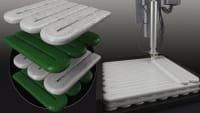
Self-Healing, Recyclable, Shape Memory Polymers
Aerospace & Defense Tech Briefs
Thermal Conductivities of Some Polymers and Composites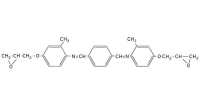

Aerospace Manufacturing and Machining INSIDER
Can This Self-Healing Composite Make Airplane and Spacecraft Components Last for Centuries?
Aerospace & Defense Tech Briefs
Outsourcing Plasma Treatments for Surface Modification
Aerospace & Defense Tech Briefs
Biobased Carbon Fibers and Thermosetting Resins for Use in DOD Composites Applications
Aerospace & Defense Tech Briefs
Reactive, Multifunctional, Micellar, Composite Nanoparticles for Destruction of Bio-Agents
Aerospace & Defense Tech Briefs
Thermal Response of Ultra-High Molecular Weight Polyethylene (UHMWPE) Materials in a Flash Flame Test

Aerospace Manufacturing and Machining INSIDER
Thermoplastic Drive Shaft System Developed for Aerospace Applications
Aerospace & Defense Tech Briefs
Cold Spray Technology
Aerospace INSIDER
Smart Skin Simplifies Spotting Strain in Aircraft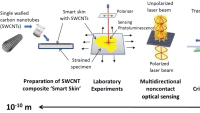
Aerospace & Defense Tech Briefs
Fiber-Reinforced Thermoplastic Composites

Aerospace & Defense Tech Briefs
Fabricating Transparent and Stretchable Supercapacitors Based on Wrinkled Graphene Electrodes


Aerospace & Defense Tech Briefs
Hybrid Ultra-Low VOC and Non-HAP Rain Erosion Coatings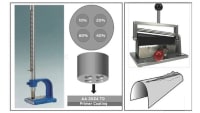
Aerospace & Defense Tech Briefs
Molecular Engineering for Mechanically Resilient and Stretchable Electronic Polymers and Composites
Aerospace & Defense Tech Briefs
Precision Assembly of Systems on Surfaces (PASS)
Aerospace & Defense Tech Briefs
Transparent Display Technology
Aerospace INSIDER
Foldable Material Can Support Many Times its Weight
Aerospace & Defense Tech Briefs
Development of Hydrophobic Coatings for Water-Repellent Surfaces Using Hybrid Methodology
Aerospace Manufacturing and Machining INSIDER
Researchers Push Limits in High-Temp, Polymer Additive Manufacturing
Aerospace & Defense Tech Briefs
Designing With Plastics for Military Equipment
Aerospace & Defense Tech Briefs
Toho Tenax Develops 'Super-Heat-Resistant' Prepreg for Engine Apps

Tech Briefs
Extrans Permeation Measurement System
Tech Briefs
Lighter Radiation Shielding for Electronics
Top Stories
INSIDERManufacturing & Prototyping
 How Airbus is Using w-DED to 3D Print Larger Titanium Airplane Parts
INSIDERManned Systems
 FAA to Replace Aging Network of Ground-Based Radars
NewsTransportation
 CES 2026: Bosch is Ready to Bring AI to Your (Likely ICE-powered) Vehicle
NewsSoftware
 Accelerating Down the Road to Autonomy
EditorialDesign
 DarkSky One Wants to Make the World a Darker Place
INSIDERMaterials
 Can This Self-Healing Composite Make Airplane and Spacecraft Components Last...
Webcasts
Defense
 How Sift's Unified Observability Platform Accelerates Drone Innovation
Automotive
 E/E Architecture Redefined: Building Smarter, Safer, and Scalable...
Power
 Hydrogen Engines Are Heating Up for Heavy Duty
Electronics & Computers
 Advantages of Smart Power Distribution Unit Design for Automotive...
Unmanned Systems
 Quiet, Please: NVH Improvement Opportunities in the Early Design...
