




Smart Skin Simplifies Spotting Strain in Aircraft

Thanks to one peculiar characteristic of carbon nanotubes, engineers will be able to measure the accumulated strain in an airplane over the entire surface or down to microscopic levels. They’ll do so by shining a light onto structures coated with a two-layer nanotube film and protective polymer.
Strain in the surface will show up as changes in the wavelengths of near-infrared light emitted from the film and captured by a miniaturized hand-held reader. The results will show engineers and maintenance crews whether structures like aircraft have been deformed by stress-inducing events or regular wear and tear.
More From SAE Media Group
Tech Briefs
Thin Heat Shield for Superfast Aircraft
Tech Briefs
Self-Healing, Recyclable, Shape Memory Polymers
Photonics & Imaging Technology
Military Optics Technology
Photonics & Imaging Technology
X-Ray Study of Low-Density Materials
Aerospace INSIDER
Carbon Nanotube “Stitches” Strengthen Aircraft Composites
Electronics & Sensors INSIDER
Strain-Sensing Smart Skin Ready to Deploy
Aerospace & Defense Tech Briefs
Fiber-Reinforced Thermoplastic Composites
Tech Briefs
Air Force Research Laboratory
Tech Briefs
Laser-Light-Based Accelerometer
Aerospace Manufacturing and Machining INSIDER
Can This Self-Healing Composite Make Airplane and Spacecraft Components Last for Centuries?
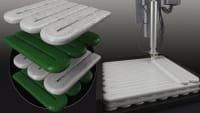
Aerospace & Defense Tech Briefs
Cold Spray Technology
Aerospace & Defense Tech Briefs
Evaluation of the Effects of Hydrogen Peroxide on Common Aircraft Electrical Materials
Aerospace Manufacturing and Machining INSIDER
GE Concludes Phase 1 Testing on XA100 Adaptive Cycle Engine
Aerospace INSIDER
Graphene Composite Could Keep Wings Ice-Free
Aerospace & Defense Tech Briefs
Advanced CT Inspection and Data Analysis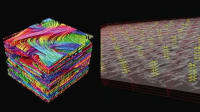
Tech Briefs
Products of Tomorrow

Tech Briefs
Electronics Withstand Extreme Heat

Tech Briefs
Sensor Film for Aerospace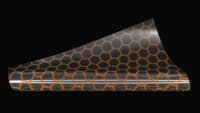
Tech Briefs
Method Enables Wings to be De-Iced in Flight
Tech Briefs
Cord Tension Measurement Device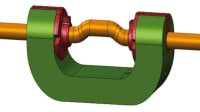

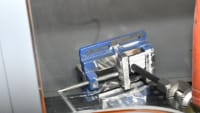
Aerospace INSIDER
Liquid Crystals Could Deflect Laser Pointer Attacks on Aircraft
Aerospace INSIDER
NASA’s Pressure-Sensitive Paint Tests Aircraft Designs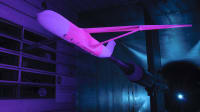

Top Stories
INSIDERManufacturing & Prototyping
 How Airbus is Using w-DED to 3D Print Larger Titanium Airplane Parts
INSIDERManned Systems
 FAA to Replace Aging Network of Ground-Based Radars
NewsTransportation
 CES 2026: Bosch is Ready to Bring AI to Your (Likely ICE-powered) Vehicle
NewsSoftware
 Accelerating Down the Road to Autonomy
EditorialDesign
 DarkSky One Wants to Make the World a Darker Place
INSIDERMaterials
 Can This Self-Healing Composite Make Airplane and Spacecraft Components Last...
Webcasts
Defense
 How Sift's Unified Observability Platform Accelerates Drone Innovation
Automotive
 E/E Architecture Redefined: Building Smarter, Safer, and Scalable...
Power
 Hydrogen Engines Are Heating Up for Heavy Duty
Electronics & Computers
 Advantages of Smart Power Distribution Unit Design for Automotive...
Unmanned Systems
 Quiet, Please: NVH Improvement Opportunities in the Early Design...
