




Isotope Beta-Battery Approaches for Long-Lived Sensors
The energy density of isotopes enables long-life electronics in sensor network applications.
The energy density of isotopes exceeds that of chemical energy storage by six orders of magnitude. Isotopes are used in many commercial applications, and are produced and available at modest prices. The power requirements of many sensors and communications equipment can greatly reduce the power requirements of many devices such as sensors, light sources, and transmitters. Chemical batteries are the mainstay of power for these devices. However, chemical batteries have limited lifetimes. This makes remote use and replacement difficult for applications extending the lifetime use.
The most compelling reason to use isotope power sources for remotely located unattended sensors and communications nodes is the long lifetime power source capability. Isotope batteries provide a continuous flow of energy from decaying isotopes. When isotopes decay, they emit alpha, beta, or gamma particles. The particles’ emitted energy can be converted to electrical energy without intermediate thermalization. Isotopes decay in five possible modes: alpha decay, beta decay, positron emission, electron capture, and isomeric transitions. Combinations of particles are commonly emitted during a given type of decay.
The characteristics desired for unattended sensor are long-life operations and safety. There are several beta emitters that exhibit long life. Long life, in this case, means the lifetime of Infrastructure; ~150 years. Keeping safety first means limiting gamma emission and keeping the amount of radioactive material as low as is reasonably possible, while still providing 100 μW trickle charge output.
Technology issues associated with developing isotope batteries include choices of isotope material, approach to converting energy stored in nucleus to electrical power, and power management. The impact of long-lived power sources can begin to have impact on sensors and network arrays now. The most compelling interest in a radioisotope (RI) power source is the unique niche of long-lived power unmatched in chemical power sources. The potential for nano-sized power sources exists because of the isotope energy density; however, energy conversion in the balance of the system presently accounts for a much larger volume in this type of device.
There are several long-lived isotope candidates; these are low gamma emitters, in addition to having long half-lives. They are not commonly produced for industry, making the cost higher. The cost can be lowered if the commercial use increases; as more material is required, the process can be made efficient.
Sealed radiation sources are one of the important tools available in affecting safety and handling. Sealed Source is a term used to describe radioactive sources that have been designed to prevent spread of radioactive material under normal working conditions.
The most straightforward approach to getting a power source out in the field for trials utilizes components that are commercially available. This completely commercial-off-the- shelf approach represents an inexpensive route to producing and licensing a long-lived power source quickly. The device is not the most efficient, most energy dense, or novel in design. It is simple and straightforward, with the goal of getting this extended lifetime power source into the hands of users. Because of the extended lifetime capability, these types of power sources can have great impact towards persistent sensing, communications signal relay, and unattended remote sensing.
This work was done by Marc Litz of the Army Research Laboratory. ARL-0173
More From SAE Media Group
Tech Briefs
Nuclear Radiation-Detecting Device
Tech Briefs
Radiation Detection with Plastic Scintillators
Medical Design Briefs
Photonic Radiation Sensors Survive Huge Doses Undamaged
Aerospace & Defense Tech Briefs
Electrical Characterization of Crystalline UO2, THO2 and U0.71TH0.29O2
Aerospace & Defense Tech Briefs
SAE International Issues, Revises Technical Reports for Aerospace Engineering

Tech Briefs
Lighter Radiation Shielding for Electronics
Tech Briefs
Handheld Camera Detects Gamma Ray Radiation
Tech Briefs
Multi-Layer Nuclear Thermionic Avalanche Cell
Aerospace & Defense Tech Briefs
Luminescence Materials as Nanoparticle Thermal Sensors
Aerospace & Defense Tech Briefs
Industry Invited to Participate in AeroTech Aerospace and Defense Technical Program
Aerospace & Defense Tech Briefs
Nominal High-Altitude Electromagnetic Pulse (HEMP) Waveforms


Sensor Technology
Energy Harvesting Can Enable 1 Trillion Battery-Free Sensors in the IoT
Sensor Technology
Smart Batteries Include Force and Pressure Sensing
Tech Briefs
Rad-Hard CMOS Crystal Oscillator


Automotive Engineering
Is GaN the Future for EV Chips?
Tech Briefs
Supercapacitor Based on Manganese Oxide
Aerospace & Defense Tech Briefs
Investigation of Flight Dynamics and Controls for a Solar-Tracker-Mounted UAV
Defense INSIDER
Detecting Radioactive Material from a Remote Distance
Tech Briefs
Facility Focus: Idaho National Laboratory
Sensor Technology
“Lighthouse” Detectors Minimize Workers’ Exposure to Dangerous Radiation
Automotive Engineering
Sensing to Solve EV Thermal Challenges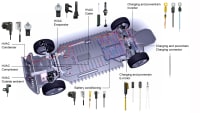

Aerospace & Defense Tech Briefs
Phonon Confinement Effect in TiO₂ Nanoparticles as Thermosensor Materials
Aerospace & Defense Tech Briefs
SAE International Extends Call for Abstracts, Seeks Submissions for AeroTech Conference
Top Stories
INSIDERMaterials
 How Airbus is Using w-DED to 3D Print Larger Titanium Airplane Parts
NewsSensors/Data Acquisition
 Microvision Aquires Luminar, Plans Relationship Restoration, Multi-industry Push
INSIDERDesign
 A Next Generation Helmet System for Navy Pilots
NewsManned Systems
 Accelerating Down the Road to Autonomy
INSIDERWeapons Systems
 New Raytheon and Lockheed Martin Agreements Expand Missile Defense Production
ArticlesDesign
 CES 2026: Bosch is Ready to Bring AI to Your (Likely ICE-powered) Vehicle
Webcasts
Transportation
 Advantages of Smart Power Distribution Unit Design for Automotive...
Automotive
 Quiet, Please: NVH Improvement Opportunities in the Early Design...
Electronics & Computers
 Cooling a New Generation of Aerospace and Defense Embedded...
Power
 Battery Abuse Testing: Pushing to Failure
AR/AI
 A FREE Two-Day Event Dedicated to Connected Mobility
