




Air Force Uses 3-D Scanner to Model Aircraft
When the 46th Test Wing's Air Force SEEK EAGLE Office purchased a 3-D laser scanner system six months ago, they had no idea how much of an impact the system would make.

"This is state of the art," said Mark Hillman, lead engineer at the SEEK EAGLE. "We are breaking ground for the military."
The approximately $150,000 Leica HDS 7000 3-D laser scanner and Rapidform reverse engineering software program was purchased to quickly build accurate digital models of Air Force aircraft and weapons for use in aircraft-weapon compatibility analyses.
"Before, we had to implement the real tests to determine how capable a system would be," said Paul Collins, lead contract engineer for SEEK EAGLE. "Now we build models for use in simulated test environments for a good indication of the outcome, before we go into actual testing, which can save hundreds of thousands of dollars."
After one month of trial scans, they were able to use it to quickly scan an entire aircraft. "Four years ago, it took six people two weeks to manually collect 3-D data for the A-10 aircraft," said Collins. "With the laser scanner, two people can collect the same amount of data in two days, a 93 percent reduction."
Additionally, the accuracy of the laser is +/- 0.01. Using the manual method, the accuracy was at best +/- 0.03, according to Collins.
The data collection process involves positioning the scanner at various positions around the airplane. The scanner automatically sweeps a laser beam across the aircraft to generate a 3-D point cloud.
"Any areas where good data is not collected, such as shadows, are depicted as black holes in the scanner software requiring the scanner to be re-positioned for optimal results", said Collins.
After scanning an aircraft, SEEK EAGLE engineers use Rapidform reverse engineering software and the 3-D point clouds to construct solid digital models.
"Improvements in using Rapidform to construct the solid models from the scanned data have been significant", said Collins.
The SEEK EAGLE engineering team didn't go into this venture lightly. They started with requirements from the entire Air Force SEEK EAGLE Office and did an in-depth comparative analysis of the viable systems before choosing their current combination of hardware and software. Overall, the scanner and software has reduced their costs by about 75 percent.
More From SAE Media Group
Aerospace & Defense Tech Briefs
Handheld Scanner Keeps USAF Planes Combat-Ready
Aerospace & Defense Tech Briefs
3D Scanning Provides Key Weapon for Aerospace and Defense Manufacturing
Aerospace & Defense Tech Briefs
Reverse Engineering Technology
Tech Briefs INSIDER
New Navigation Software Cuts Self-Driving Car Costs

Aerospace & Defense Tech Briefs
Military Vehicle Situational Awareness System
Medical Design Briefs
How Virtual, Cloud-Based Technologies Are Powering the Next Industrial Revolution
Photonics & Imaging Technology
High-Speed Inspection and Reverse Engineering in 2D and 3D
Tech Briefs
Desktop 3D Scanner
Tech Briefs
Rapid Imaging Software (RIS)
Automotive Engineering
SkillReal Says Inexpensive Camera and AI Add up to Faster, Better Inspections
Aerospace & Defense Tech Briefs
Simulation of Active Imaging Systems
Automotive Engineering
Measurement Software Update
Off-Highway Engineering
Noncontact Laser Scanner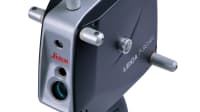
Imaging Technology
Handheld 3D Laser Camera
Tech Briefs
ZScanner 700
Tech Briefs
Vision Sensing is Becoming More Accessible
Aerospace & Defense Tech Briefs
3D Optical Scanner
Photonics & Imaging Technology
A Methodology to Read QR Codes on Uneven Surfaces
Robotics & Automation INSIDER
New Imaging Technique Reconstructs the Shapes of Hidden Objects
Aerospace & Defense Tech Briefs
Adding Context to Full-Motion Video for Improved Surveillance and Situational Awareness
Imaging Technology
Vision Sensors
Motion Control & Automation Technology
Automated Laser Scanner
Photonics & Imaging Technology
Advancements Make Laser-Based Imaging Simpler and Three-Dimensional
Tech Briefs
Product of the Month
Aerospace & Defense Tech Briefs
Laser Cleaner Robot
Top Stories
INSIDERManufacturing & Prototyping
 How Airbus is Using w-DED to 3D Print Larger Titanium Airplane Parts
INSIDERManned Systems
 FAA to Replace Aging Network of Ground-Based Radars
NewsTransportation
 CES 2026: Bosch is Ready to Bring AI to Your (Likely ICE-powered) Vehicle
NewsSoftware
 Accelerating Down the Road to Autonomy
EditorialDesign
 DarkSky One Wants to Make the World a Darker Place
INSIDERMaterials
 Can This Self-Healing Composite Make Airplane and Spacecraft Components Last...
Webcasts
Defense
 How Sift's Unified Observability Platform Accelerates Drone Innovation
Automotive
 E/E Architecture Redefined: Building Smarter, Safer, and Scalable...
Power
 Hydrogen Engines Are Heating Up for Heavy Duty
Electronics & Computers
 Advantages of Smart Power Distribution Unit Design for Automotive...
Unmanned Systems
 Quiet, Please: NVH Improvement Opportunities in the Early Design...
