




Computational Cameras
Computational cameras produce images that cannot be taken with traditional cameras.
A computational camera uses a combination of optics and software to produce images that cannot be taken with traditional cameras. A variety of computational cameras has been demonstrated; some designed to achieve new imaging functionalities, and others to reduce the complexity of traditional imaging.

The coding methods used in today’s computational cameras can be broadly classified into six approaches: Object Side Coding, which only requires optics to be externally attached to a traditional camera; Pupil Plane Coding in which an optical element is placed at, or close to, the pupil plane of a traditional lens; Focal Plane Coding in which an optical element is placed on, or close to, the image detector; Illumination Coding in which, using a spatially and/or temporally controllable flash, captured images can be coded using illumination patterns; Camera Clusters and Arrays that enable a number of traditional cameras to be spatially arranged to capture different types of images; and Unconventional Imaging Systems, which are optical designs that cannot be easily described as modifications to, or collections of, traditional cameras.
Computational cameras produce images that are fundamentally different from the traditional linear perspective image. However, the hardware and software of each computational camera are typically designed to produce a particular type of image. The nature of this image cannot be altered without significant redesign of the imaging system. A programmable imaging system uses an optical system for forming the image that can be varied by a controller in terms of its radiometric and/or geometric properties. When such a change is applied to the optics, the controller also changes the decoding software in the computational module.
The result is a single imaging system that can emulate the functionalities of several specialized ones. Such a flexible camera has two major benefits. First, a user is free to change the role of the camera based on his or her needs. Second, it allows one to explore the notion of a purposive camera that, as time progresses, automatically produces the visual information that is most pertinent to the task. In order to give its enduser true flexibility, a programmable imaging system must have an open hardware and software architecture.
One motivation for developing computational cameras is to create new imaging functionalities that would be difficult, if not impossible, to achieve using the traditional camera model. The new functionality may come in the form of images with enhanced field of view, spectral resolution, dynamic range, temporal resolution, etc. The new functionality can also manifest in terms of flexibility — the ability to manipulate the optical settings of an image (focus, depth of field, viewpoint, resolution, lighting, etc.) after the image has been captured.
Another major benefit of computational imaging is that it enables the development of cameras with higher performance- to-complexity ratio than traditional imaging. Camera complexity has yet to be defined in concrete terms. However, one can formulate it as some function of size, weight, and cost. In imaging, it is generally accepted that higher performance comes at the cost of complexity. For instance, to increase the resolution of a camera, one needs to increase the number of elements in its lens. In traditional imaging, this is the only way to combat the aberrations that limit resolution. In contrast, computational imaging allows a designer to shift complexity from hardware to computations. For instance, high image resolution can be achieved by post-processing an image captured with very simple optics.
The design of computational cameras may be viewed as choosing an appropriate operating point within a high dimensional parameter space. Some of the parameters are photometric resolution, spatial resolution, temporal resolution, angular resolution, spectral resolution, field of view, and F-number. The space could include additional parameters related to the “cost” of the design, such as, size, weight, and expense. In general, while making a final design choice to achieve a desired functionality, one is forced to trade off between the various parameters.
In the cases of omnidirectional imaging and integral imaging, resolution is traded off for wider field of view and viewpoint (or focus) control, respectively. Generally, the tradeoff made with any given computational camera is straightforward to analyze and quantify.
This work was done by Shree K. Nayar of Columbia University for the Office of Naval Research. ONR-0026
This Brief includes a Technical Support Package (TSP).
Computational Cameras
(reference ONR-0026) is currently available for download from the TSP library.
Don't have an account?
More From SAE Media Group
Photonics & Imaging Technology
Researchers Use Inkjet Printing to Make a Portable Multispectral 3D Camera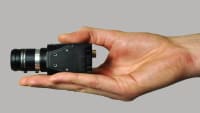
Aerospace & Defense Tech Briefs
Spatial Calibration for Accurate Long Distance Measurement Using Infrared Cameras
Photonics & Imaging Technology
Inspection of Bulk Material with Trilinear Line-Scan and Prism Cameras
Automotive Engineering
AutoSens: Nodar’s Plan to Make Park Assist Tech Better, Cheaper, Cleaner
Photonics & Imaging Technology
Machine Vision Applications in Laser Measurement Systems
Medical Design Briefs
Ultrathin Dental Camera Inspired by Insect-Eye Structure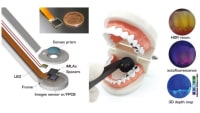

Photonics & Imaging Technology
Seeing Like a Butterfly: Optical Invention Enhances Camera Capabilities
Aerospace & Defense Tech Briefs
Spatial Resolution and Contrast of a Focused Diffractive Plenoptic Camera

ADAS & Autonomous Vehicle Engineering
Owl AI’s 3D Thermal Sensors See Further into the Dark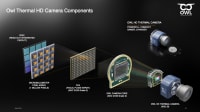
Photonics & Imaging Technology
Lunar Lens: First Compact Flat Metalens Images Moon Surface

Automotive Engineering
Ultra-Wide, Low-Distortion Lenses for Crash Testing Environments
Photonics & Imaging Technology
Light Field Imaging Technology
Photonics & Imaging Technology
Lens-Free Fluorescent Microscope
Photonics & Imaging Technology
New Products
Photonics & Imaging Technology
Detecting Threats Beyond the Limits of Human, Sensor Sight
Tech Briefs
Multi-Shot Lensless Camera
Photonics & Imaging Technology
Optical Invention Mirrors the Image Processing Power of a Human Eye
Tech Briefs
3D Camera Merges Depth and Spectral Data
Photonics & Imaging Technology
Calibration Method Improves Scientific Research Performed with Smartphone Cameras
Photonics & Imaging Technology
Decoding Multiple Frames From a Single Scattered Exposure
Tech Briefs
High-Resolution Multi-Spectral Camera
Photonics & Imaging Technology
Sharper Images: A Breakthrough in Microscopy Resolution


Medical Design Briefs
Werth EasyScope
Photonics & Imaging Technology
The Latest Advancements in Optics
Overview
The document titled "Computational Cameras: Approaches, Benefits and Limits" by Shree K. Nayar from Columbia University presents a comprehensive overview of the advancements in computational imaging technology. It outlines how computational cameras utilize a combination of optics and software to achieve imaging functionalities that traditional cameras cannot replicate.
The report begins by discussing the evolution of camera flash technology, which has traditionally served as a simple point light source. With advancements in digital projectors, the role of flash has become more sophisticated, allowing for programmable illumination. This enables cameras to project complex illumination patterns onto scenes, capturing images that provide richer information through computational decoding. Such capabilities allow for post-capture control over various imaging parameters, including viewpoint, resolution, depth of field, and lighting.
Nayar categorizes the design approaches for computational cameras into six broad coding methods, emphasizing that while some methods modify traditional camera models, others represent entirely new paradigms in imaging. The report highlights the diversity of work in the field, showcasing existing computational cameras as examples to illustrate these approaches.
The document also addresses the challenges in designing optimized optical systems for computational cameras, noting that a systematic design methodology is still lacking. As a result, the design process remains a blend of science and art, requiring creativity alongside technical knowledge.
Furthermore, the report explores the benefits of computational imaging, such as enhanced flexibility and the ability to capture images under varying conditions. It also discusses the limitations, including potential complexities in implementation and the need for open hardware and software architectures to fully realize the potential of programmable imaging systems.
In conclusion, Nayar's report serves as a foundational resource for understanding the current landscape of computational cameras, their operational principles, and the ongoing research in this vibrant field. It emphasizes the transformative potential of computational imaging in various applications, paving the way for future innovations in digital photography and imaging technology.
Top Stories
INSIDERManufacturing & Prototyping
 How Airbus is Using w-DED to 3D Print Larger Titanium Airplane Parts
NewsAutomotive
 Microvision Aquires Luminar, Plans Relationship Restoration, Multi-industry Push
INSIDERAerospace
 A Next Generation Helmet System for Navy Pilots
INSIDERDesign
 New Raytheon and Lockheed Martin Agreements Expand Missile Defense Production
ArticlesAR/AI
 CES 2026: Bosch is Ready to Bring AI to Your (Likely ICE-powered) Vehicle
Road ReadyDesign

Webcasts
Semiconductors & ICs
 Advantages of Smart Power Distribution Unit Design for Automotive...
Unmanned Systems
 Quiet, Please: NVH Improvement Opportunities in the Early Design...
Electronics & Computers
 Cooling a New Generation of Aerospace and Defense Embedded...
Power
 Battery Abuse Testing: Pushing to Failure
AR/AI
 A FREE Two-Day Event Dedicated to Connected Mobility
