




Ultra-Wide, Low-Distortion Lenses for Crash Testing Environments
The performance of crash test imaging systems depends heavily on the optics in front of them.
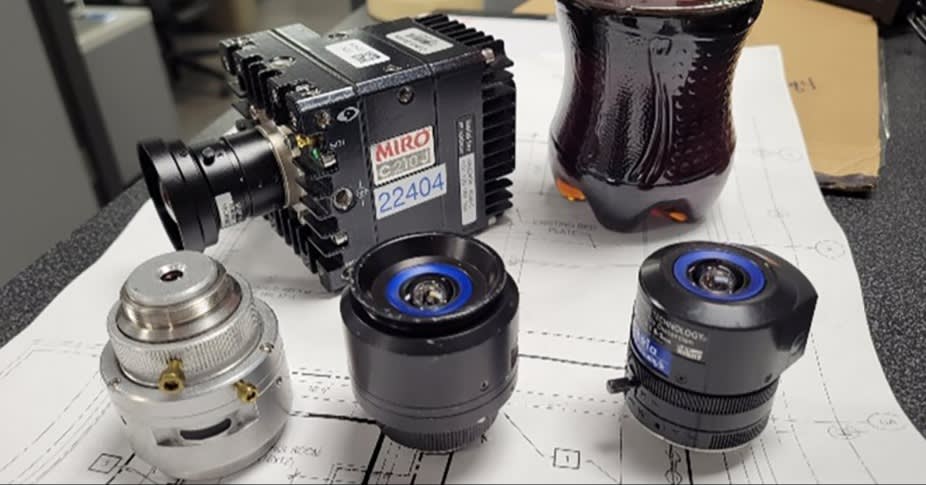
In the demanding field of automotive crash testing, imaging systems face a dual challenge: They must survive extreme forces while delivering precise, distortion-free footage for post-test analysis. High-speed cameras, often priced in the tens of thousands of dollars, are essential for documenting the dynamics of impact. But the performance of these systems depends heavily on the optics in front of them.
Why ultra-wide, low-distortion optics matter
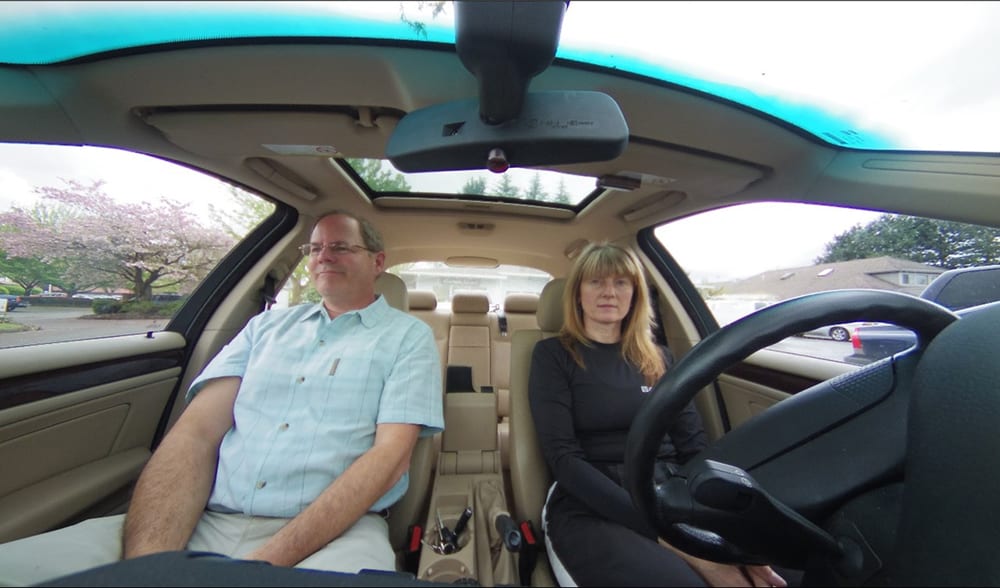
Crash test environments are highly constrained. Cameras are frequently mounted in confined spaces such as footwells, under dashboards, or along structural components of a vehicle. Traditional wide-angle lenses often introduce severe barrel distortion, bending straight lines and compressing details at the edges. This distortion can obscure crucial measurement data and typically requires corrective post-processing, slowing down workflows and potentially introducing errors.
New generations of ultra-wide, rectilinear lenses address problems at the optical level. By correcting distortion through advanced lens design, they maintain straight lines across the full field of view and preserve resolution even at the image periphery. This results in high-quality, wide-angle imaging without the need for digital correction.
Built for impact
Beyond image quality, durability is a critical factor. In a crash event, lenses are subjected to shock, vibration, flying debris and extreme G-forces. Conventional optics often require additional protective housings or reinforcement to survive testing. Modern ruggedized designs now integrate these protections directly into the lens barrel, using all-metal housings, integrated mounts, and reinforced optics. This prevents element shift during vibration, minimizes the risk of lens separation at the mount, and reduces the need for custom modifications.
Recent models have been independently tested to withstand shock levels of up to 50G and vibration levels of up to 200Hz at 10G, aligning their performance with the most rigorous test conditions in the automotive industry. By integrating these protections, labs reduce both cost and preparation time while maintaining consistent optical results.
Expanding imaging capabilities

Another significant advancement is compatibility with larger-format image sensors. While early wide-angle, low-distortion designs were limited to small-format sensors, new lenses now support 1/1.8-in. imagers. These sensors, with larger pixels and greater light sensitivity, enable higher dynamic range and improved performance in low-light or high-contrast conditions. Modern ultra-wide, low-distortion lenses now combine exceptionally wide fields of view exceeding 115° horizontally with less than 0.5% distortion, resolution beyond 5 megapixels at 200 lp/mm, and carefully engineered coatings and glass elements that suppress flare and preserve contrast when shooting into bright test lighting. They also perform effectively across both visible and near-infrared spectra, broadening their usability.
Real-world validation

Crash test facilities that once relied on custom modifications to standard optics are now deploying these purpose-built rugged lenses across hundreds of test scenarios. Users report consistent performance, even when mounted in unconventional or high-risk positions such as under vehicles or near direct impact zones. Lenses maintain focus despite extreme shock, resist breakage at common failure points such as the mount, and deliver images sharp enough for precise analysis without software correction.
A step forward for machine vision
The convergence of ultra-wide coverage, optical distortion correction, and industrial ruggedization represents a meaningful step forward for machine vision technology, not just for automotive crash testing, but for any application requiring precision imaging in hostile environments. One source for ultra-wide rectilinear lenses is Theia Technologies, a U.S. optics manufacturer based in Wilsonville, OR. These lenses enable faster analysis, reduce system complexity, and open new possibilities for capturing critical data under extreme conditions.
Andrea Van Landingham is VP of Business Development at Theia Technologies. Jon Boucher is marketing coordinator at Theia Technologies. They wrote this article for SAE Media.
More From SAE Media Group
Photonics & Imaging Technology
Machine Vision Applications in Laser Measurement Systems
Aerospace & Defense Tech Briefs
Spatial Calibration for Accurate Long Distance Measurement Using Infrared Cameras
Photonics & Imaging Technology
Preventing Heat-Induced Image Warping in Machine Vision Line Scan Cameras
Medical Design Briefs
Ultrathin Dental Camera Inspired by Insect-Eye Structure
Imaging Technology
Finding the Right Lens: The Factors to Focus On
Photonics & Imaging Technology
Inspection of Bulk Material with Trilinear Line-Scan and Prism Cameras
Motion Control Technology
Selecting the Optimal Vision Equipment to Meet Automation Needs
Tech Briefs
Automated Vision System Inspects a Large Surface
Tech Briefs
Manufacturing Ultra-Thin Camera Lenses
Photonics & Imaging Technology
3D Scanning Inspection
Photonics & Imaging Technology
Using Digital Microscopes as Inspection Tools
Photonics & Imaging Technology
Ground Tactical Vision Comes Full-Circle
Photonics & Imaging Technology
Comparing Sensitivity of Thermal Imaging Cameras Modules
Aerospace & Defense Tech Briefs
High-Speed Midwave Infrared Cameras Enable Military Test Range Tracking System

Medical Design Briefs
Tethered Endoscope for Photographing the Esophagus
Photonics & Imaging Technology
Artificial Intelligence Magnifies the Utility of Electron Microscopes
Photonics & Imaging Technology
Visualizing Value at the Speed of Light
Photonics & Imaging Technology
Calibration Method Improves Scientific Research Performed with Smartphone Cameras
Photonics Tech Briefs
Wafer-Level Lens Alignment
Aerospace & Defense Tech Briefs
Computational Cameras
Tech Briefs
Multipurpose Hyperspectral Imaging System
Automotive Engineering
Alitheon’s Vision Is Easy Digital Traceability
Photonics & Imaging Technology
Wireless Handheld Spectrometer Transmits Data to Smartphone
Photonics & Imaging Technology
Decoding Multiple Frames From a Single Scattered Exposure
Automotive Engineering
SkillReal Signs Tier 1 Supplier for NVIDIA-Powered AI Inspection
Automotive Engineering
Nodar's GridDetect: Look, Ma, No Lidar!

Top Stories
INSIDERManufacturing & Prototyping
 How Airbus is Using w-DED to 3D Print Larger Titanium Airplane Parts
INSIDERManned Systems
 FAA to Replace Aging Network of Ground-Based Radars
NewsTransportation
 CES 2026: Bosch is Ready to Bring AI to Your (Likely ICE-powered) Vehicle
NewsSoftware
 Accelerating Down the Road to Autonomy
EditorialDesign
 DarkSky One Wants to Make the World a Darker Place
INSIDERMaterials
 Can This Self-Healing Composite Make Airplane and Spacecraft Components Last...
Webcasts
Defense
 How Sift's Unified Observability Platform Accelerates Drone Innovation
Automotive
 E/E Architecture Redefined: Building Smarter, Safer, and Scalable...
Power
 Hydrogen Engines Are Heating Up for Heavy Duty
Electronics & Computers
 Advantages of Smart Power Distribution Unit Design for Automotive...
Unmanned Systems
 Quiet, Please: NVH Improvement Opportunities in the Early Design...
