




Autonomous Vehicle Engineering - September 2021
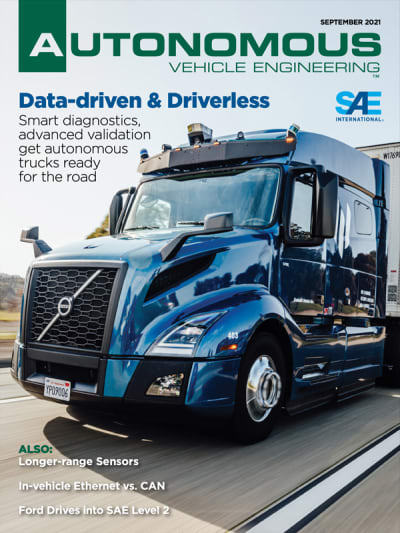
Inside this issue
Overview
The latest issue of Autonomous Vehicle Engineering delves into the rapidly evolving landscape of autonomous driving technology, highlighting significant advancements and trends that are shaping the future of the automotive industry. This edition emphasizes the integration of innovative sensor technologies, the importance of safety in automated systems, and the ongoing developments in vehicle communication networks.
Key Highlights:
-
Advancements in Sensor Technology: The issue opens with a focus on the growth of long-range, high-resolution imaging radar systems. These radars, capable of detecting objects up to 350 meters away, are becoming increasingly sophisticated, with more signal channels than those found in most mass-market passenger vehicles. The shift to 77 GHz radar technology has led to smaller, more cost-effective sensors that can be integrated into various parts of vehicles, such as headlights and door handles, enhancing coverage and functionality. This miniaturization trend is crucial for maintaining the sleek aesthetics of modern vehicle designs while improving sensor performance.
-
Dynamic Gesture Sensing: Another significant topic covered is the transition from traditional controls to gesture and proximity sensing systems in vehicles. Automakers are exploring how these technologies can replace knobs and touchscreens, thereby improving driver safety and convenience. The issue discusses the challenges associated with current gesture-sensing systems, which often rely on expensive and complex time-of-flight cameras. Instead, the magazine highlights emerging solutions that utilize infrared-based optical sensors, offering a more streamlined and cost-effective approach to gesture recognition in automotive applications.
Safety and Regulatory Considerations: The issue also addresses the critical aspect of safety in autonomous driving. A notable feature is the investigation launched by the National Highway Traffic Safety Administration (NHTSA) into Tesla's Autopilot system following a series of accidents involving stationary emergency vehicles. This investigation underscores the importance of robust safety measures and the need for thorough testing and validation of automated driving systems. Experts in the field discuss the implications of these incidents and the necessity for improved sensor-software integration to handle edge cases effectively.
-
Vehicle Communication Networks: The magazine explores the evolution of vehicle communication systems, particularly the increasing adoption of Ethernet technology. As vehicles become more connected and reliant on data exchange, Ethernet is emerging as a mainstream solution, complementing existing networks like CAN (Controller Area Network). The issue discusses how these advancements are enabling higher data transfer rates and supporting the growing complexity of vehicle electronic modules, which are essential for advanced driver-assistance systems (ADAS) and vehicle electrification.
-
Emerging Trends in Autonomous Vehicles: The editorial section reflects on the broader trends influencing the automotive industry, including the rise of rideshare services and urban mobility solutions. The magazine highlights various projects testing innovative concepts in transportation, emphasizing the need for collaboration among stakeholders to address the challenges of urban mobility and the integration of autonomous vehicles into existing infrastructure.
-
Webinars and Expert Insights: The issue features information about upcoming webinars that provide further insights into automotive technologies, including best practices for interconnect technologies in ADAS and vehicle electrification. These educational resources aim to equip engineers and designers with the knowledge needed to navigate the complexities of modern automotive systems.
-
Industry Perspectives: Throughout the issue, industry experts share their perspectives on the future of autonomous driving. They discuss the importance of continuous learning and adaptation in the face of rapid technological advancements. The magazine emphasizes the need for a collaborative approach among automakers, technology providers, and regulatory bodies to ensure the safe and effective deployment of autonomous vehicles.
In conclusion, this issue of Autonomous Vehicle Engineering serves as a comprehensive resource for professionals in the automotive industry, offering valuable insights into the latest technological advancements, safety considerations, and emerging trends in autonomous driving. As the industry moves towards a future where autonomous vehicles become commonplace, the magazine underscores the importance of innovation, collaboration, and a commitment to safety in shaping this transformative journey.
Articles
Top Stories
INSIDERAerospace
 How Airbus is Using w-DED to 3D Print Larger Titanium Airplane Parts
NewsAutomotive
 Microvision Aquires Luminar, Plans Relationship Restoration, Multi-industry Push
INSIDERManufacturing & Prototyping
 A Next Generation Helmet System for Navy Pilots
INSIDERDefense
 New Raytheon and Lockheed Martin Agreements Expand Missile Defense Production
ArticlesAR/AI
 Accelerating Down the Road to Autonomy
Road ReadyDesign

Webcasts
Automotive
 Advantages of Smart Power Distribution Unit Design for Automotive...
Unmanned Systems
 Quiet, Please: NVH Improvement Opportunities in the Early Design...
Defense
 Cooling a New Generation of Aerospace and Defense Embedded...
Power
 Battery Abuse Testing: Pushing to Failure
Power
 A FREE Two-Day Event Dedicated to Connected Mobility
