




Ford Drives into SAE Level 2
Driver monitoring was an essential component to engineering the new “hands-free” BlueCruise/Active Glide enhanced ADAS system.

U.S. Patent #10752253, granted to four Ford Motor Co. engineers in August 2020, covers the “driver awareness detection system” that is a key safety component in the company’s first “hands-free” driver-assistance system. Branded both as ‘BlueCruise’ in Ford vehicles and ‘Active Glide’ in Lincolns, the SAE Level 2 ADAS is the next step in Ford’s Co-Pilot360 technology suite that debuted in 2020 on Mustang Mach-E and the 2021 F-150. It was recently announced for the 2022 Lincoln Navigator and is expected to eventually be a cross-portfolio offering. (See here)
“Ford is taking a ‘building blocks’ approach to driver assistance technology,” explained Justin Teems, one of the patent holders and manager of the company’s Active Driver Assist Features team. At a BlueCruise demonstration drive for media in early August attended by SAE Media, Teems and other experts stressed that the driver-monitoring “block” is essential — and non-debatable among engineers and planners — for hands-free driving features.
“Certainly, the technology is developing rapidly; it’s leaps-and-bounds beyond where it was two years ago,” added Shane Larkin, an engineering supervisor in Teems’ group. “But Ford is proceeding conservatively to ensure that the driver is always paying attention to the road ahead. Our aim with BlueCruise is to reduce driver stress and fatigue without compromising safety.”

Larkin rode ‘shotgun’ during our demo drive in a hybrid-propulsion F-150 on busy metro Detroit freeways, guiding the author through BlueCruise’s simple functions. As we accelerated down the freeway onramp into 80-mph (129-km/h), truck-intense traffic, I moved the pickup into the center lane. Following Larkin’s prompt, I tried to engage the hands-free function. This requires actuating the adaptive cruise control (ACC) then pressing an icon on the steering wheel. Also required: driving in a “Hands-Free Blue Zone,” part of some 130,000 miles (209,000 km) of U.S. (37 states to date) and Canadian (five provinces) divided highways that Ford has GPS-mapped and digitized for BlueCruise driving.
In my first attempted deployment, however, the driver-recognition system (with driver-facing infrared camera mounted on the steering column) would not cooperate. I was wearing a COVID mask and removed it. Still no reaction. I then removed my sunglasses (which have caused driver-recognition hiccups for me in GM vehicles equipped with its hands-free Super Cruise system) — bingo! The F-150’s instrument-cluster screen turned blue and showed the “hands-free” icon. We were BlueCruisin’ in the middle lane of M39. And I was very conscious of keeping my eyes on the road ahead. Larkin noted that the development team chose audible warnings, rather than physical alerts (no seat buzzers) to correct driver inattention.
“The system ‘finds’ your eyes by surveying all of your facial features,” Larkin explained. “With the mask and glasses on, it only has the top of your head, your chin and ears to go by. That makes it challenging to find where your eyes are. It’s not just what it sees, but the analysis of it.” The facial-recognition software is a joint development with the system supplier, which is responsible for the low-level image processing. “What to do with that information is all on the Ford side,” he said.
To ensure that the BlueCruise-equipped vehicle obeys posted speed limits, the system can automatically adjust the road-speed setting. Or, to keep pace with traffic, it enables the driver to select a velocity range of up to 20-mph above or below the posted speed. Another handy feature: If BlueCruise was engaged the last time the ACC was active, BlueCruise automatically engages with the next ACC activation.
The level of stress reduction afforded by BlueCruise depends on the driver’s own acclimation to hands-free driving. According to Larkin, new ADAS features typically require about 45 minutes for drivers to ‘trust’ the vehicle in most highway scenarios. Even as I came to trust the F-150’s L2 operation during our demo drive, my heart rate still raced while running a gauntlet of 45-foot-long semitrucks doing their usual 75-mph snake-weave.
I cautiously kept my hands in close proximity to the steering wheel. “We let the driver decide where to place their hands,” Larkin said. “Part of our testing is making sure that if anything happens within a hands-free zone, the driver has time to put their hands back on the wheel if they need to react, if we’re prompting them that they need to resume control.” When it was time to move into the right lane to exit to another highway, I had to resume manual “hands-on” control of the vehicle. Lane-change assist still is in development; “it’ll be just a tap-the-turn-indicator” function,” Larkin promised.
BlueCruis: Driver engagement is critical
Ford engineer Dianne Liyana is a technical specialist on the BlueCruise development team. She spoke with SAE Media during a BlueCruise demo drive about what she calls the “key component” of ADAS features.
What is Ford doing to clear up some of the ambiguities related to driver-assistance technology that’s causing confusion for the end customer?
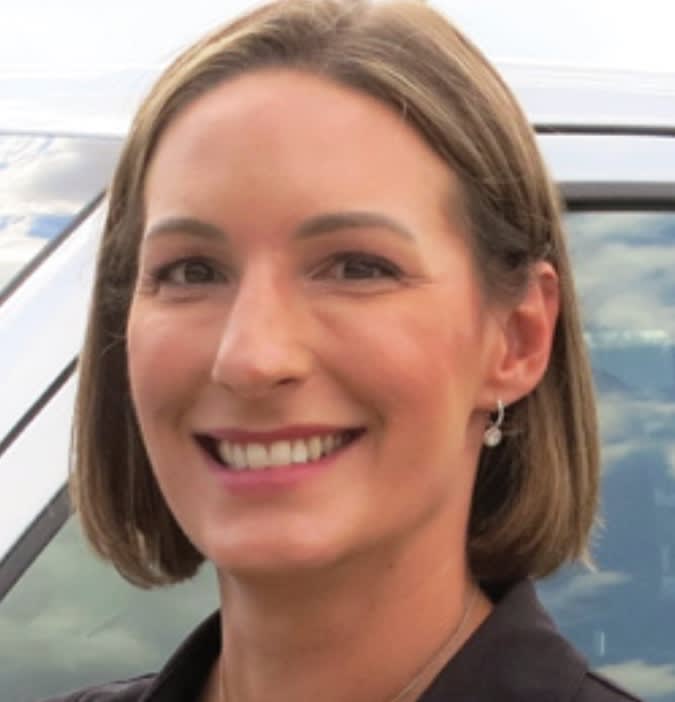
This started when a certain automaker made misleading statements about the capabilities of their driver-assistance system. That, unfortunately set the tone for this space. Going forward, Ford has always known that driver-in-the-loop — driver engagement — is a critical component of these features being successful. In addition to our committing to driver monitoring, we have user-interface studies regarding the customer’s ability to understand what we’re communicating to the driver. That’s a key component for us for these systems, regardless of the SAE level.
A growing number of engineers and planners see SAE Level 3 as a non-starter.
That’s because of the inability to properly control that handoff [from ADAS system to driver], or how quickly that handoff might need to happen. Outward facing, I don’t refer to the [SAE] levels because I don’t expect the average consumer to know what the level means. I refer to the feature and the expectation it has with the consumer. Our job is to communicate our expectation for that feature. The expectation for BlueCruise, our Level 2, is that you will be able to experience hands-free driving and reduced stress — but we require your 100% attentiveness with it. BlueCruise has some error-proofing engineered into it to prevent flat-out abuse: You cannot move to the back seat when this system is engaged!
To effectively communicate what Level 2 technologies provide, the industry could put it very simply: We expect you to always watch the road.
More From SAE Media Group
Automotive Engineering
SAE WCX 2022: OEM Learnings from Level 2 ADAS
Autonomous Vehicle Engineering
We Finally Have Some Data on ADAS!
Autonomous Vehicle Engineering
Amending the Automated-Driving ‘Constitution’
Autonomous Vehicle Engineering
GM Announces Door-To-Door Ultra Cruise ADAS

Automotive Engineering
Setting Hyundai’s Safety Strategy
Off-Highway Engineering
Freightliner’s Medium-Duty Makeover
Off-Highway Engineering
Volkswagen ID.Buzz All-electric Vans Combine Iconic Styling With Modern Technology
Automotive Engineering
ZF Debuts New Modular Inverter, ADAS Supply Deal at CES
Automotive Engineering
NHTSA Moves on Driver-Impairment Regulation

Automotive Engineering
UX Work Underway to Make Alphabet Soup, Control Icons Easier on Drivers

Automotive Engineering
Riding Along With Mercedes and Its in-city Driver Assistance System
Autonomous Vehicle Engineering
Ford Gets in the ‘Hands-Free’ Game with BlueCruise
Automotive Engineering
Growing Lidar for North America
ADAS & Autonomous Vehicle Engineering
Choreographed Robotic ADAS Testing Bridges Gap Between Simulations and Real World
Automotive Engineering
Engineers Balance Today’s Programs with Tomorrow’s Mobility Future
Autonomous Vehicle Engineering
ADAS Over the Horizon
Automotive Engineering
Battery Leasing Spurs VinFast’s EV Offensive
Automotive Engineering
Ford Approved for Hands-Off Driving on German Autobahn
Automotive Engineering
Valeo Debuts New Lidars, EV Tech at CES 2022
Off-Highway Engineering
Uhnder and Spartan to Partner on Hi-rez Radar
Autonomous Vehicle Engineering
Safety, Standards Crucial to AVs’ Advance
ADAS & Autonomous Vehicle Engineering
The Road to Zero Prototypes
Automotive Engineering
Seeking More Traction in Budding EV Market, VW Adds AWD to ID.4
Automotive Engineering
Nvidia’s New Level 2+ Autonomy Platform Is Making Cars Safer Today
Autonomous Vehicle Engineering
The Swedish Word for AV Tech
Battery & Electrification Technology
Advanced Electrical Architectures Demand New Developmental Strategies
Tech Briefs
FailureNet: Detecting and Preventing AV Failures
Top Stories
INSIDERManufacturing & Prototyping
 How Airbus is Using w-DED to 3D Print Larger Titanium Airplane Parts
INSIDERManned Systems
 FAA to Replace Aging Network of Ground-Based Radars
NewsTransportation
 CES 2026: Bosch is Ready to Bring AI to Your (Likely ICE-powered) Vehicle
NewsSoftware
 Accelerating Down the Road to Autonomy
EditorialDesign
 DarkSky One Wants to Make the World a Darker Place
INSIDERMaterials
 Can This Self-Healing Composite Make Airplane and Spacecraft Components Last...
Webcasts
Defense
 How Sift's Unified Observability Platform Accelerates Drone Innovation
Automotive
 E/E Architecture Redefined: Building Smarter, Safer, and Scalable...
Power
 Hydrogen Engines Are Heating Up for Heavy Duty
Electronics & Computers
 Advantages of Smart Power Distribution Unit Design for Automotive...
Unmanned Systems
 Quiet, Please: NVH Improvement Opportunities in the Early Design...
