




Driving Safety Forward: How Simulation and MODSIM Accelerate ADAS Innovation
Simulation has become mission-critical for ADAS development. Model-based systems engineering can integrate modeling and simulation from the start of the design process.
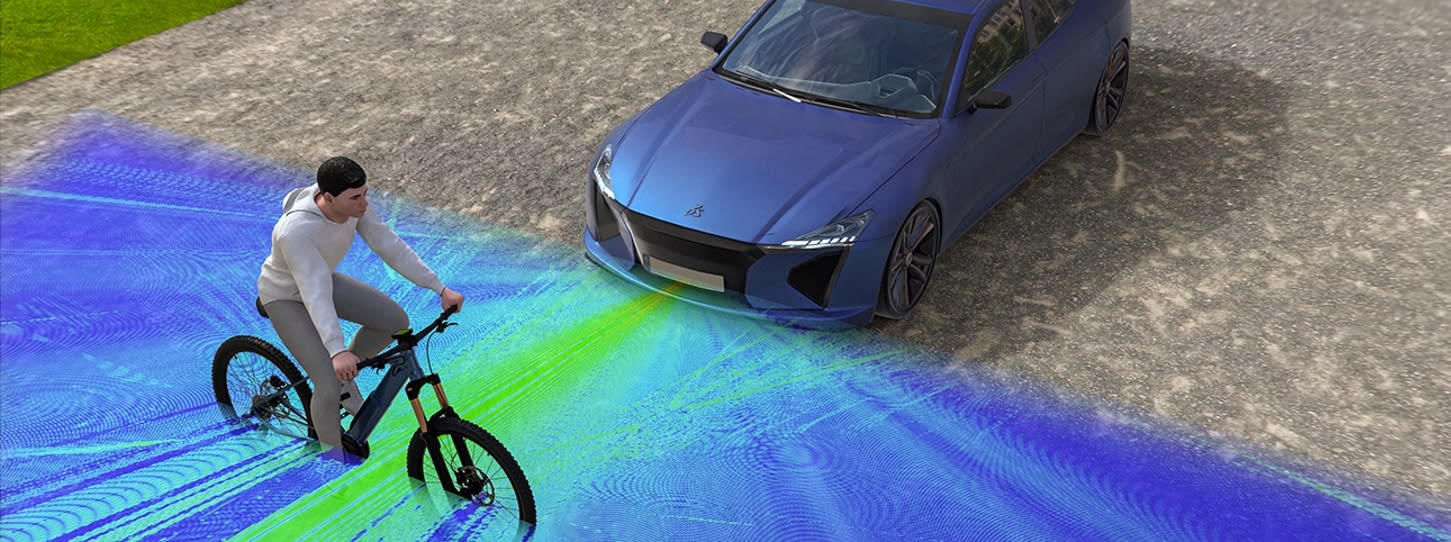
Advanced Driver Assistance Systems (ADAS) are transforming vehicle safety, acting as the bridge between conventional driving and full autonomy. From adaptive cruise control to emergency braking and blind-spot detection, these technologies rely on a dense network of radar sensors, antennas, electronic control units and software. What unites them is the need for precise functionality under complex real-world situations. Achieving full reliability requires more than testing on the road; it demands a virtual approach grounded in simulation.
Simulation has become mission-critical for ADAS development. As new vehicles integrate dozens of sensors into tightly constrained spaces, even subtle design decisions can affect system performance. Radar solutions, in particular, present unique challenges, especially as vehicle surfaces grow more complex and the number of onboard systems increases.
To meet these challenges, Dassault Systèmes offers MODSIM for model-based systems engineering, integrating modeling and simulation from the very start of the design process. This methodology enables multidisciplinary teams to work together on a shared platform, using common data and synchronized models. System-level performance can be evaluated before hardware exists, drastically reducing the time, cost and risk of ADAS development.
Complex geometry, real-world accuracy
In ADAS, vehicle physical geometry is more of a functional challenge than a stylistic concern. Antennas and radar sensors perform differently depending on their mounting surfaces and surroundings. Curved body panels can alter signal paths, producing blind spots or ghost targets. Material composition around a sensor can affect electromagnetic propagation. Accurate simulation of these interactions is essential to ensuring performance.
Engineers can use full-wave 3D electromagnetic simulation of antennas and radar units, taking into account the entire vehicle assembly, to assess radiation patterns, field strength and signal interference in the context of the actual vehicle design. By simulating placement options and comparing performance metrics early in the process, teams can avoid costly late-stage redesigns.
In one project, a manufacturer identified a radar ghost target issue during virtual testing. Anomalies caused by reflections were coming from the vehicle’s grille design. Using CST Studio Suite, engineers traced the interference path and adjusted both the antenna placement and grille geometry. This change was validated in simulation before any physical prototypes were built, avoiding what could have been a costly mid-development redesign. By resolving the issue early, the team not only met safety performance targets but also preserved the planned launch schedule.
Environmental factors

ADAS performance is not shaped by electromagnetic behavior alone. Environmental conditions such as heat, moisture and dirt have significant effects. A radar sensor mounted behind a bumper, for instance, may overheat if airflow is insufficient or fail to function properly if soiled by mud or rain. One way to address these issues is through multiphysics simulation, combining electromagnetic, thermal and fluid analysis in a unified model.
For example, simulating weather exposure and soiling can be done to optimize sensor placement and housing design. Engineers can also evaluate thermal conditions under various driving scenarios to ensure radar units remain within safe operating ranges. The ability to test these interactions virtually allows for more robust ADAS performance under real-world conditions.
With so many technical domains required for ADAS design (structural, electrical, software, thermal, electromagnetic), collaboration is essential. Teams need to share models, trace requirements and synchronize simulation data across the product lifecycle.
Traceability is not just a workflow convenience; it’s a safety imperative. Regulatory requirements increasingly demand clear evidence of how design decisions were made and validated. On Dassault’s 3DExperience platform, every simulation, model update and requirement link can be traced back to its source. This traceability ensures not only compliance but also clarity and accountability throughout the design process.
Global regulations for advanced safety systems are becoming more stringent. UNECE’s WP.29 guidelines now require demonstrable validation of ADAS features under diverse operating conditions, while NHTSA’s AV Test initiative encourages transparent performance data sharing. Virtual testing with MODSIM provides a way to document compliance from the earliest design stages, linking requirements directly to simulation evidence. This traceable, model-based record supports not only engineering integrity but also regulatory audits, helping automakers navigate evolving legal frameworks without slowing innovation.
Radar-centric challenges
Radar is arguably the most powerful ADAS component. It is also the most complex to simulate. Radar units detect objects based on reflections of electromagnetic waves, which can be influenced by vehicle geometry, nearby systems and environmental factors. Interference from other sensors or electronic components can produce ghost targets or distort object localization.
To address these challenges, the suite should include radar post-processing capabilities. Engineers can then visualize signal paths, identify ghost reflections and analyze key radar observables like angle of arrival, Doppler shift and range resolution. The ability to run comparative simulations between design variants is also helpful to evaluate detection reliability and false positive rates.
This radar-specific focus, combined with co-site interference analysis and electromagnetic compatibility testing, supports safety-critical decisions. Engineers can ensure that radar units provide reliable, high-resolution data in the context of the complete vehicle environment.
The next generation of ADAS is expected to integrate 4D imaging radar, which captures object height in addition to range, speed and angle. This richer data stream can enhance detection accuracy in complex environments such as dense urban traffic or heavy weather. MODSIM’s integrated approach allows engineers to incorporate these emerging sensors into full-vehicle models early, exploring how they interact with cameras, LiDAR and V2X communications. By simulating sensor fusion at the system level, developers can ensure that these advanced radars contribute effectively to the overall safety envelope.
Scaling up testing with virtual miles
Physical test drives cannot cover every conceivable scenario. Edge cases such as sudden pedestrian crossings, low-visibility weather or unusual road geometries must be simulated to validate ADAS systems thoroughly. Virtual testing enables early performance evaluation, stress testing and fail-safe analysis. By integrating radar behavior, environmental conditions and control software into virtual drive scenarios, engineers gain a comprehensive view of how ADAS systems behave in the real world.
Connected vehicles in smart cities
As ADAS evolves toward autonomy, vehicle safety depends not only on onboard sensors but also on robust connectivity. Future systems will rely on high-bandwidth links such as 6G to exchange data with infrastructure, other vehicles and the cloud. These connections can be validated by extending virtual testing from vehicle-scale to city-scale.
Using CST Studio Suite, engineers can simulate urban environments that include buildings, terrain, traffic and pedestrians. This virtual twin approach allows evaluation of coverage, interference and channel performance under realistic conditions. By analyzing metrics such as received power, signal-to-noise ratio and channel impulse response along virtual drive routes, teams can identify blind spots and optimize antenna placement before vehicles hit the road.
This combination of sensor simulation, environmental multiphysics and large-scale connectivity modeling ensures ADAS functions reliably not only in controlled test tracks, but also in the dense and dynamic environments of tomorrow’s smart cities. Embedding simulation within the design process by shifting design verification and validation to the concept stage accelerates development, reduces risk and prepares the industry for the transition from today’s assisted driving to tomorrow’s autonomous mobility.
Jan Eichler is senior industry process consultant for Dassault Systèmes SIMULIA.
More From SAE Media Group
Automotive Engineering
DSpace Launches Simphera AV Development Simulator
Autonomous Vehicle Engineering
Horiba to Expand Virtual AV Vetting with Physical-Body Testing
ADAS & Autonomous Vehicle Engineering
The Road to Zero Prototypes
Autonomous Vehicle Engineering
Steering Toward Full Vehicle Autonomy
Autonomous Vehicle Engineering
ZF Establishes Level 2+ ADAS
Autonomous Vehicle Engineering
10 Best Practices for ADAS and AV Testing
Autonomous Vehicle Engineering
Data Drives Driverless Truck Launch
Automotive Engineering
New Proving-Ground Tools Needed to Manage AV Testing
Automotive Engineering
Automated Vehicle Safety Series Addresses Design, Testing, Verification, and Validation
Aerospace & Defense Tech Briefs
Industry Invited to Participate in AeroTech Aerospace and Defense Technical Program
Off-Highway Engineering
Commercial Vehicle ADAS: Testing, Testing and More Testing
Autonomous Vehicle Engineering
GM Announces Door-To-Door Ultra Cruise ADAS
Automotive Engineering
Designing and Assessing Vehicle Safety Functions with a Use Case Approach
Aerospace & Defense Tech Briefs
Analyzing Aircraft Antenna Placement and Performance with Unified Modeling and Simulation
Off-Highway Engineering
Addressing Electromagnetic Compatibility in the Context of Aircraft Electrification
Automotive Engineering
Thermal Imaging Makes Its Case for ADAS, AVs

Autonomous Vehicle Engineering
Making the Strategic Move into AV Testing
Off-Highway Engineering
Design Tools Ensure Component Compatibility, Create Autonomous Driving Tests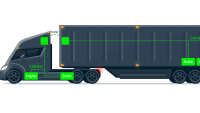
Automotive Engineering
Soft Tests for Autonomous Vehicles
Autonomous Vehicle Engineering
Complexity of Autonomous-Systems Simulation, Validation Soars to the Clouds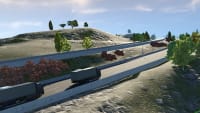
ADAS & Autonomous Vehicle Engineering
Choreographed Robotic ADAS Testing Bridges Gap Between Simulations and Real World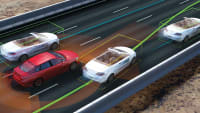

Tech Briefs
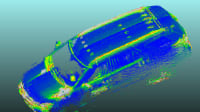
Vehicle Design with System-Level Modeling
Automotive Engineering
Expanding ADAS Roles for Radar and Cameras
Off-Highway Engineering
Cloud Simulation Assists Active-Safety Development for Electric Refuse Truck

Automotive Engineering
Porsche Engineering Turns to AI to Improve AV Simulation
Top Stories
INSIDERManufacturing & Prototyping
 How Airbus is Using w-DED to 3D Print Larger Titanium Airplane Parts
INSIDERManned Systems
 FAA to Replace Aging Network of Ground-Based Radars
NewsTransportation
 CES 2026: Bosch is Ready to Bring AI to Your (Likely ICE-powered) Vehicle
NewsSoftware
 Accelerating Down the Road to Autonomy
EditorialDesign
 DarkSky One Wants to Make the World a Darker Place
INSIDERMaterials
 Can This Self-Healing Composite Make Airplane and Spacecraft Components Last...
Webcasts
Defense
 How Sift's Unified Observability Platform Accelerates Drone Innovation
Automotive
 E/E Architecture Redefined: Building Smarter, Safer, and Scalable...
Power
 Hydrogen Engines Are Heating Up for Heavy Duty
Electronics & Computers
 Advantages of Smart Power Distribution Unit Design for Automotive...
Unmanned Systems
 Quiet, Please: NVH Improvement Opportunities in the Early Design...
