




Grease Innovation Adapts to Meet New Demands of Commercial and Off-Highway Equipment
While engine design and fuel choice often dominate conversations about performance, Chevron stresses that the role of grease is just as critical.

In the commercial and off-highway sectors, equipment reliability isn’t just a maintenance target but a business imperative. Whether it’s a long-haul truck on the interstate or a dozer working through dust and rock, these machines operate in some of the most demanding environments on Earth. And while engine design and fuel choice often dominate conversations about performance, the role of grease is just as critical, particularly as equipment is pushed harder and longer under more variable conditions.
Over the last decade, heavy-duty grease development has undergone a quiet evolution. Performance expectations have risen sharply. So have the environmental and regulatory considerations that influence formulation decisions.
As someone deeply involved in grease formulation changes, I’ve seen firsthand how grease chemistry is adapting to meet the increasingly complex needs. Let’s explore where we’ve been, where we’re going, and what matters most when selecting grease for high-stakes, high-load environments.
Grease under pressure: Today’s operating environment

Equipment doesn’t operate under a single stressor – it contends with many at once. High shock loads, wide temperature fluctuations, prolonged idling, and wet or contaminated conditions are common challenges. Standard greases may meet baseline specifications, but in these extreme environments, minimum isn’t enough.
What makes modern grease formulation so complex is the need to balance multiple performance attributes. For example, you may need a grease with high load-carrying capacity, excellent water resistance, and stability under high thermal stress in one product. Achieving this balance requires innovation in both thickener systems and additive packages.
Historically, the majority of greases relied on simple lithium or lithium complex thickeners. These systems provided acceptable performance for many years, but rising expectations and global supply disruptions have driven interest in alternatives.
Calcium sulfonate complex greases, in particular, are gaining traction to meet these demands and are quickly becoming a go-to choice in OEM specifications. These greases offer exceptional water spray-off resistance, better mechanical stability under high loads and superior corrosion protection. They also serve as a drop-in solution in environments where contamination, water ingress and shock loading are frequent.
In addition, thickeners like polyurea are seeing increased use in electric motor bearings and other niche applications due to their oxidative stability and long life. The market is becoming more diversified, and formulation strategy now begins with matching thickener performance to application conditions – not the other way around.
Testing beyond the lab: Real-world validation matters
Most grease development starts in the lab with industry-standard test methods. ASTM protocols, such as Four-Ball Weld, Timken OK Load, water spray-off and water washout, help establish baseline metrics for load-bearing capacity and resistance to environmental stressors. These are essential indicators, but they don’t always capture the full picture.
In extreme-duty applications, field validation is equally critical. Chevron has conducted grease trials at cement plants, rock quarries and other harsh industrial environments to ensure formulations perform under the conditions they’re built for.
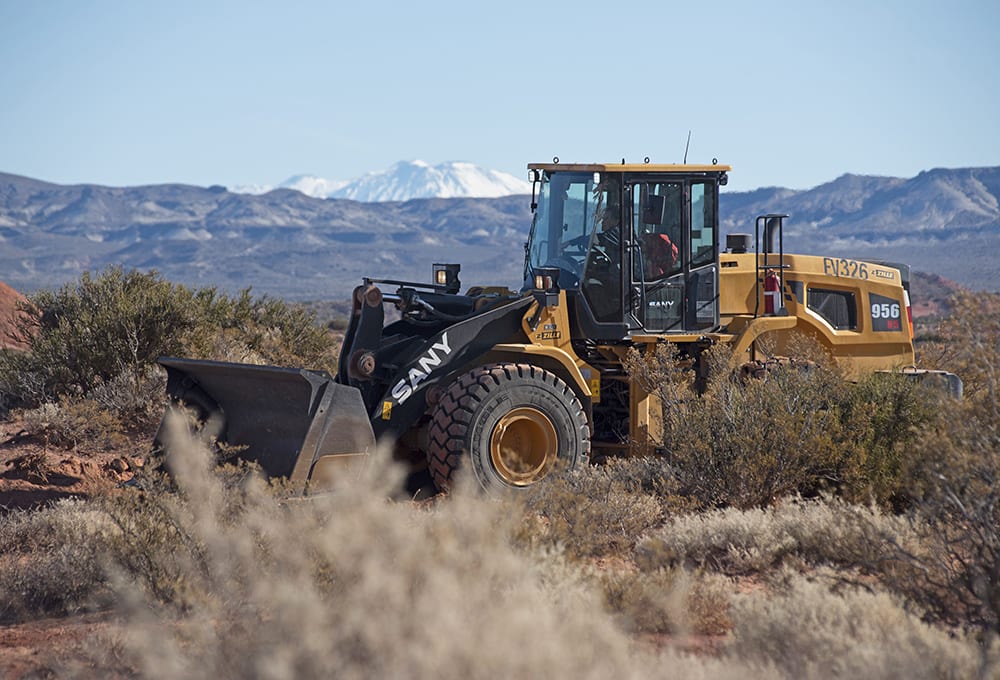
For example, in one rock quarry, a wheel loader’s bucket pins were prone to rapid wear due to water spray, shock load and airborne dust. A field trial of a calcium sulfonate-based grease with solid lubricants resulted in a 25% reduction in grease usage and extended re-lubrication intervals. This demonstrated not just theoretical but tangible improvements in cost and uptime.
Raising the bar: The rise of HPM certification
To help operators navigate the increasingly technical world of grease selection, the National Lubricating Grease Institute (NLGI) introduced the High-Performance Multiuse (HPM) certification. This standard goes beyond the legacy GC-LB classification by incorporating additional performance criteria and optional sub-categories for high-load, water resistance and low-temperature service.
Importantly, HPM-certified greases are subject to third-party audits and annual requalification, ensuring long-term quality and consistency. For fleet operators, this is a helpful benchmark when evaluating new products.
But it’s not enough to have the right grease on the shelf. Teams also need the knowledge to apply it correctly. Organizations like NLGI, NORIA and STLE offer valuable training programs that can elevate maintenance practices and reduce the risk of equipment failure.
Navigating formulation in a changing regulatory climate
Another force shaping grease innovation is regulation. Several traditional additives, once mainstays of extreme pressure and anti-wear performance, are being phased out. This has spurred the development of new additive technologies that meet performance goals without introducing regulatory liabilities.

Simultaneously, industry-wide sustainability targets are prompting manufacturers to develop greases with longer life cycles, improved biodegradability or lower consumption rates. A high-performance grease that extends re-lubrication intervals not only reduces maintenance labor but also generates less waste and fewer disposal challenges. In this way, grease formulation contributes directly to ESG objectives.
Avoiding common pitfalls in grease selection
Despite its importance, grease is often treated as an interchangeable commodity. Here are a few misconceptions and myths we’d like to debunk:
- “All greases are the same.” Grease formulation is complex. Two products with the same NLGI grade can perform very differently in real-world use.
- “Color tells the story.” Red doesn’t mean high-temp. Green doesn’t mean eco-friendly. Color or appearance is no substitute for technical data and doesn’t reflect grease quality.
- “One grease can do it all.” Consolidating to a single grease may simplify procurement, but it often leads to compromises in protection, performance and equipment longevity.
- “All greases are compatible with each other.” One particularly overlooked area is compatibility during grease changeovers. If a previous product isn’t fully purged or is incompatible with a new formulation, problems such as blocked lines or bearing failures can occur. Selecting greases with broader compatibility tolerances or ensuring a thorough purge is a crucial step during any transition.
The most successful operations I’ve worked with start by consulting OEM manuals, reviewing key technical data points – such as load ratings, washout resistance and thickener compatibility – and engaging their lubricant supplier for application-specific recommendations.
Looking ahead: The strategic role of grease
Our world is changing: electrification, automation and 24/7 demand are changing the way we operate trucks and off-highway equipment. As machines become more capable, their maintenance needs become more specific – and grease must keep pace.
Formulations that were considered cutting-edge a decade ago may no longer be sufficient. Meanwhile, new materials and additive packages are unlocking performance levels once thought impossible.
The opportunity for innovation is significant, but so is the responsibility. Choosing the right grease is no longer just a maintenance decision; it’s a strategic one that affects uptime and the total cost of ownership.
Anoop Kumar, senior staff scientist, Chevron , wrote this article for SAE Media.
More From SAE Media Group
Automotive Engineering
‘Retuning’ Lubricants for EV Duty
Aerospace & Defense Tech Briefs
Cold Sprayed Coatings with Dual Nanoparticle Reinforcements for Wear and Corrosion Protection

Tech Briefs
Wear-Resistant Platinum Gold Alloy
Automotive Engineering
Conveyor Coating System

Medical Design Briefs
The Power of the Plasma Pen
Medical Design Briefs
The Use of Parylene-Coated Mandrels in the Balloon Catheter Manufacturing Process
Tech Briefs
Painting 3D-Printed Objects
Aerospace Manufacturing and Machining
Aerospace Work Platforms — More than Meets the Eye
Motion Design
Avoiding Electrical Damage with Conductive Lubrication

Aerospace & Defense Tech Briefs
Aircraft Maintenance Technicians Seek Simplified, Portable, Fast Aviation Eddy Current Testing

Aerospace & Defense Tech Briefs
Beyond Boundaries: Elevating Aerospace Design with Fluorosilicones
Aerospace & Defense Tech Briefs
Testing Military-Grade Adhesive in Extreme Loading Conditions
Off-Highway Engineering
Wear-Resistant Pumps
NASA Spinoff
3D Printed Engines Propel Next Industrial Revolution
Battery & Electrification Technology
New Products
Off-Highway Engineering
Bringing Intelligence into Fluid Power Systems
Aerospace Manufacturing and Fabrication
New Products & Services
Automotive Engineering
Accelerating Materials Development with Quantum Computing


Aerospace Manufacturing and Machining INSIDER
Can This Self-Healing Composite Make Airplane and Spacecraft Components Last for Centuries?
Motion Design
Linear Bearings: What You Need to Know


Top Stories
NewsRF & Microwave Electronics
 Microvision Aquires Luminar, Plans Relationship Restoration, Multi-industry Push
INSIDERAerospace
 A Next Generation Helmet System for Navy Pilots
INSIDERDesign
 New Raytheon and Lockheed Martin Agreements Expand Missile Defense Production
INSIDERMaterials
 How Airbus is Using w-DED to 3D Print Larger Titanium Airplane Parts
NewsPower
 Ford Announces 48-Volt Architecture for Future Electric Truck
ArticlesAR/AI

Webcasts
Electronics & Computers
 Cooling a New Generation of Aerospace and Defense Embedded...
Automotive
 Battery Abuse Testing: Pushing to Failure
Power
 A FREE Two-Day Event Dedicated to Connected Mobility
Unmanned Systems
 Quiet, Please: NVH Improvement Opportunities in the Early Design Cycle
Automotive
 Advantages of Smart Power Distribution Unit Design for Automotive &...
Energy
 Sesame Solar's Nanogrid Tech Promises Major Gains in Drone Endurance