




Workhorse’s W56 Is the People’s Champ of Electrified Work Vans
Workhorse’s electric step van wasn’t designed to revolutionize the EV market, but it’s guaranteed to put in an honest day’s work before running back to the barn.
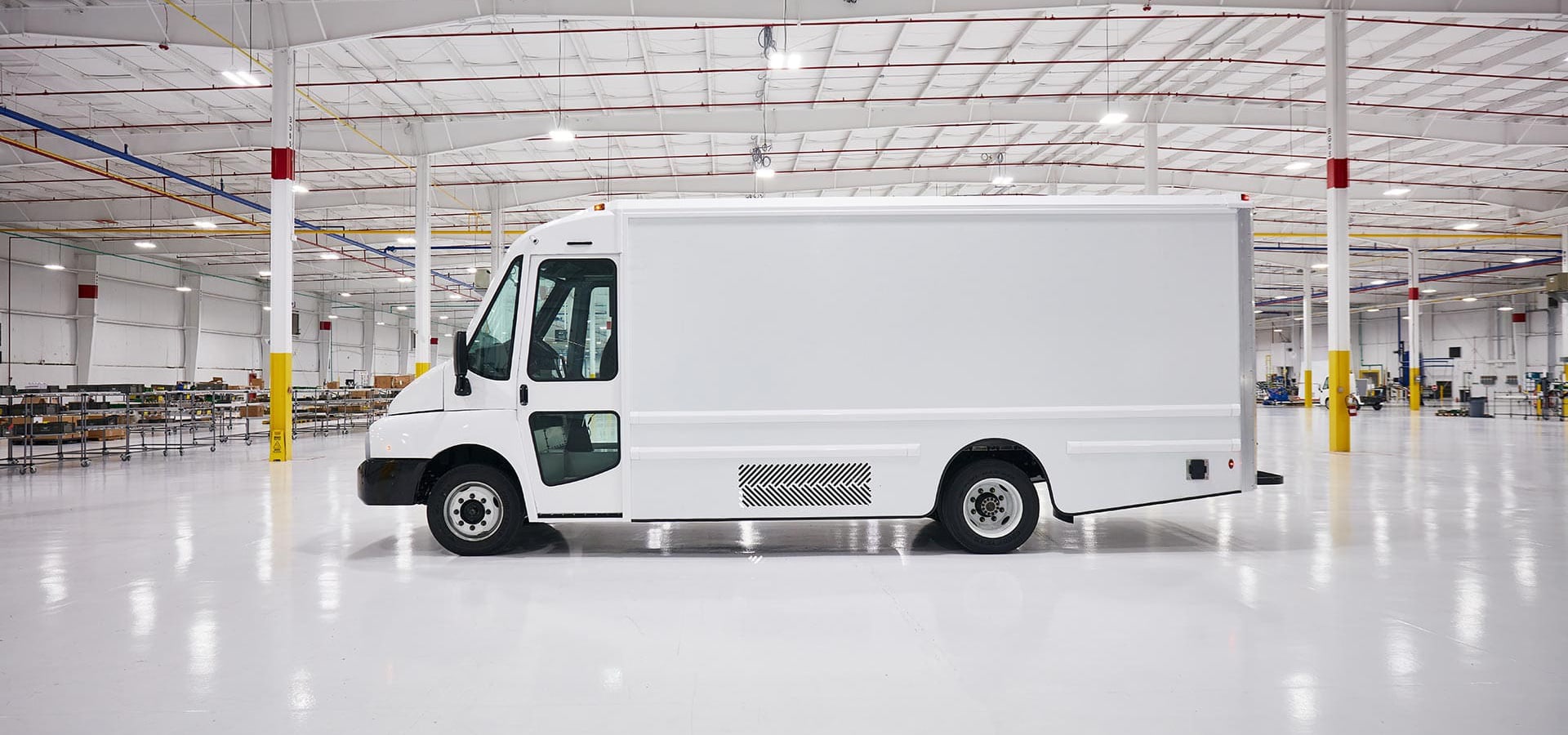
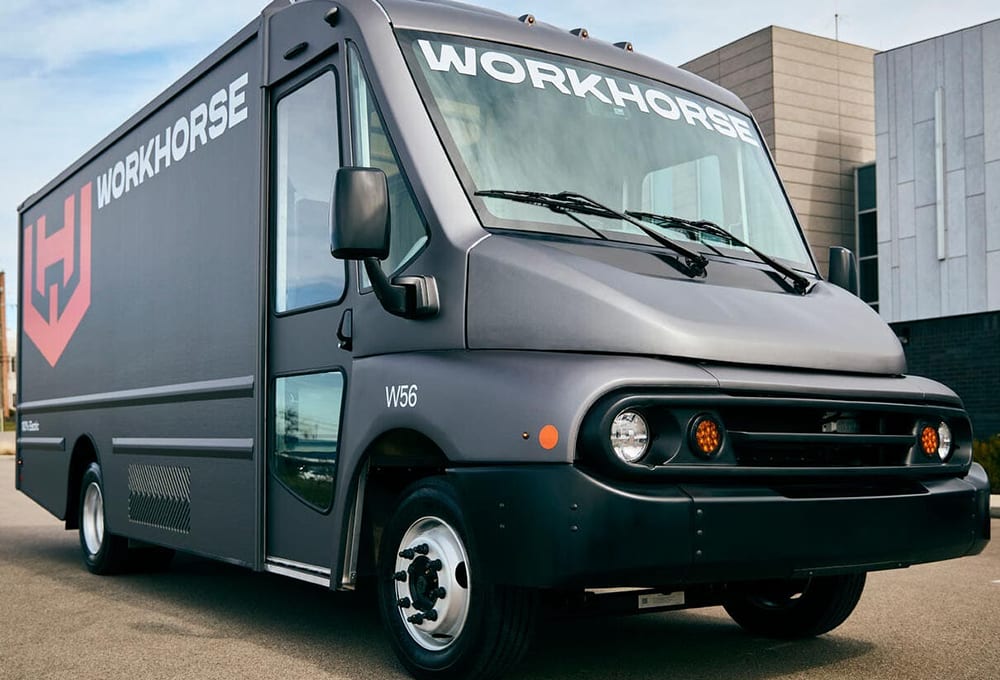
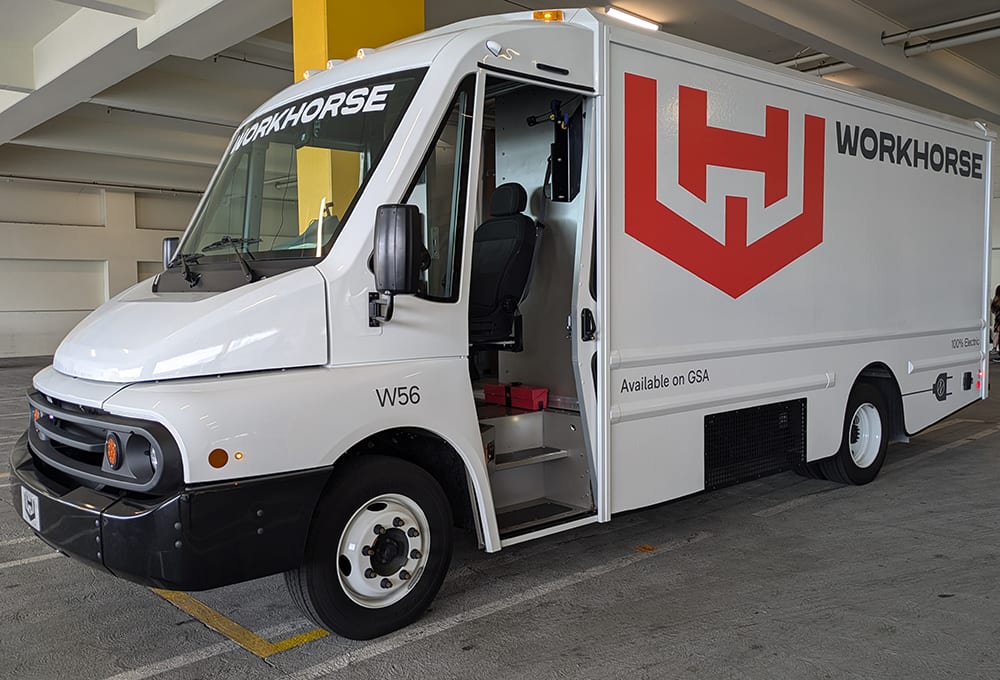
ACT Expo 2025 had a fleet of new commercial-vehicle launches as well as displays for models already on the market. One such existing chassis was the Workhorse W56, an electric step van designed for Class 5/6 last-mile delivery.
Unlike many of its competitors, Workhorse did not set out to be a technological leader with the W56. Rather, the company took the approach of leveraging the best of the currently available and applicable technologies to produce a durable, reliable and producible product that just happened to be powered by electrons.
SAE Media sat down at ACT Expo with Workhorse CTO Josh Anderson and Max Lupfer, engineering program manager for Workhorse, and discussed why they believe their grounded approach to developing the W56 was the best pathway to producing a product worthy of the Workhorse name.
What were the guiding engineering and design goals that Workhorse used to develop this platform?
JA: Workhorse has traditionally been a technology-focused company that had brought a lot of EV tech concepts to market. But in 2021, the company was revamped to focus on being an OEM-level producer of trucks. The mandate was not to develop a ‘next generation’ advanced concept vehicle. Our motivation and direction were to develop a production-ready, competent and reliable truck that could enter the marketplace with minimal delays, minimum risk and maximum versatility.
We were able to look at the addressable market from Class 3 to Class 6 and pick our target. Since we were launching on an accelerated timeframe with a product that was already proven in the marketplace, it didn’t take us long to zero in on the Class 5 and Class 6 step-van market that Workhorse has had a presence in since the 1940s. So that made the initial design definition fairly easy and something that we could benchmark against a few competitors.
Although we hadn’t really produced step vans since about 2017, we had a library of previous designs for gas and diesel trucks. We were unique in the position among EV startups in that we had a fully validated model to start from. We drew the first part in CAD because we could leverage the older step-van designs and run all of our analysis based around that before we ever actually designed a part of the new truck.
What were some unexpected speed bumps along the way to bringing this van to market?
JA: Because the technology is relatively new, when people think about an electric truck the focus always goes to questions like ‘what’s the battery technology? How is the electrical architecture going to roll out? Where are we going to have issues with controls and the things that people are less familiar with?’
Some of the most interesting things that we ran across were more mechanical in nature. For example, it looks just like a regular truck, but the weight and balance vastly different. For over half a century, step vans have been designed with a drive setup that has a long drive shaft through the middle, the engine in the front and the axle on the back with a lot of inherent twist in the frame.
If we’re repackaging, we have to revisit the structural fundamentals of the ladder frame and say, ‘Hey, is this still going to work? Or do we need to do things differently?’
Where did that lead you during the van’s development in terms of broad goals?
JA: We had a mandate for this project that it was going to be a new truck that just happened to be electric. When I give talks on safety, reliability and quality, nowhere in those three do you hear buzzwords like ‘next gen tech’ or ‘more advanced’. What we do talk about are those pillars of safety, reliability, quality and finding a way to bring that to the market in a relatively short amount of time.
Following a traditional automotive development process allowed us to have a different perspective than a lot of startups do. We basically concluded that the market is not at a point where the volumes demand vertical integration. We can’t be an expert in everything, and we certainly don’t have a big enough team. So, what can we do? We can leverage the supply base and be the best-in-class in terms of using commercial off-the-shelf components, whether it’s axles, batteries, suspension or steering.
We didn’t set out to be an expert in e-axles or batteries. Our strengths were in chassis development, ladder-frame development, integration and the other aspects of the business outside of the product, which is production-quality supply chain, aftermarket service and warranty support.
One of the concerns potential customers have with these new technologies is dealer and parts support. By taking the best currently available technology and practices to validate and build a vehicle, do you feel that gives Workhorse a competitive advantage in the marketplace?
JA: Absolutely. If you think about it, generating the product is very similar to a systems-level approach. We’ve done that with the entire organization at a slightly bigger scale and part of doing that was to integrate all those complementary teams for different portions of running a business in the product development process. The supply chain was involved from the beginning.

Before we had picked out the components we were using, the service team was in every design review to talk about how they could access parts and really, we’ve set the entire business up that way. We’re working together in in a startup that is focused on technology-driven development.
What were the later stages of developing the chassis like once you were through the initial design phase?
JA: We had some unfamiliar territory to cover like how you deal with electrical cabling and how do you verify electrical cabling before you energize the system. There was a lot of attention spent on the commissioning process. But I think one of the key things we did is that we never built any concepts. We did 100 percent of the release design in CAD, and then we had the manufacturing facility on board for all the different complementary parts of the business work.
Then we had the production team, which had been getting the facility ready to build the first fleet of pilot vehicles rather than in our engineering center. We felt this was a better methodology than pushing the design over the wall and hoping manufacturing can take over. The line today looks completely different than it did on chassis one, but that’s driven by the experience of every engineer being in the factory with their responsible parts alongside the people assembling that from the get-go.
We got to develop the manufacturing process, the station, workflow and everything else right alongside the product development. So we were able to say, ‘This isn’t going to work. Oh, you can’t put this battery in until you’ve put this piece in. Oh, this cross member is going to get in the way.’
What were some other details of optimizing the production side?
JA: Our production line can build two dash assemblies simultaneously because that’s how quickly we can move the chassis down the line. We also added layout boards for harnesses so that we could prep the harnesses instead of just taking them out of the box. Being able to lay them out ahead of time so they can easily install them onto the chassis was a big help.

We also have a cable tray set up inside the frame rails so all the cables can be pre-populated onto that tray, routed correctly and then the whole tray can be brought over onto the vehicle. All our production staff have to do is bolt it in and make the connections on either end.
What challenges did you have to overcome when production versions of the vans started rolling out?
JA: So in our analytical model before we built a single van, one of the things that came to light was that ladder frames like to twist a lot. And battery packs, as you can imagine, don’t like to twist a lot. So we were able to shortcut some failures we would have seen in the field by knowing that and designing a lot of torsional rigidity into the ladder frame. It prevented us from having any component-level issues.
One of the most interesting parts of the vehicle to me is that the battery packs forward of the front axle actually have more potential for movement than the ones between the rails. There’s a lot of strength between the axles, but forward of the front axle you’ve only got a beam supported on one end. So the front of the chassis ahead of the front axle tends to walk and twist. The things mounted to the front axle see a lot more torsional force.
Some of the most interesting things that we’ve had to address in validation haven’t been powertrain related. They’ve been the stresses put on the body forward of the front axle from that movement.
What were the design considerations for ride and handling for the chassis when laden and unladen?
ML: We worked with Hendrickson quite a bit on that. We took the approach of targeting the middle ground. A fully loaded use case will be a rare event for the vehicle based on what we’ve seen for applications like parcel and linen delivery. We ended up closer to the three to five thousand pounds payload, so we took that as the main target for where we’d optimize our ride quality to allow either spectrum, both lighter and heavier, to suffer a little bit.
For the rear suspension, we have strictly leaf packs at both ends. We don’t have any sway bars. There’s enough friction to help damp a lot of the roll control that you need for the vehicle. One thing that we found during our testing is load path that was leading to fracture failures in the radius leaf.Our e-axle has a cantilevered motor off the front of the axle. Between the motor torque that we can generate under acceleration as well as during jounce events, the extra load that gets imparted into the leaf pack from that cantilevered mass. The radius leaf of the lead pack was being overstressed and we had a fracture failure during durability. So we’ve had to reprofile that radius leaf.
Typically, that leaf is cambered up to match the profile of the leaf at its static state. We actually had it profiled to be more or less flat. So during installation it actually has stress imparted into it in the negative direction to where we have to bend it up into location.
During travel, it relaxes to a lower stress state and then for high stress events, it reverses direction. We basically took the stress curve from what was a zero to a plus and we’ve changed it now to negative. Then loaded height puts it at nominal stress and then adjustability on that puts it into a positive stress.
Working in progress
As stated by Workhorse’s brain trust, the aim of the W56 was not to make a gigantic leap in EV tech for commercial applications. Rather, their end goal was to offer the best commercial chassis they could using currently available components and production practices.
To that end, their effort seems like it was a success. SAE Media had the opportunity to drive the W56 around the ACT Expo ride-and-drive loop. At parking lot speeds, the best thing we can say about it is that it felt remarkably like any other step van – which is a compliment considering that was Workhorse’s main goal with the W56.
The electrified commercial step-van space is more crowded than it’s ever been with numerous options for fleets looking to electrify. In a segment where every competitor is attempting to be exceptional, Workhorse’s approach of offering a simple but soundly engineered chassis is refreshingly honest.
More From SAE Media Group
Off-Highway Engineering
EV Startup Prepares to Enter Commercial Market with Novel EAxle
Automotive Engineering
BEV-Agnostic’ Systems Require Attention
Automotive Engineering
Active Roll Stabilization Introduced for Audi’s Large Crossovers
Automotive Engineering
Mercedes Unveils Tech-Heavy Electric G-Class
Off-Highway Engineering
Blue Arc Amps up for EV Production
Automotive Engineering
Honda Pioneering New Manufacturing Tech for Zero Electrified Platform
Off-Highway Engineering
Electrification’s Impact on Commercial-Vehicle Chassis Design
Off-Highway Engineering
Atlis EV Pickup, Platform Targets Medium-Duty Market
Off-Highway Engineering
Bollinger’s Electric Truck Enters Design Validation Phase
Autonomous Vehicle Engineering
BMW 7-Series Drives Itself Through Own Assembly
Automotive Engineering
Ford Details All-Electric F-150 Lightning
Off-Highway Engineering
Lightning EMotors Announces EChassis for Commercial EVs
Automotive Engineering
The Ford We Didn’t Know
Automotive Engineering
Lotus Breaks out with New Eletre Electric SUV
Automotive Engineering
GM and Honda to Jointly Develop Honda’s Electric Vehicles
Off-Highway Engineering
GM Defense Adapts Hummer EV for Military Concept Vehicle
Automotive Engineering
Magna Shows off Electric Offroad Powertrain, In-Cabin Tech
Off-Highway Engineering
Bollinger Expanding Planned EV Lineup with the Deliver-E Commercial Van
Automotive Engineering
All-Electric Nissan Ariya Handles Ultra-Cold Temps on Pole to Pole Trek
Automotive Engineering
Elaphe Readies In-Wheel Motors for OEM EVs After 2030
Off-Highway Engineering
Eaton and BAE Gear up a New Electrified Truck
Automotive Engineering
Hau Thai-Tang Is Engineering a New Ford
Automotive Engineering
GM’s Hummer EV Is Still like Nothing Else
Off-Highway Engineering
Next Steps Toward Battery-Electric Class 8 Trucks
Automotive Engineering
Engineering the 2022 Toyota Tundra
Automotive Engineering
2022 Toyota Tundra: V8 Out, Twin-Turbo Hybrid Takes Over
Automotive Engineering
The Haters Go After Toyota
Off-Highway Engineering
Mercedes-Benz Goes Long with EActros 600 Electric Truck
Automotive Engineering
Engineering ‘Electron Guzzlers’
Off-Highway Engineering
Lion Electric Proclaims Its Lion8 Tractor the New King of the EV Jungle
Top Stories
INSIDERDefense
 New Raytheon and Lockheed Martin Agreements Expand Missile Defense Production
NewsAutomotive
 Ford Announces 48-Volt Architecture for Future Electric Truck
INSIDERManufacturing & Prototyping
 Active Strake System Cuts Cruise Drag, Boosts Flight Efficiency
ArticlesTransportation
 Accelerating Down the Road to Autonomy
INSIDERMaterials
 How Airbus is Using w-DED to 3D Print Larger Titanium Airplane Parts
Road ReadyTransportation
Webcasts
Electronics & Computers
 Cooling a New Generation of Aerospace and Defense Embedded...
Power
 Battery Abuse Testing: Pushing to Failure
Connectivity
 A FREE Two-Day Event Dedicated to Connected Mobility
Automotive
 Quiet, Please: NVH Improvement Opportunities in the Early Design Cycle
Transportation
 Advantages of Smart Power Distribution Unit Design for Automotive &...
Aerospace
 Sesame Solar's Nanogrid Tech Promises Major Gains in Drone Endurance