




Scaling Manufacturing and Production for 'Data as a Service' Electric Drone
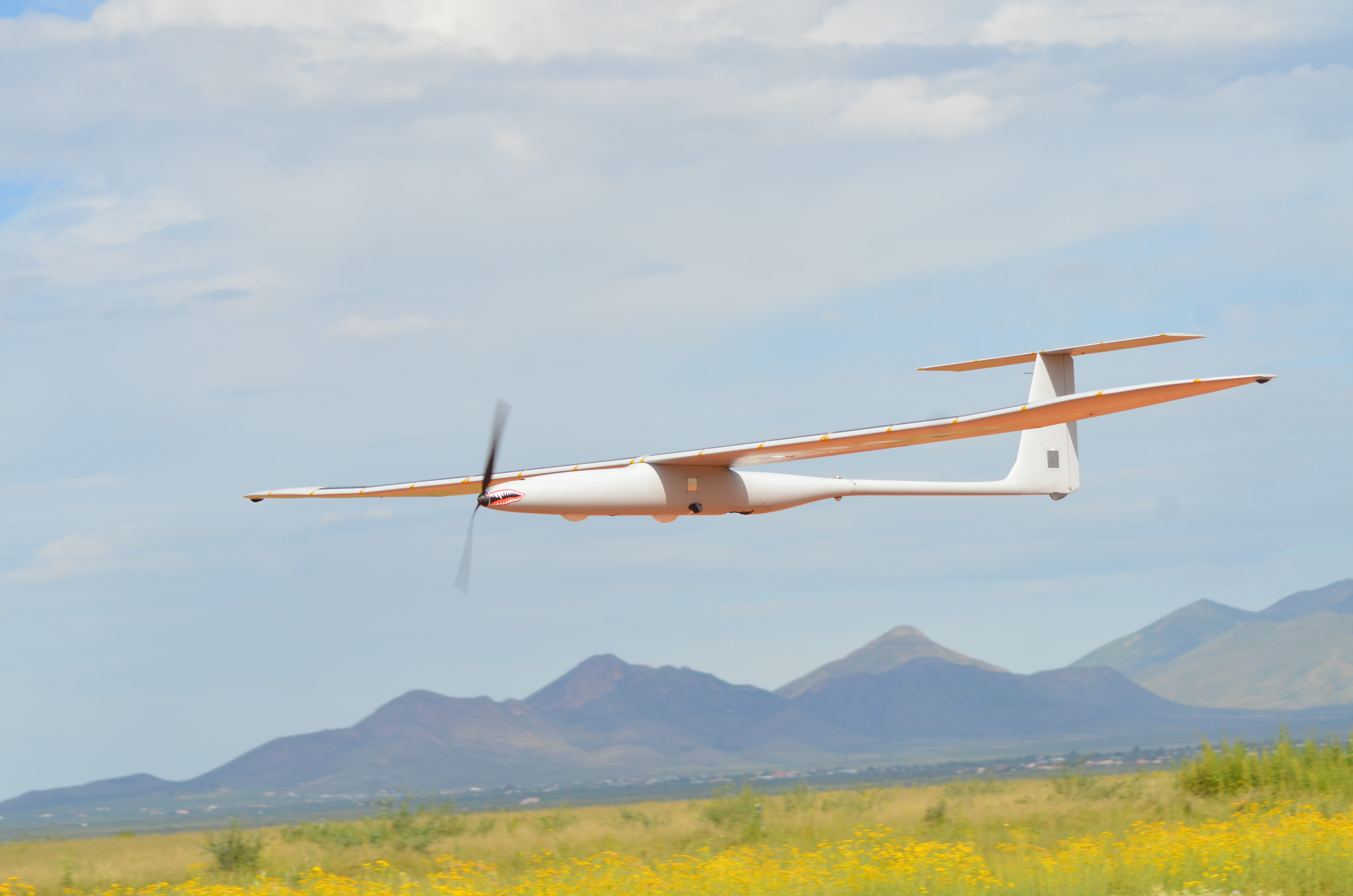
The Department of Defense (DoD) recently announced a new $20 million award to Kraus Hamdani Aerospace for its Accelerate the Procurement and Fielding of Innovative Technologies (APFIT) program. Under the contract, Kraus Hamdani, the California-based manufacturer, will use the funding to support the production of its K1000ULE unmanned aircraft system (UAS).
The K1000ULE is a solar-powered glider drone that has demonstrated the ability to fly non-stop for 26 hours, and has been evaluated by DoD for a wide variety of defense applications over the last two years.
On episode 4 of season 6 of the Aerospace & Defense Technology podcast, Fatema Hamdani, co-founder of Kraus Hamdani Aerospace, explains what the APFIT program is and how it will help the company scale production of its autonomous drone that also can be used as a flying cell tower.
Subscribe to the Aerospace & Defense Technology podcast on Apple Podcasts or Spotify .
More From SAE Media Group


Aerospace Manufacturing and Machining INSIDER
Small Low-Cost Engines for Drones and Collaborative Combat Aircraft
Tech Briefs
AUSA 2024: New Drones and Counter UAS Technology
Aerospace INSIDER
Two Startups Partner to Expand Hydrogen-Powered Drone Production
Aerospace & Defense Tech Briefs
UAV Turbines Designs Purpose-Built Microturbine Engine for Class 3 and 4 UAVs
Aerospace INSIDER
German Air Force Starts Flight Testing New Heron ISR Drone
Aerospace & Defense Tech Briefs
Explainable-AI Image Recognition Is the Next Step for U.S. Air Force Unmanned Aircraft


Aerospace & Defense Tech Briefs
Textron Systems, Textron Aviation Defense Demonstrate Simulated Manned-Unmanned Teaming Capability
Aerospace & Defense Tech Briefs
Martin UAV VTOL Unmanned Aircraft Taps Persistent Systems Wave Relay Data Link Technology
Aerospace & Defense Tech Briefs
Vertical Flight Society Applauds EVTOL Innovation, Bell Nexus UAM Concept

Aerospace INSIDER
VSR700 Unmanned Helicopter Performs Autonomous Flight Testing with DGA
Aerospace INSIDER
MQ-1C Completes First Air-Launched Effect Flight Demonstration

Automotive Engineering
Boeing Completes Autonomous Synchronized Flight Tests in Australia
NASA Spinoff
Bringing Hybrid Power to the Rescue
Aerospace INSIDER
Anduril Completes First Semi-Autonomous Flight of CCA Prototype

Aerospace & Defense Tech Briefs
MUSHER Demonstrates Manned-Unmanned Aircraft Teaming Applications

Aerospace & Defense Tech Briefs
SAE International Launches Aerospace Technology Symposium at Japan Aerospace 2018
Top Stories
INSIDERManufacturing & Prototyping
 How Airbus is Using w-DED to 3D Print Larger Titanium Airplane Parts
INSIDERManned Systems
 FAA to Replace Aging Network of Ground-Based Radars
NewsTransportation
 CES 2026: Bosch is Ready to Bring AI to Your (Likely ICE-powered) Vehicle
NewsSoftware
 Accelerating Down the Road to Autonomy
EditorialDesign
 DarkSky One Wants to Make the World a Darker Place
INSIDERMaterials
 Can This Self-Healing Composite Make Airplane and Spacecraft Components Last...
Webcasts
Defense
 How Sift's Unified Observability Platform Accelerates Drone Innovation
Automotive
 E/E Architecture Redefined: Building Smarter, Safer, and Scalable...
Power
 Hydrogen Engines Are Heating Up for Heavy Duty
Electronics & Computers
 Advantages of Smart Power Distribution Unit Design for Automotive...
Unmanned Systems
 Quiet, Please: NVH Improvement Opportunities in the Early Design...
