




Why the Hybrid Approach Extends the Range of Electric Aircraft

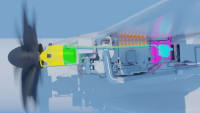
Established in 2018 by four ex-Airbus engineers who led the development of an all-electric plane but believed that batteries alone would not be enough to decarbonize aviation, Ascendance is one of France's fastest-growing startups. Ascendance is currently developing both a hybrid electric propulsion system, STERNA, and a winged hybrid electric vertical takeoff and landing (eVTOL) aircraft called ATEA.
Jean-Christophe Lambert, Ascendance Co-founder and CEO, joins the Aerospace & Defense Technology podcast to discuss why the use of a hybrid electric propulsion system could extend the range of future electric aircraft and how it provides an easier near-term path to certifying and enabling passenger-carrying eVTOL flight operations.
Check out www.eVTOLtechusa.com for details on SAE Media Group’s first eVTOL Technology USA conference happening October 28-29 in Arlington, Virginia.
Subscribe to the Aerospace & Defense Technology podcast on Apple Podcasts or Spotify .
More From SAE Media Group


Aerospace INSIDER
Sikorsky is Designing a New Hybrid Electric Tilt Wing VTOL Demonstrator

Aerospace INSIDER
Archer Achieves First Untethered Flight with Midnight eVTOL
Aerospace INSIDER
Airbus Preparing to Fly New Prototype eVTOL This Year

Aerospace INSIDER
Archer Aviation Completes Midnight eVTOL Transition Flight Milestone
Aerospace INSIDER
Embraer Subsidiary Shows First Full-Scale eVTOL Prototype
Aerospace & Defense Tech Briefs
Air Mobility Innovations Take Center Stage at Aerospace Systems and Technology Conference
Tech Briefs
The Pouch Cell Batteries Powering Joby's eVTOL
Aerospace & Defense Tech Briefs
Lilium Starts Production of eVTOL Jet Batteries
Aerospace & Defense Tech Briefs
Airbus to Fly Prototype eVTOL This Year
Aerospace INSIDER
Lilium Starts Production of eVTOL Jet Batteries
NASA Spinoff
Swinging the HAMR
Aerospace & Defense Tech Briefs
Air Racing Is Going Electric
Aerospace INSIDER
Electra Starts Proving Blown Lift eSTOL Technology
Aerospace & Defense Tech Briefs
Vertical Flight Society Applauds EVTOL Innovation, Bell Nexus UAM Concept
Aerospace INSIDER
DoD's First Electric Aircraft Charging Station is a BETA Supercharger
Aerospace & Defense Tech Briefs
Rolls-Royce to Work with Airframe Manufacturers, Seek Partners for EVTOL Project

Aerospace & Defense Tech Briefs
Personal Air Transport Drives Need for Advanced VTOL Technologies, Standards
Aerospace & Defense Tech Briefs
Hybrid Electric Aircraft Demonstrator
Tech Briefs
How Much Do You Know About eVTOLs?
Aerospace & Defense Tech Briefs
Additive Manufacturing, Composites Help Grow Global Electric Aircraft Market

Aerospace INSIDER
Safran's ENGINeUS 100 Electric Motor Earns EASA Certification
Aerospace & Defense Tech Briefs
Boeing to Leverage Aurora Acquisition for Technical Know-How
Top Stories
INSIDERDefense
 New Raytheon and Lockheed Martin Agreements Expand Missile Defense Production
NewsAutomotive
 Ford Announces 48-Volt Architecture for Future Electric Truck
INSIDERManufacturing & Prototyping
 Active Strake System Cuts Cruise Drag, Boosts Flight Efficiency
ArticlesTransportation
 Accelerating Down the Road to Autonomy
INSIDERMaterials
 How Airbus is Using w-DED to 3D Print Larger Titanium Airplane Parts
Road ReadyTransportation

Webcasts
Electronics & Computers
 Cooling a New Generation of Aerospace and Defense Embedded...
Power
 Battery Abuse Testing: Pushing to Failure
Connectivity
 A FREE Two-Day Event Dedicated to Connected Mobility
Automotive
 Quiet, Please: NVH Improvement Opportunities in the Early Design Cycle
Transportation
 Advantages of Smart Power Distribution Unit Design for Automotive &...
Aerospace
 Sesame Solar's Nanogrid Tech Promises Major Gains in Drone Endurance