




Electrify the U.S. Postal Fleet!

They’re hot in the summer and cold in the winter, their drivers complain. Their sub-10-mpg fuel efficiency and emissions profile are stuck in the 1980s. On-board fires are not uncommon due to poorly routed fluid lines. With rear-drive only, their traction in slippery road conditions is “scary,” according to U.S. Postal Service carriers who brave rain, snow and gloom of night in the Long Life Vehicle — the familiar residential mail truck that is finally nearing replacement.
It’s hard to believe that some 140,000 of these rolling boxes, based on 2wd Chevy S-10 chassis and gasoline engines, were assembled by Grumman, maker of sleek F-14 Tomcat jet fighters. But the cheap-and-crude LLV was the USPS’s baby. Launched in 1986 for a 24-year lifecycle, it was given a six-year service extension in 2009. Then six years later the USPS kicked off its Next Generation Delivery Vehicles (NGDV) program to finally develop a mail truck for the 21st century.
The multi-year contract to deliver up to 180,000 new-gen mail trucks is reportedly worth more than $6 billion.
In 2016, the Postal Service awarded prototype development contracts to six OEMs: AM General, Karsan, Mahindra, Oshkosh, Utilimaster, and VT Hackney. AM General and Oshkosh, of course, are well-versed in the gov-spec space and the latter is collaborating with Ford for this program. Turkey-based Karsan is partnering with Morgan Olsen in Michigan in the competition. Singapore-affiliated VT Hackney is working with electric van newcomer Workhorse Group. The program calls for half the prototypes to be hybrid and alt-fuel vehicles. May the best solution win.
Testing under real-world duty cycles has been ongoing for the past year. Suppliers in the running tell me they’d expected the production contract to be awarded last month. That the officially independent USPS is running late here is not surprising, given Washington politics.
The new mail trucks will be ergonomically improved. They’ll also feature active and passive safety systems and telematics for precise delivery tracking. They’ll even have heat and A/C! A portion of the fleet is expected to have 4wd for snowbelt operations. All good. But the Postal Service’s failure to mandate battery-electric propulsion for the entire residential-delivery fleet is a strategic and tactical mistake.
EV mail service nationwide is a huge mobility-leadership opportunity for the U.S. Residential mail delivery is the ideal duty cycle for a battery-electric cargo van that runs the same route daily and returns to a terminal for overnight charging. For the USPS it’s a no-brainer. The technology is now sufficiently robust for widespread fleet use.
What better way to promote the reliable, durable, quiet, clean, and low-cost operation of EVs than to have them serving us daily in our neighborhoods?
Note to USPS: Skip hybrids, except for the most remote rural routes. It’s time to bring home the mail, electrically.
More From SAE Media Group
Off-Highway Engineering
ZM Trucks Starts Production in Fontana, California
Off-Highway Engineering
Prodrive, Volta Trucks Develop Electric Truck for Urban Driving
Automotive Engineering
Welcome to the Automotive Engineering Podcast
Automotive Engineering
SAE ITC EVPKI Consortium™ Welcomes New Member Rivian

Off-Highway Engineering
Thor Lets Campers Go Further Off Grid With Electric Embark RV
Off-Highway Engineering
Workhorse Group Unveils W-15 E-REV Fleet Truck and Partners with Ryder
Automotive Engineering
Engineering ‘Electron Guzzlers’

Automotive Engineering
2026 Nissan Leaf First Drive: Fun and More Efficient
Off-Highway Engineering
Lightning EMotors Announces EChassis for Commercial EVs
Off-Highway Engineering
Volta Announces ‘Engineering Kickoff’ of Smaller Electric Trucks
Off-Highway Engineering
Freightliner’s Medium-Duty Makeover
Automotive Engineering
Ideas for Multi-Modal Mobility
Tech Briefs
EVs Are Growing Up—and Getting Practical
Automotive Engineering
CES 2021: GM Creates BrightDrop, a New Electrified Delivery and Logistics Company

Tech Briefs
Are In-Wheel Motor Systems Catching On?
Battery & Electrification Technology
Ultracapacitor Solutions to Address Energy-Storage Needs of Vehicles
Off-Highway Engineering
Truck OEMs Invested in Infrastructure
Automotive Engineering
Ford Plans to Move Self-Driving and Electric Vehicle Teams to Detroit
Off-Highway Engineering
Oshkosh Defense Selected to Assemble Next-Gen Mail Trucks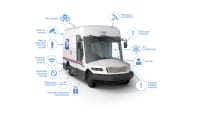
Off-Highway Engineering
Bollinger’s Electric Truck Enters Design Validation Phase
Automotive Engineering
Time with the Teardown Titan
Off-Highway Engineering
REE Unveils P7-C Chassis Cab at ACT Expo
Automotive Engineering
2026 Toyota RAV4 Review: All Hybrid, All the Time
Automotive Engineering
Ford EV Engineers ‘Always On’ for Customer Feedback
Off-Highway Engineering
eCitaro to Replace Conventional City Buses
Off-Highway Engineering
ACT Expo 2022: Production ECascadia Ready for 230 Miles of ‘Typical Range’
Power Electronics INSIDER
Highway Segment Charges Electric Vehicles
Top Stories
INSIDERManufacturing & Prototyping
 How Airbus is Using w-DED to 3D Print Larger Titanium Airplane Parts
INSIDERManned Systems
 FAA to Replace Aging Network of Ground-Based Radars
NewsTransportation
 CES 2026: Bosch is Ready to Bring AI to Your (Likely ICE-powered) Vehicle
NewsSoftware
 Accelerating Down the Road to Autonomy
EditorialDesign
 DarkSky One Wants to Make the World a Darker Place
INSIDERMaterials
 Can This Self-Healing Composite Make Airplane and Spacecraft Components Last...
Webcasts
Defense
 How Sift's Unified Observability Platform Accelerates Drone Innovation
Automotive
 E/E Architecture Redefined: Building Smarter, Safer, and Scalable...
Power
 Hydrogen Engines Are Heating Up for Heavy Duty
Electronics & Computers
 Advantages of Smart Power Distribution Unit Design for Automotive...
Unmanned Systems
 Quiet, Please: NVH Improvement Opportunities in the Early Design...
