




'Scaling' EVs Won’t Come Easy
As obstacles to EV adoption mount, maintaining a robust ICE supply base is crucial.
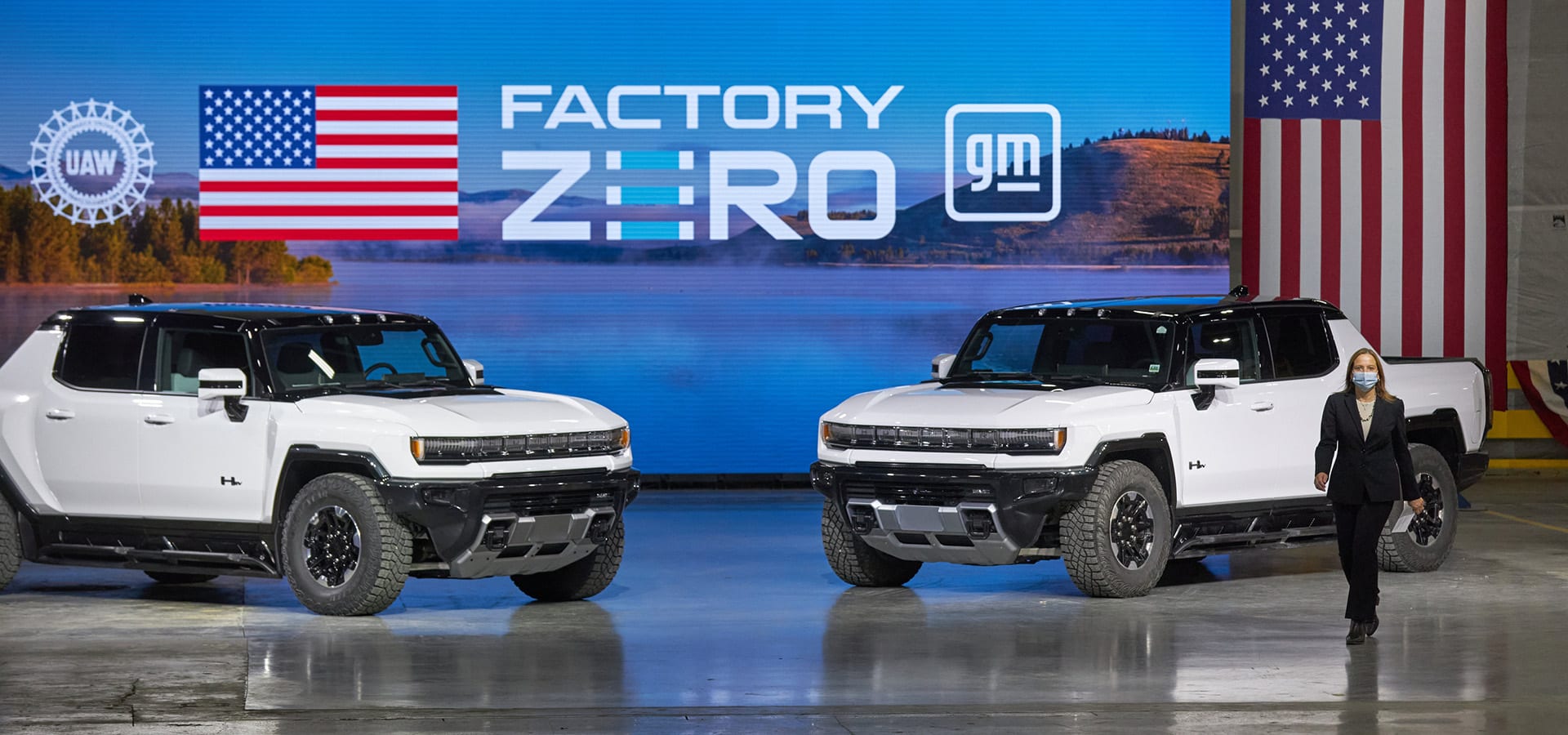
Regular readers of Supplier Eye will note that this author tries to outline the positives and the negatives of supplier strategies. It’s a moving target. A recent deluge of negative headlines with respect to EVs has OEMs, suppliers and other participants re-evaluating their strategies. Slower consumer acceptance and stalled sales of some EVs — in combination with the recent eye-popping labor agreements with the UAW and Unifor unions — underscore that return on capital and labor-cost challenges will be core considerations going forward. At no point was this transition going to be smooth — “lumpy” is a better description.

Executive Director, Consulting, S&P Global Mobility
SAE Foundation Trustee
While there are several positives with the ICE-to-EV transition (emissions, efficiency, reduction of carbon-fuel dependence and running costs), there are hurdles that cannot be dismissed. Of late, several of these concerns have become more prominent. One surrounds the ability for government and industry to effectively bridge the higher costs (due to scale economies) of EVs in an environment of higher average-vehicle cost.
Case in point: according to S&P Global Mobility, the U.S. light-vehicle average transaction price was nearly $45,000 in 2022 and continuing to rise in 2023. At this point, ATP represents 55% of the U.S. average annual income — up from 40% of income in 2016. Vehicle prices/affordability have started to reduce total market size as rising financing costs, mostly because of higher interest rates, also are part of this equation. Recent labor agreements within and outside automotive underscore that vehicle production costs will continue an upward trajectory.
Another factor: given that EVs marketed in the U.S. to this point have been “on the edges” in the performance, luxury and fullsize pickup segments, we have not yet hit the heart of the market. By 2025, more than 50% of the market is expected to be B-, C- and D-segment-sized offerings, according to S&P Global Mobility. Vehicles that are the size of a Jeep Compass or Ford Edge are core to EV penetration for the future. Major hurdles remain to reach 40%-plus BEV penetration in North America by 2030. One needs also to remember that although fullsize pickups/SUVs have been an early destination for BEV propulsion, more than half of this 3-million-sales-plus category still will be ICE-based in 2035. Specific vocation needs, range and towing/cargo requirements will extend ICE requirements in this sector.
There has been mounting concern surrounding the state of the ICE supply base and future ICE-related component demand over the next decade. Beyond the EV hype, other factors are critical. As noted earlier, several OEMs are integrating a hybrid technical bridge to full EV
production. Understanding that scale economies, the charging infrastructure, affordability and other factors need to be solved, several OEMs are defraying risk through a variety of mitigation strategies.
Output of ICE-based models has a strong trajectory for many years, which will require a capable supply base. It can be easy for many to view EV as a treasured growth destination, though one needs to remember that in North America today, 93% of output is ICE-based. Internal-combustion structures and their associated systems will for many years continue to be the viable option for OEMs and consumers. Little question that EVs will continue to bask in the hype, but ICE components and systems, though challenged, will continue to be a critical cog in the North American automotive ecosystem.
More From SAE Media Group
Automotive Engineering
SAE Completes Next Step to Standardize Tesla-Developed EV Charging Connector
Automotive Engineering
GM and Honda to Jointly Develop Honda’s Electric Vehicles
Automotive Engineering
SAE to Standardize Tesla NACS Charging Connector
Automotive Engineering
Slate and SK Executives on Bringing the Inexpensive EV to Market
Automotive Engineering
NVH-Fighting Plastic EV Motor Mount Wins Lightweighting Award
Automotive Engineering
Automaker Coalition Plans High-Power Charging Network to Rival Tesla's
Automotive Engineering
Tariff Challenges, EV Advances at Mobility 360
Automotive Engineering
Electrification Brings Supplier Value Closer to Home
Automotive Engineering
Magna Charging Ahead on Contract EV Production
Off-Highway Engineering
Bollinger’s Electric Truck Enters Design Validation Phase
Automotive Engineering
A New Reckoning
Automotive Engineering
EV Battery Manufacturing Commitments Surge in U.S.
Automotive Engineering
A Hard Look at New Sourcing Strategies
Automotive Engineering
Making the BEV Commitment
Automotive Engineering
Managing the Evolution of the EV Charging Standard
Automotive Engineering
GM Follows Ford to Adopt Tesla EV Charging Connector, Join Supercharger Network
Automotive Engineering
New GM, LG Chem Joint Venture to Build EV Battery Plant in U.S.
Automotive Engineering
VinFast Brings New EVs, Assembly Plans to U.S.
Autonomous Vehicle Engineering
Chevy Tweaks 2020 Bolt’s Battery Chemistry to Add Range
Aerospace & Defense Tech Briefs
Industry Invited to Participate in AeroTech Aerospace and Defense Technical Program
Automotive Engineering
BEV – a New Business Model
Automotive Engineering
For Aptiv, More EVs Mean More Profit with SVA
Automotive Engineering
EV Confidence
Automotive Engineering
The Lesson of J3400: Move Fast and Fix Things
Off-Highway Engineering
Truck OEMs Invested in Infrastructure
Automotive Engineering
Electric-Vehicle Legislation in California – Third Time the Charm?
Automotive Engineering
Looking Ahead to 2026
Automotive Engineering
Hau Thai-Tang Is Engineering a New Ford
Automotive Engineering
Suppliers Face the Electrified Future
Automotive Engineering
CES: VinFast Previews Wild Concept Truck
Top Stories
NewsRF & Microwave Electronics
 Microvision Aquires Luminar, Plans Relationship Restoration, Multi-industry Push
INSIDERAerospace
 A Next Generation Helmet System for Navy Pilots
INSIDERDesign
 New Raytheon and Lockheed Martin Agreements Expand Missile Defense Production
INSIDERMaterials
 How Airbus is Using w-DED to 3D Print Larger Titanium Airplane Parts
NewsPower
 Ford Announces 48-Volt Architecture for Future Electric Truck
ArticlesAR/AI

Webcasts
Electronics & Computers
 Cooling a New Generation of Aerospace and Defense Embedded...
Automotive
 Battery Abuse Testing: Pushing to Failure
Power
 A FREE Two-Day Event Dedicated to Connected Mobility
Unmanned Systems
 Quiet, Please: NVH Improvement Opportunities in the Early Design Cycle
Automotive
 Advantages of Smart Power Distribution Unit Design for Automotive &...
Energy
 Sesame Solar's Nanogrid Tech Promises Major Gains in Drone Endurance