




Army Launches M1E3 Tank Development, Cancels M1 Abrams Upgrade Program
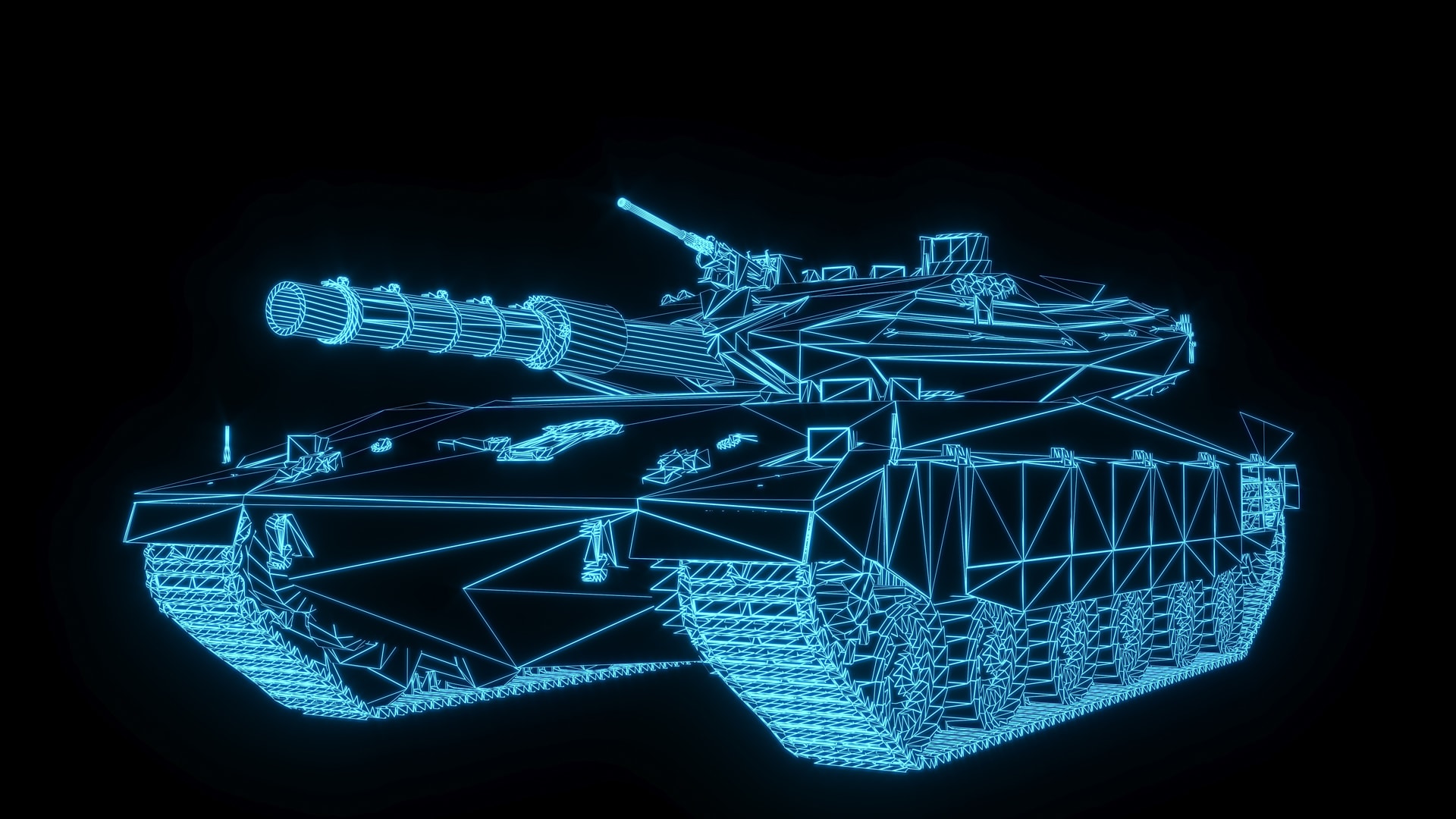
U.S. Army officials are cancelling their current upgrade plans for the M1 Abrams main battle tank in favor of a more significant modernization effort, the service announced last week. The Army will end the M1A2 System Enhancement Package version 4 program and develop the M1E3 Abrams instead, according to a Sept. 6 announcement.
The Abrams Main Battle Tank is a full-tracked, low-profile, land-combat assault weapon that enables soldiers to dominate their adversaries through lethal firepower, unparalleled survivability and agile maneuvering. It closes with and destroys the enemy using mobility, firepower and shock effect.
In its announcement, the Army said the decision was driven by years of testing, soldier feedback and "maturing technology." General Dynamics Land Systems is the prime contractor for the Abrams tank.
“The Abrams Tank can no longer grow its capabilities without adding weight, and we need to reduce its logistical footprint," said Maj. Gen. Glenn Dean, Program Executive Officer for Ground Combat Systems. “The war in Ukraine has highlighted a critical need for integrated protections for Soldiers, built from within instead of adding on.”
The development of the M1E3 Abrams will include the best features of the M1A2 SEPv4 and will comply with the latest modular open systems architecture standards, allowing quicker technology upgrades and requiring fewer resources. This will enable the Army and its commercial partners to design a more survivable, lighter tank that will be more effective on the battlefield at initial fielding, and easier to upgrade in the future.
The modernization will enhance the efficacy and maneuverability of armored brigade combat teams in conflicts across the globe through a reduced sustainment footprint and increased operational and tactical mobility, according to the Army.
The Army will continue to produce the M1A2 SEPv3 at a reduced rate until production transitions to the M1E3 Abrams, and the Army will carry technologies forward into the SEPv4 Abrams modernization effort. As longer-range threats increase in both lethality and survivability, the M1E3 Abrams will be able to defeat those threats, according to the Army.
“The M1E3 Abrams nomenclature is a return to the Army’s standard use of its type classification and nomenclature system for our combat vehicle fleet,” said Dean. “The ‘E’ designation represents an engineering change to an existing platform that is more significant than a minor modification and serves to designate the prototype and development configuration until the vehicle is formally type classified and receives an ‘A’ designation. This is distinct from the ‘XM’ designation used for new prototype systems.”
Initial operational capability for the M1E3 Abrams is anticipated to occur in early the 2030s.
More From SAE Media Group
Aerospace Manufacturing and Machining INSIDER
Army Unveils New Prototype M1E3 Abrams Tank
Aerospace Manufacturing and Machining INSIDER
Marines Receive First Combat and Control Variant of Amphibious Combat Vehicle
Aerospace & Defense Tech Briefs
Armored Multi-Purpose Vehicle Rapid Capability Kit Upgrades
Aerospace & Defense Tech Briefs
Modernized M88 Recovery Vehicle Variant Aims to Eliminate Gaps

Aerospace INSIDER
Army Starts Testing Prototype Modular Turreted Mortar System
Aerospace & Defense Tech Briefs
Electric Hybrid Propulsion System
Aerospace Manufacturing and Machining INSIDER
Army to Advance Prototype Competition for Future Electric Light Reconnaissance Vehicle
Aerospace & Defense Tech Briefs
Battle Tank Protection Systems Outfit Four Brigades of Army Tanks

Defense INSIDER
Army Tests Newest 120mm Abrams Main Battle Tank Round

Defense INSIDER
Marines Select Prototypes for Light Armored Vehicle Replacement
Defense INSIDER
Army Developing Next Generation Combat Vehicles
Aerospace & Defense Tech Briefs
Battle Tank Active Protection Systems
Defense INSIDER
Four New Military Ground Vehicles Unveiled at DSEI 2025
Defense INSIDER
AUSA 2023: Are Robotics the Future of Army Combat Vehicles?
Aerospace & Defense Tech Briefs
M1 Abrams Tank Engine Updates
Aerospace & Defense Tech Briefs
Armor Kits for Heavy Trucks
Defense INSIDER
Army Green Lights Infantry Squad Vehicle Upgrade Production

Aerospace & Defense Tech Briefs
Amphibious Combat Vehicle
Defense INSIDER
Anduril Becomes Third US Supplier of Solid Rocket Motors
Aerospace Manufacturing and Machining INSIDER
Army Seeks to Expand 3D Printing to the Tactical Edge
Defense INSIDER
Two of the Army's Lead Technology Researchers Retire
Aerospace & Defense Tech Briefs
Thailand Army Vehicle Computer System Upgrades
Defense INSIDER
Anniston Army Depot Aids Artillery Modernization Efforts
Aerospace Manufacturing and Machining INSIDER
Army Launches $50 Million Advanced Manufacturing Initiative for Aviation and Weapon Systems
Top Stories
INSIDERRF & Microwave Electronics
 FAA to Replace Aging Network of Ground-Based Radars
NewsManufacturing & Prototyping
 Rewriting the Engineer’s Playbook: What OEMs Must Do to Spin the AI Flywheel
Road ReadyTransportation
 2026 Toyota RAV4 Review: All Hybrid, All the Time
NewsDesign
 CES 2026: Bosch is Ready to Bring AI to Your (Likely ICE-powered) Vehicle
INSIDERManned Systems
 F-22 Pilot Controls Drone With Tablet
EditorialLighting Technology

Webcasts
Energy
 Powering America’s EV Future: Connect, Collaborate, Innovate
Power
 E/E Architecture Redefined: Building Smarter, Safer, and Scalable...
Power
 Hydrogen Engines Are Heating Up for Heavy Duty
Electronics & Computers
 Advantages of Smart Power Distribution Unit Design for Automotive...
Transportation
 Quiet, Please: NVH Improvement Opportunities in the Early Design...
