




Marines Select Prototypes for Light Armored Vehicle Replacement

The U.S. Marine Corps has selected two companies to design prototype Advanced Reconnaissance Vehicle 30mm Autocannon (ARV-30) vehicles. Under a new two-year award, General Dynamic Land Systems and Textron Systems will develop competing prototype ARV-30s, the mobile reconnaissance vehicle that will replace the Marines' Light Armored Vehicle (LAV).
The LAVs currently operated by the Marines first entered into service in 1983 to support Air-Ground Task Force missions and has a service life that is projected to expire by the mid-2030s, according to a Congressional Research Service overview of the program published last year. Throughout 2023, the Marines began evaluating three prototypes from Textron, General Dynamics and BAE Systems, focusing on the ability of the vehicles other than navigate mission-representative terrain, in addition to its C4 and UAS capabilities.
In the development of the ARV-30, the Marines are searching for an LAV replacement that is networked, lethal, providing sensors and lethality options to "counter threats traditionally addressed with more heavily armored systems." The vehicle will be equipped with automatic 30mm medium-caliber cannon, anti-armor capability, modern command-and-control systems, and a full range of advanced sensors. ARV-30 will also be smaller and lighter than the BAE-supplied Amphibious Combat Vehicle (ACV).
According to an update on the ARV program released by General Dynamics in January, the Marine Corps directed tests of their existing ARV prototype vehicle in 2023 that included "Command, Control, Communications and Computer/Uncrewed Aerial Systems (C4/UAS); land and water mobility; and blast and kinetic tests, as well as cyber and electromagnetic interference (EMI) assessments." Some of the "closely monitored" testing included ocean swim mobility and surf zone transition of littoral beach areas, the company notes.
The prototype General Dynamics vehicle that the Marines tested last year features the company's "Next Generation Electronic Architecture," that enables artificial intelligence (AI) and control of robotic systems.
An update on their respective ARV prototype vehicle recently released by Textron Systems notes that the company received an amendment in January to upgrade the command, control, communications and computers (C4) and automotive systems of the ARV, by increasing requirements maturity and improving overall vehicle system performance through enhanced reliability. The amendment includes a requirement for improved battle software that will help refine the overall ARV-30 program requirements.
"The ARV-30 aims to combine the turret and weapon system found on the ACV-30,” Steve Myers, Marine Corps Program Manager, Light Armored Vehicles, said in a press release. “Ensuring commonality is crucial, especially for the Marine Corps' capacity to maintain weapon systems with limited fleets. The prototyping of the ARV-30 allows the Government to test and confirm the requirements before entering the Engineering and Manufacturing Development (EMD) phase.”
The Marines expect the delivery of the ARV-30 prototypes from the two companies to occur in 2025.
More From SAE Media Group
Aerospace Manufacturing and Machining INSIDER
Marines Receive First Combat and Control Variant of Amphibious Combat Vehicle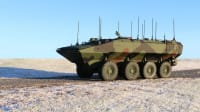
Off-Highway Engineering
BAE Systems, Iveco Awarded Contract by U.S. Marines to Deliver 30 ACVs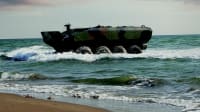
Aerospace Manufacturing and Machining INSIDER
Army Unveils New Prototype M1E3 Abrams Tank
Aerospace & Defense Tech Briefs
Amphibious Combat Vehicle C4 UAS
Aerospace & Defense Tech Briefs
Armored Multi-Purpose Vehicle Rapid Capability Kit Upgrades
Defense INSIDER
AUSA 2023: Are Robotics the Future of Army Combat Vehicles?
Aerospace & Defense Tech Briefs
Amphibious Combat Vehicle

Aerospace Manufacturing and Machining INSIDER
Army to Advance Prototype Competition for Future Electric Light Reconnaissance Vehicle

Aerospace & Defense Tech Briefs
Ruggedized Computer Rack Cases
Defense INSIDER
Four New Military Ground Vehicles Unveiled at DSEI 2025
Aerospace & Defense Tech Briefs
Modernized M88 Recovery Vehicle Variant Aims to Eliminate Gaps

Defense INSIDER
Army Receives New Robot Combat Vehicle Prototypes
Aerospace & Defense Tech Briefs
Battle Tank Protection Systems Outfit Four Brigades of Army Tanks

Defense INSIDER
Anniston Army Depot Aids Artillery Modernization Efforts
Defense INSIDER
Army Drives Ahead With Joint Light Tactical Vehicle Program
Aerospace & Defense Tech Briefs
Mobile Weapons Stations
Defense INSIDER
Mounted Troops to Get High-Tech Situational Awareness Tools
Aerospace & Defense Tech Briefs
Reconnaissance Vehicle Sensor Suite Upgrade
Aerospace & Defense Tech Briefs
Electric Hybrid Propulsion System
Aerospace Manufacturing and Machining INSIDER
A New AI-Piloted VTOL Fighter Jet for Contested Environments
Defense INSIDER
Japanese Army to Test First Unmanned Ground Vehicles
Top Stories
NewsRF & Microwave Electronics
 Microvision Aquires Luminar, Plans Relationship Restoration, Multi-industry Push
INSIDERAerospace
 A Next Generation Helmet System for Navy Pilots
INSIDERDesign
 New Raytheon and Lockheed Martin Agreements Expand Missile Defense Production
INSIDERMaterials
 How Airbus is Using w-DED to 3D Print Larger Titanium Airplane Parts
NewsPower
 Ford Announces 48-Volt Architecture for Future Electric Truck
ArticlesAR/AI

Webcasts
Aerospace
 Cooling a New Generation of Aerospace and Defense Embedded...
Automotive
 Battery Abuse Testing: Pushing to Failure
Transportation
 A FREE Two-Day Event Dedicated to Connected Mobility
Unmanned Systems
 Quiet, Please: NVH Improvement Opportunities in the Early Design Cycle
Transportation
 Advantages of Smart Power Distribution Unit Design for Automotive &...
Energy
 Sesame Solar's Nanogrid Tech Promises Major Gains in Drone Endurance