




EVs Are Coming, but Challenges, Alternative Fuels Will Slow Turnover
Regulatory attacks on petroleum are sparking heavy investments in battery power, but alternative fuels continue to spar for growth. As vehicles move slowly from diesel to alternatives, owners and operators will need to focus on training and telematics to maximize efficiency.
Battery power was front and center in Indianapolis at the Green Truck Summit in March, as speakers described infrastructure challenges and training requirements as well as equipment pricing issues. Alternative fuels remain viable as vehicle suppliers strive to meet regulations that sharply reduce emissions over the next two decades.

“By 2039, we want all our production vehicles to be carbon neutral,” Sean Waters, VP of product compliance and regulatory affairs, Daimler Trucks North America, said in the keynote speech. “That’s one year before the California mandate. The transition will take some help from government; the total cost of ownership for electrified vehicles doesn’t support going to electrics.”
Many speakers agreed that electric vehicles (EVs) need to fit specific applications, especially those where vehicles can return to bases nightly for recharging. Several also agreed that battery power is still too expensive for many applications, calling for governments to subsidize electric vehicles.

Joseph Moser of Commonwealth Edison, which supplies power for the greater Chicago area, noted that incentives remain a critical factor. “When we looked at hybrids, incentives were a big issue. If they’re not available, we do not go to hybrids,” he said.
While incentives may be needed to jump-start the market, government handouts alone can’t create a strong market. “Incentives are fine, but they’re not a long-term solution,” said Michael McDonald, senior director, sustainability and government affairs, UPS. “The cost of equipment has to come down.”
Special considerations for CVs
For commercial vehicles, the infrastructure will be an important factor for success of electric power. Bill Combs, VP of connected vehicle strategy & experimentation, Penske Transportation Solutions, stressed the need for standards that address the requirements of large trucks. The CharIn standard, which is nearing completion, focuses on Class-8 trucks. “The committees are even thinking about where charging ports should be located. With higher voltages, you need a shorter cable or it will be so thick you won’t be able to move it at 40 degrees,” he said.
Daimler’s Waters also stressed the need for chargers and charging stations that are focused on trucks. It’s not practical for semis and cars to pull into the same facility. “We also need to deal with different charging stations than passenger cars,” Waters said. “Filling up a truck will take a lot longer than a passenger car, not to mention that a 53-foot trailer will not fit in a charging station made for passenger cars.”
Waters also noted that international standards for vehicles are not harmonized, which makes it tough for manufacturers to gain the benefits of volume production. Designing different systems for different regions adds costs.
Speakers at the day-long conference noted that electric power and alternative fuels are making solid inroads, but diesel isn’t going away any time soon. Trucks have very long life-times, so many will still be on the road well into the second half of the century.
“Diesel will still be important for our society,” Waters said. “Even if our carbon goals are met by 2039, diesel tractors being sold in 2038 will be on the road a long time.”
Alt fuels won’t back down
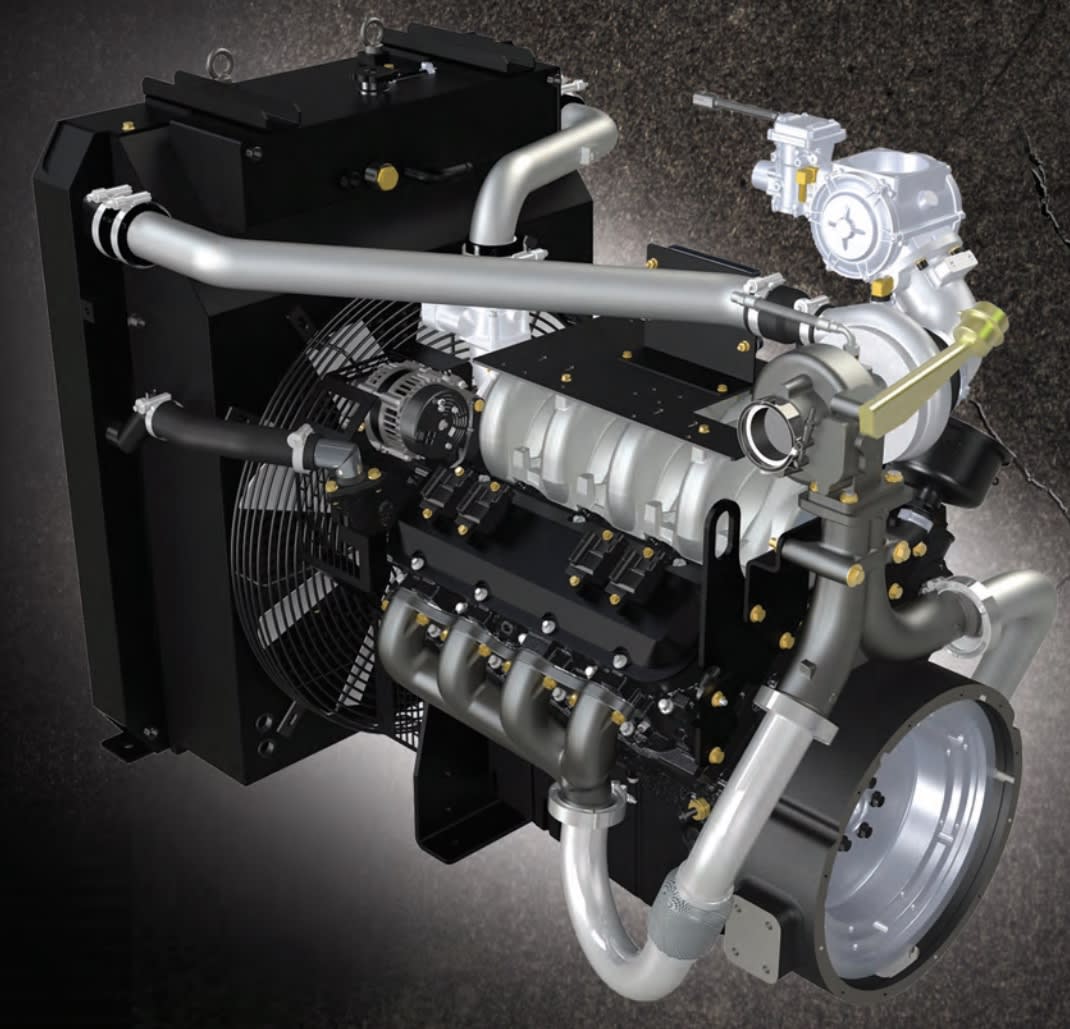
Achieving price parity won’t be easy for electrified vehicles. Conventional internal-combustion-engine technologies will continue to improve their performance, offering low cost while moving towards near zero emissions. Propane Education & Research Council president Tucker Perkins noted that while battery power systems will improve, propane-based engines will also continue their progress. New engine technologies like direct injection and higher compression will bring continued benefits for propane, which already burns far cleaner than diesel, he said.
Selecting the right fuel for each application isn’t the only way to trim fuel usage and emissions. Fleet owners and operators will need to continuously monitor activities and work closely with drivers and operators so they do everything they can to improve efficiency.
“It’s not just one thing, all the technologies create an ecosystem that can help reduce the TCO,” said Michelle Moody, marketing director, Ford Commercial Solutions. “Connectivity allows people to get the greatest benefits. Once you make the decision on which fuel to use, connectivity lets you get data on your operations.”
UPS’s McDonald noted that maintenance technicians need to be trained so high-voltage electrical systems can be repaired safely and effectively. Drivers also need to be trained so they understand how their actions improve efficiency.
“One company did aerodynamic packages and idle control, incentivizing drivers, who got a percentage of the fuel savings from reduced idling,” said Rick Sapienza, director, clean transportation program, NC Clean Energy Technology Center. “Companies that go electric need to train drivers. We had a bus company where many drivers did not make it through their shifts and needed towing. They did some training, after that they had no tow-homes.”
More From SAE Media Group
Off-Highway Engineering
Combustion Engines Carry on in Construction
Off-Highway Engineering
Hydrogen ‘Inevitable’ for Commercial Vehicles
Off-Highway Engineering
Nikola Producing Battery-Electric Trucks, Fuel-Cell EVs Coming
Off-Highway Engineering
Propane Powers Ahead for Medium Duty Sector
Off-Highway Engineering
Hexagon Agility Partners with Brudeli for Hybrid CNG Truck Powertrains
Automotive Engineering
Dealing with the BEV ‘Concavity’
Automotive Engineering
EV Confidence
Automotive Engineering
Next Steps for Fuel Cell Technology
Off-Highway Engineering
Hybrid Powertrains in the Product Mix
Automotive Engineering
Electrons, Combustion, and Bosch
Off-Highway Engineering
Blue Bird Adds Electric School Buses to Alt-Powertrain Portfolio
Automotive Engineering
Wide Collaborations Aim to Advance the Fuel-Cell Future
Automotive Engineering
For Aptiv, More EVs Mean More Profit with SVA
Automotive Engineering
Precast Concrete Bases Pave the Way for Rapid EV Charger Development
Off-Highway Engineering
Cummins and Isuzu Announce Battery-electric Truck Collaboration
Automotive Engineering
Tension and the Electric Takeover
Off-Highway Engineering
Alternative Fuels, Propulsion Poised for Growth in U.S. Fleets
Automotive Engineering
Orbis Says HaloDrive Axial-Flux Motor Available for In-Wheel, Other Uses
Automotive Engineering
Bridging the Power Gap with 48 Volts
Off-Highway Engineering
Electrify America Accelerates DC Fast-Charger Installation
Off-Highway Engineering
Electrification and the Other “E” – E-Fuels
Automotive Engineering
Engineering ‘Electron Guzzlers’
Off-Highway Engineering
Hydrogen’s Humming in Power Generation
Automotive Engineering
Mazda Pushes the Propulsion Frontier
Off-Highway Engineering
Hybrids Are Having a Moment

Off-Highway Engineering
Fuel-Cell Power for Monster Mining Trucks in GM, Komatsu Deal
Off-Highway Engineering
Hexagon Bullish on CNG for Long-Haul Trucks
Off-Highway Engineering
Volvo Charts Its Path Towards Zero Emissions
Off-Highway Engineering
Commercial Trucks Employ Range of Power Systems
Top Stories
INSIDERManufacturing & Prototyping
 How Airbus is Using w-DED to 3D Print Larger Titanium Airplane Parts
INSIDERManned Systems
 FAA to Replace Aging Network of Ground-Based Radars
NewsTransportation
 CES 2026: Bosch is Ready to Bring AI to Your (Likely ICE-powered) Vehicle
NewsSoftware
 Accelerating Down the Road to Autonomy
EditorialDesign
 DarkSky One Wants to Make the World a Darker Place
INSIDERMaterials
 Can This Self-Healing Composite Make Airplane and Spacecraft Components Last...
Webcasts
Defense
 How Sift's Unified Observability Platform Accelerates Drone Innovation
Automotive
 E/E Architecture Redefined: Building Smarter, Safer, and Scalable...
Power
 Hydrogen Engines Are Heating Up for Heavy Duty
Electronics & Computers
 Advantages of Smart Power Distribution Unit Design for Automotive...
Unmanned Systems
 Quiet, Please: NVH Improvement Opportunities in the Early Design...
