




WCX 2023: Sorting out EV Public Charging in the U.S.
The U.S.’s nascent EV charging infrastructure is a mess. Expert panelists at WCX offered ways to untangle it.

The still-teething U.S. electric vehicle charging infrastructure is wrestling with significant issues as it builds out. Spotty operability of EV public charging stands is in the industry’s crosshairs, as it is a potential barrier to mass EV adoption, agreed panelists in the ‘Energy Infrastructure and Its Impact on EV Adhesion’ leadership discussion at SAE’s WCX 2023.


“We need to make products that work,” asserted panelist Mark Bole, VP and head of V2X and battery solutions at General Motors, about the charging-stand situation.
It’s not unusual for EV drivers to encounter a non-working public EV charging station. According to a 2023 J.D. Power study, one in five charging experiences in the U.S. ends in failure. Providers of charging stations also include sellers of EVs. In addition to manufacturing the R1T pick-up truck and the R1S SUV, EV automaker Rivian engineers and produces its own DC fast chargers.
“Equally as important, we maintain our own charging networks,” said Trent Warnke, Rivian’s senior director of energy and charging solutions. Rivian’s DC fast chargers began rolling out to locales in the U.S. and Canada in 2022. “Making sure that [charging station] uptime is there is critical for driver experience and EV adoption,” Warnke said, noting the importance of Rivian’s own service technicians.
Well-trained service technicians and a full supply of charging station spare parts are key to keeping ABB’s portfolio of chargers in working order. “We’re on our fifth generation of DC fast chargers,” explained Alex Ehrett, public policy and market development director for ABB E-mobility’s western region. She noted that the company is continuously making the necessary product improvements “so that EV consumers have a positive [charging] experience.”



With more than 3,000 electric utilities in the U.S. according to the Edison Electric Institute, energy grid management activities can vary from state to state. “We’re talking with a number of utilities that want to test vehicle-to-grid (V2G) with us,” said GM’s Bole.
The key to V2G is a bi-directional charger, which can be used to charge an EV as well as discharge the vehicle’s power to the grid. Bole said that GM could begin a bi-directional charger pilot program with a few utility companies later this year.
Justin Wilson, director of utility partnerships and regulatory affairs at ChargePoint (operator of the the largest network of independent EV charging stations) believes bi-directional chargers have hurdles to overcome. “One reality is a bi-directional charger is going to be more expensive to install,” Wilson said without providing specifics.
V2G applications won’t please every EV driver. “There are use cases where V2G isn’t going to make sense,” she said. The likelihood of EV drivers wanting to feed the grid during a road trip’s charging stop is slim. “It’s really a matter of just finding the right fits for V2G and not using it as a blanket solution,” said Ehrett.
The charging infrastructure for EVs isn’t fully mature yet. “We’re 15 years old as an industry, so we can’t even drive yet,” Wilson quipped. Developing a new transportation infrastructure requires more than patience. “Let’s work together cooperatively through SAE in order to get there,” said Wilson.
More From SAE Media Group
Automotive Engineering
SAE WCX 2022: Sustainability Is a Lifecycle Mindset
Automotive Engineering
GM and Honda to Jointly Develop Honda’s Electric Vehicles
Off-Highway Engineering
Charging Infrastructure Coming – at a Cost
Off-Highway Engineering
ZF, Freudenberg Developing Integrated Fuel-Cell and E-Drive System
Off-Highway Engineering
Next Steps Toward Battery-Electric Class 8 Trucks
Off-Highway Engineering
Mega Push for Heavy-Duty EV Charging
Off-Highway Engineering
Electrify America Accelerates DC Fast-Charger Installation
Off-Highway Engineering
Bigger Barrier to CBEVs: Batteries or Infrastructure?
Off-Highway Engineering
BEV Truck Manufacturers Charge Ahead at 2022 NTEA Show
Off-Highway Engineering
Daimler Launches New EV Truck Brand for U.S. Market
Automotive Engineering
Bidirectional Charging Is Nearly Mainstream
Automotive Engineering
EV Battery Tech Must Outpace Oil Industry Advances
Off-Highway Engineering
GM Announces Hydrotec Fuel-Cell Power Generator and Rapid Charger for EVs
Automotive Engineering
The EV Tech of BMW’s Neue-Klasse IX3
Off-Highway Engineering
Brownout for Commercial-Vehicle Electrification?
Off-Highway Engineering
Battery of Issues Surrounds Large-Vehicle Electrification
Off-Highway Engineering
Funding, Mandates Fuel Commercial-Vehicle Electrification
Automotive Engineering
Slate and SK Executives on Bringing the Inexpensive EV to Market
Automotive Engineering
Architecting GM’s New EV Batteries
Automotive Engineering
Reliability Is Key to Capturing EVSE Market Share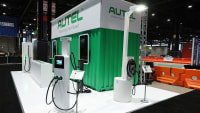
Automotive Engineering
Key ‘Plug and Charge’ Agreement Could Eliminate EV Charging-Payment Headaches
Automotive Engineering
SAE Completes Next Step to Standardize Tesla-Developed EV Charging Connector
Automotive Engineering
GM Energy Introduces Vehicle-To-Home Charging Solution
Off-Highway Engineering
Nikola Producing Battery-Electric Trucks, Fuel-Cell EVs Coming
Off-Highway Engineering
Propane Powers Ahead for Medium Duty Sector
Automotive Engineering
Ford Details All-Electric F-150 Lightning
Automotive Engineering
Hercules Readies Alpha Electric Pickup Prototypes
Off-Highway Engineering
Tesla Semi “Crushes” SuperTruck 2 in Real-World Efficiency
Automotive Engineering
Reducing the Battery Materials Supply Risk
Off-Highway Engineering
WAVE Inductive Charging Purpose-Built for Large EVs
Top Stories
NewsRF & Microwave Electronics
 Microvision Aquires Luminar, Plans Relationship Restoration, Multi-industry Push
INSIDERAerospace
 A Next Generation Helmet System for Navy Pilots
INSIDERDesign
 New Raytheon and Lockheed Martin Agreements Expand Missile Defense Production
INSIDERMaterials
 How Airbus is Using w-DED to 3D Print Larger Titanium Airplane Parts
NewsPower
 Ford Announces 48-Volt Architecture for Future Electric Truck
ArticlesAR/AI

Webcasts
Electronics & Computers
 Cooling a New Generation of Aerospace and Defense Embedded...
Automotive
 Battery Abuse Testing: Pushing to Failure
Power
 A FREE Two-Day Event Dedicated to Connected Mobility
Unmanned Systems
 Quiet, Please: NVH Improvement Opportunities in the Early Design Cycle
Automotive
 Advantages of Smart Power Distribution Unit Design for Automotive &...
Energy
 Sesame Solar's Nanogrid Tech Promises Major Gains in Drone Endurance