




Lumotive’s New LCM Underpins Next-Gen Lidar
The Lumotive microchip uses a patented metamaterial delivering ‘smart’ properties to achieve superior sensing performance.

“The future happened yesterday” is an appropriate description of the rapid pace of development in automated-driving technology. The expression may be most accurate in sensor tech where, for most OEMs (except Tesla thus far), radar and lidar increasingly are considered an essential duo for enhanced automated driving beyond SAE Level 2, and of course for full Level 4-5 automation.

Current lidar is transitioning from electro-mechanical systems to solid-state devices. Considered by industry experts to be the technology’s inevitable future, Lidar 2.0 is next-generation 3D sensing that is software-defined, solid-state and scalable. Engineers believe those capabilities will make lidar ubiquitous by reducing costs, speeding innovation and improving user experience.
But despite improvements made in the areas of cost, size, and reliability, there have been unacceptable tradeoffs in the areas of range, resolution and field of view (FoV). One lidar- enabling technology that its developers assert ticks all the boxes is an optical semiconductor from Lumotive. The company calls it a Light Control Metasurface (LCM).

At the core of the Lumotive microchip is a patented metamaterial, one with ‘smart’ properties capable of blocking, absorbing, enhancing, or bending electromagnetic waves to achieve sensing performance exceeding that of conventional materials. The Lumotive chip’s scalable, solid-state 3D sensing architecture uses patented beam-steering technology (no moving parts) to deliver a combination of best-in-class performance, cost, reliability and size, according to Dr. Sam Heidari, Lumotive CEO. And with zero mechanical inertia, Lumotive’s LCMs enable steering of light in any pattern across the entire field of view within microseconds.
“I can change my VOI (vision of interest) as I please,” Heidari told SAE Media at CES 2023. “I can define how I want to look at the world. If I want high resolution as one VOI, I can do that.” And if high frame rate as a VOI is desired, “I can do that, too. You can only do that with our technology.”
The Lumotive chip is the key component of the company’s Open Lidar API (application programming interface), a technology aimed at leading the industry towards scalable, ubiquitous and lower-cost 3D sensing based on Lidar 2.0 technology. According to Heidari, more than two
dozen companies currently are evaluating the LCM technology. It has applications beyond mobility Lidar 2.0, including communications, computation, photography and holographic displays, he added.
More From SAE Media Group
ADAS & Autonomous Vehicle Engineering
Making Sense of Next-Gen ADAS Sensing
Autonomous Vehicle Engineering
Flash! Lidar’s Next Generation Arrives
Autonomous Vehicle Engineering
Velodyne Preps for Volume Lidar
Autonomous Vehicle Engineering
New Roles for Lidar in Autonomy’s Lower Levels
Autonomous Vehicle Engineering
Sensing Enters a New Era
Autonomous Vehicle Engineering
GM Announces Door-To-Door Ultra Cruise ADAS
Tech Briefs
Compact 3D LiDAR Imaging System
Off-Highway Engineering
CES 2024: Aeva Launches 4D Lidar for SAE Level 4 Trucks
Automotive Engineering
New Osram IREDs Enhance Vehicle Vision, less Harmful to Human Eyes
Autonomous Vehicle Engineering
Lunewave Promises Low-Cost Radar with High-Performance 360-Degree View
ADAS & Autonomous Vehicle Engineering
AV Life After Argo AI
Autonomous Vehicle Engineering
Vehicle Sensors Go Longer Range
ADAS & Autonomous Vehicle Engineering
Lidar Vs. Everybody in the Onboard Sensor Race
Automotive Engineering
Osram and Vergence Automation Develop New Lidar and 4D Camera for Autonomous Vehicles
Autonomous Vehicle Engineering
Improving Lidar – or Defeating It
Automotive Engineering
New R&D Boss Details RoboSense’s LiDAR Strategy
Automotive Engineering
Virtual Validation on the Rise, but Physical Testing Remains Crucial
Autonomous Vehicle Engineering
Opsys Tech Demos Cost-Effective Solid-State Lidar-Module Prototypes
Automotive Engineering
Sensitive Subjects
Autonomous Vehicle Engineering
Sony Jumps into AV Sensors, Software
Off-Highway Engineering
Sensata’s Sensors Aid Blind Spot Monitoring for Tractor-Trailers
Automotive Engineering
Processing Capability TOPs-Out to Expand Vehicle Automation
ADAS & Autonomous Vehicle Engineering
Mercedes-Benz Architecting Its Own Operating System
Autonomous Vehicle Engineering
Aptiv Centralizing Computing Power to Speed Autonomous Vehicle Development
Automotive Engineering
Expanding ADAS Roles for Radar and Cameras
Automotive Engineering
Power over Coaxial in Automotive: A Simplified Path to Advanced Vehicle Systems
Autonomous Vehicle Engineering
Automated-Vehicle ‘Goiters’ Be Gone!
Autonomous Vehicle Engineering
The ‘Buzz’ in Driverless Shuttling
Photonics & Imaging Technology
A Marriage of Light-Manipulation Technologies
Autonomous Vehicle Engineering
Continental's Lidar in a Flash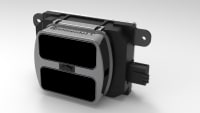
Top Stories
NewsRF & Microwave Electronics
 Microvision Aquires Luminar, Plans Relationship Restoration, Multi-industry Push
INSIDERAerospace
 A Next Generation Helmet System for Navy Pilots
INSIDERDesign
 New Raytheon and Lockheed Martin Agreements Expand Missile Defense Production
INSIDERMaterials
 How Airbus is Using w-DED to 3D Print Larger Titanium Airplane Parts
NewsPower
 Ford Announces 48-Volt Architecture for Future Electric Truck
ArticlesAR/AI

Webcasts
Electronics & Computers
 Cooling a New Generation of Aerospace and Defense Embedded...
Automotive
 Battery Abuse Testing: Pushing to Failure
Power
 A FREE Two-Day Event Dedicated to Connected Mobility
Unmanned Systems
 Quiet, Please: NVH Improvement Opportunities in the Early Design Cycle
Automotive
 Advantages of Smart Power Distribution Unit Design for Automotive &...
Energy
 Sesame Solar's Nanogrid Tech Promises Major Gains in Drone Endurance