




AFRL’s Demonstration and Science Experiments Mission
A document describes the Air Force Research Laboratory's Demonstration and Science Experiments (DSX) mission, dedicated to research needed to advance the ability to operate spacecraft in the harsh radiation environment of medium earth orbit (MEO). The DSX spacecraft, to be launched in late 2009 into an orbit ranging in altitude from 6,000 to 12,000 km, is designed to carry instruments pertinent to studies in three categories:
- Wave Particle Interaction Experiment (WPIx) — Research on the physics of very-low-frequency (VLF) transmissions in the magnetosphere and characterization of the feasibility of using natural and artificial VLF waves to reduce space radiation;
- Space Weather Experiment (SWx) — Characterizing and modeling of the radiation environment in MEO; and
- Space Environmental Effects (SFx) — Research on, and characterization of, effects of space weather on spacecraft electronics and materials.
The DSX mission uses a modular design that provides for launch either as a primary satellite on a conventional launch rocket or as a secondary payload on a larger rocket. Another key feature of the design is a dedicated payload computer, which obviates the design of avionics to conform to custom payload data interfaces, enabling the rapid procurement of a standard spacecraft data bus.
This work was done by Gregory Spanjers, James Winter, Martin Tolliver, Gregory Ginet, and Bronislaw Dichter of the Air Force Research Laboratory; Aaron Adler and Jason Guarnieri of Jackson and Tull, Inc.; and Dan Cohen of Sequoia Technologies, Inc. For more information, download the Technical Support Package (free white paper) at www.defensetechbriefs.com/tsp under the Physical Sciences category. AFRL-0030
This Brief includes a Technical Support Package (TSP).
AFRL’s Demonstration and Science Experiments Mission
(reference AFRL-0030) is currently available for download from the TSP library.
Don't have an account?
More From SAE Media Group
Aerospace & Defense Tech Briefs
Space Debris Orbit and Attitude Prediction for Enhanced and Efficient Space Situational Awareness


Tech Briefs
Biomorphic Gliders
Aerospace INSIDER
NASA Seeks Space Technologies for Suborbital and Orbital Flight Tests
Tech Briefs
Passive Radiative Cooler for Use in Outer Space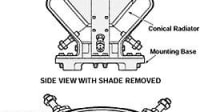

Tech Briefs
Seed-Wing Flyers for Exploration
NASA Spinoff
Using AI to Predict the Sky
Tech Briefs
Tracking Falling Space Debris

Aerospace & Defense Tech Briefs
Radiation Tolerant “Smart Backplanes” for Spacecraft Avionics
Tech Briefs
Compact Autonomous Hemispheric Vision System


Motion Design INSIDER
Plasma Thrusters Used on Satellites Could be Much More Powerful

Tech Briefs
Computer Program Automates Thermal Analyses

Photonics & Imaging Technology INSIDER
NASA, Rocket Lab Launch First Pair of Storm Observing CubeSats
Motion Design INSIDER
A New Window into Earth’s Upper Atmosphere
Motion Design INSIDER
MIT Engineers Develop a Fully 3D-Printed Electrospray Engine
Tech Briefs
Levitating Objects with Light
Tech Briefs
Products of Tomorrow
Tech Briefs
Global Fire Detection Constellation
Overview
The document provides an overview of the Air Force Research Laboratory's (AFRL) Demonstration and Science Experiments (DSX) mission, which aims to enhance the Department of Defense's (DoD) capabilities in operating spacecraft within the harsh radiation environment of medium-earth orbits (MEO). The DSX program focuses on three primary research areas: the Wave Particle Interaction Experiment (WPIx), the Space Weather Experiment (SWx), and Space Environmental Effects (SFx). These experiments are designed to investigate the physics of very-low-frequency (VLF) transmissions, characterize the space radiation environment, and assess the effects of space weather on spacecraft electronics and materials.
The DSX spacecraft employs a modular design, allowing it to be launched as either a primary satellite or a secondary payload on larger rockets. This flexibility is crucial for maximizing launch opportunities and minimizing costs. A dedicated payload computer is utilized to streamline operations, separating payload functions from the main spacecraft avionics, which enhances the overall efficiency of the system.
The document outlines the spacecraft's operational phases, including the deployment of its attitude control system and the subsequent in-orbit tests before entering operational mode. The DSX mission is designed to operate under power and data volume constraints, with experimental payloads duty cycled to optimize resource usage. The WPIx measurements, which are power-intensive, are scheduled to occur within specific latitudinal constraints to ensure efficient data collection.
The DSX mission timeline indicates that the spacecraft is on track for launch readiness by late 2009, following a series of critical design reviews and integration milestones. The mission is expected to yield valuable data that will inform future satellite designs and enhance space situational awareness regarding radiation belts.
In summary, the DSX program represents a significant step forward in developing technologies for robust space operations in MEO. It aims to create new climatology models for satellite design, validate wave-particle interaction components for radiation forecasting, and test methods for ruggedizing electronics. The modular integration approach and the use of a dedicated payload computer are key innovations that promise to reduce development risks and improve the responsiveness of future space missions.
Top Stories
INSIDERAerospace
 How Airbus is Using w-DED to 3D Print Larger Titanium Airplane Parts
NewsAutomotive
 Microvision Aquires Luminar, Plans Relationship Restoration, Multi-industry Push
INSIDERManufacturing & Prototyping
 A Next Generation Helmet System for Navy Pilots
INSIDERDefense
 New Raytheon and Lockheed Martin Agreements Expand Missile Defense Production
ArticlesAR/AI
 Accelerating Down the Road to Autonomy
Road ReadyDesign

Webcasts
Automotive
 Advantages of Smart Power Distribution Unit Design for Automotive...
Unmanned Systems
 Quiet, Please: NVH Improvement Opportunities in the Early Design...
Defense
 Cooling a New Generation of Aerospace and Defense Embedded...
Power
 Battery Abuse Testing: Pushing to Failure
Power
 A FREE Two-Day Event Dedicated to Connected Mobility
