




Study of Membrane Optics for Lightweight Space Telescopes
Unimorph piezoelectric actuators would be used to control shapes of membrane mirrors.
Astudy has been performed to establish a foundation for the analysis, design, and further development of inplane- actuated deformable membrane mirrors for lightweight spaceborne telescopes. It is envisioned that the telescopes, having typical mirror diameters of 20 m or larger, would be stowed compactly for launch and transport, then deployed in orbit around the Earth for use in surveillance of the Earth and in exploration of deep space.

In the study, the underlying differential equations for a unimorph-actuated membrane were developed, using a plate-membrane model to represent the elastic behavior of the membrane, along with applicable assumptions of quasi-static piezoelectric theory and a piezoelectric-thermal analogy. A finite-element model corresponding to the differential equations was developed and used to generate theoretical predictions for a 0.127-m diameter deformable mirror testbed. A boundary tension field needed for the finite-element model was determined by use of laservibrometer data. A nonlinear solution technique was used to incorporate the stiffening of the membrane by applied tension. Deformation data calculated by use of influence functions derived from the finite-element model for the static case were compared with experimental deformation data, then a least-squares approach was followed in creating an influencefunction matrix, which, in turn, was incorporated into a quasi-static control algorithm. In a subsequent test of the algorithm, simultaneous tracking of the Zernike tip, tilt, and defocus modes was demonstrated. (Zernike modes are so named because they are characterized by orthonormal polynomials, developed by Frits Zernike, that arise in the mathematical treatment of wavefronts in optical systems having circular pupils.)
Analytical solutions to plate-membrane and beam-string ordinary differential equations representing the deformable-mirror equations were developed. A simplified approach to modeling in axisymmetric cases also was developed. Significantly, it was shown both analytically and through numerical analysis that the result of static actuation for a mirror with a discrete electrode pattern and a high tension- to-stiffness ratio is simply a localized piston displacement (a displacement perpendicular to the surface of the membrane) in the region of the actuator.
Next, a static control strategy denoted the modal transformation method was developed. The method was implemented in a finite-element simulation to demonstrate the capability to form Zernike surfaces within a clear aperture region by use of a number of statically actuated structural modes.
The problem of scaling for membrane optics was addressed. Linear mathematical models were shown to correctly represent the behaviors of small-scale laboratory models, but fully nonlinear models were found to be necessary for describing the behaviors of larger-aperture membrane mirrors. The results of this part of the study have been interpreted to suggest that nonlinear effects must be considered in feasibility studies for future largeaperture membrane mirrors for telescopes.
This work was done by Michael J. Shepard of the Air Force Institute of Technology for the Air Force Research Laboratory. For more information, download the Technical Support Package (free white paper) at www.defensetechbriefs.com/tsp under the Photonics category. AFRL-0005
This Brief includes a Technical Support Package (TSP).
Study of Membrane Optics for Lightweight Space
(reference AFRL-0005) is currently available for download from the TSP library.
Don't have an account?
More From SAE Media Group
Photonics & Imaging Technology
Manufacturing Large Mirrors
Photonics Tech Briefs
Coarse Alignment of a Segmented Telescope Mirror

Photonics & Imaging Technology
Silicon Carbide Optics for High-Energy Applications
Photonics Tech Briefs
Active Layer Optimization in Ultra-Thin, Surface-Parallel, Deformable Mirrors
Photonics & Imaging Technology
Controlling the Grind for Precision Photonics
Photonics Tech Briefs
Optical Profilometers Using Adaptive Signal Processing
Photonics Tech Briefs
On Calculating the Zero-Gravity Surface Figure of a Mirror
Aerospace & Defense Tech Briefs
Developments in Adaptive Filtering and System Identification
Photonics & Imaging Technology
Spiral Ladder-Inspired Tool That Allows Precision Control of Light Direction and Polarization
Tech Briefs
Silicon Chip Improves LiDAR
Photonics Tech Briefs
Optically Driven Deformable Mirrors
Photonics & Imaging Technology
SPIE Photonics West 2023 Preview
Photonics & Imaging Technology
ZERODUR: The Highly Technical Glass-Ceramic
Photonics & Imaging Technology
Visualizing Value at the Speed of Light
Tech Briefs
Compact Infrared Spectrometer
Photonics Tech Briefs
Membrane Mirrors With Bimorph Shape Actuators
Photonics Tech Briefs
Active Correction of Aberrations of Low-Quality Telescope Optics
Photonics Tech Briefs
Rollable Thin-Shell Nanolaminate Mirrors
Photonics Tech Briefs
Nanolaminate Mirrors With "Piston" Figure-Control Actuators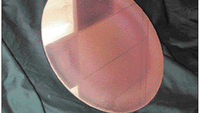
Sensor Technology
Breakthrough Lightweight AR Eyeglasses
Photonics & Imaging Technology
High Quality Optical Surfaces

Aerospace & Defense Tech Briefs
Computational Photonics in Laser Communications Through Clouds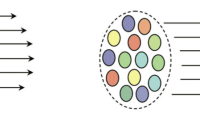
Photonics & Imaging Technology
Photonics West 2021 Preview
Photonics & Imaging Technology
Spectroscopy Using an Optical Microscope
Photonics & Imaging Technology
New Products
Photonics & Imaging Technology
SPIE Photonics West 2022 Preview
Overview
The document is a dissertation by Michael J. Shepherd that focuses on the development of lightweight, in-plane actuated deformable mirrors for space telescopes. The research aims to improve deep space exploration and Earth surveillance by creating large diameter light-gathering apertures that can be compactly stowed and deployed in orbit.
The document is organized into eight chapters, beginning with an introduction to the research area and the thesis statement. It provides contextual background on membrane optics, outlining current research in the field. The development of piezoelectric theory is discussed, including the piezoelectric-thermal analogy and the governing equations for in-plane actuated circular plate-membranes.
Chapter IV presents non-linear finite element modeling and experimental closed-loop quasi-static control efforts conducted on a 0.127m diameter test article, specifically the AFIT deformable mirror testbed. This chapter highlights the practical applications of the theoretical concepts introduced earlier.
In Chapter V, the analysis of a linear piecewise continuous axisymmetric ordinary differential equation for in-plane actuated beam-strings and plate-membranes is provided. The chapter presents both analytical and approximation methods, comparing results with the non-linear finite element model from Chapter IV.
Chapter VI introduces the Modal Transformation Method, which utilizes a combination of Bessel-based statically actuated vibration mode shapes for static surface control. This method addresses the incompatibility of the Zernike basis set with the fixed edge condition of the deformable mirror.
Chapter VII discusses the implications of scale in membrane optics, demonstrating through finite element simulation that the model's scale significantly affects surface deformation's shape and magnitude. This chapter emphasizes the importance of considering scale in the design and testing of optical systems.
The document concludes with an appendix, bibliography, and index, providing additional resources and references for further exploration of the topics discussed. Overall, Shepherd's research contributes valuable insights into the design and control of deformable mirrors, which are crucial for advancing optical systems in space applications. The findings have the potential to enhance the performance of space telescopes, enabling more effective exploration and observation of celestial bodies.
Top Stories
INSIDERDefense
 New Raytheon and Lockheed Martin Agreements Expand Missile Defense Production
NewsAutomotive
 Ford Announces 48-Volt Architecture for Future Electric Truck
INSIDERManufacturing & Prototyping
 Active Strake System Cuts Cruise Drag, Boosts Flight Efficiency
ArticlesTransportation
 Accelerating Down the Road to Autonomy
INSIDERMaterials
 How Airbus is Using w-DED to 3D Print Larger Titanium Airplane Parts
Road ReadyTransportation

Webcasts
Electronics & Computers
 Cooling a New Generation of Aerospace and Defense Embedded...
Power
 Battery Abuse Testing: Pushing to Failure
Connectivity
 A FREE Two-Day Event Dedicated to Connected Mobility
Automotive
 Quiet, Please: NVH Improvement Opportunities in the Early Design Cycle
Transportation
 Advantages of Smart Power Distribution Unit Design for Automotive &...
Aerospace
 Sesame Solar's Nanogrid Tech Promises Major Gains in Drone Endurance