




Roush Opens Advanced Durability Lab
Supplier bets big on physical testing's future.
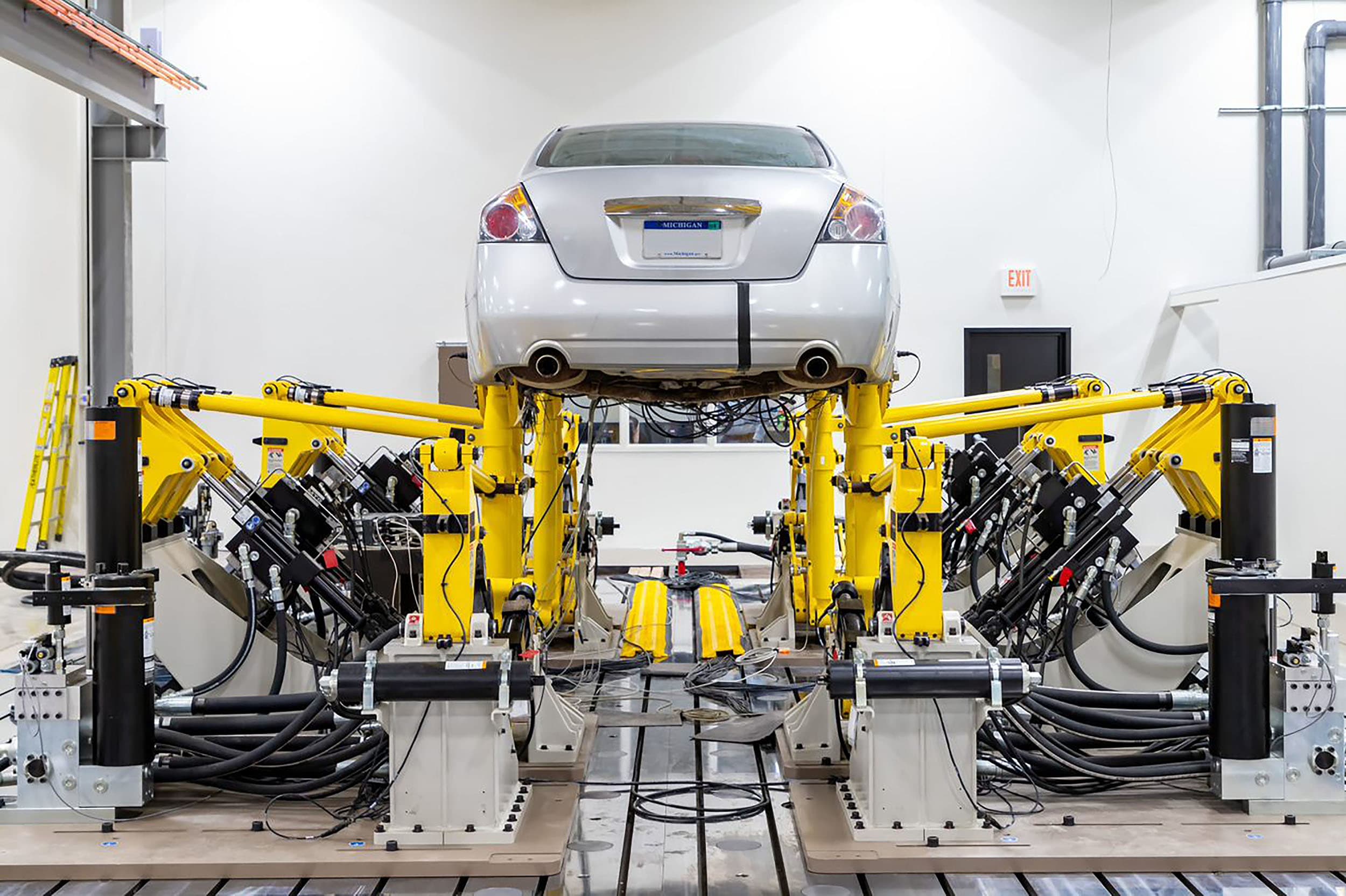
The auto industry’s steady march toward electrified and automated vehicles has many suppliers affixed to the digital-testing environment rather than using traditional hardware validation.
With a six-degrees of freedom road simulator as its centerpiece, the recently-opened Roush Advanced Durability Lab in Livonia, Michigan is a trend-buster. “If suppliers and vehicle manufacturers aren’t going to reinvest in certain hardware solutions because their product-development focus is software solutions, there will be a gap. That’s an opportunity for us,” claimed Jeff Johnston, Roush’s president of testing services.
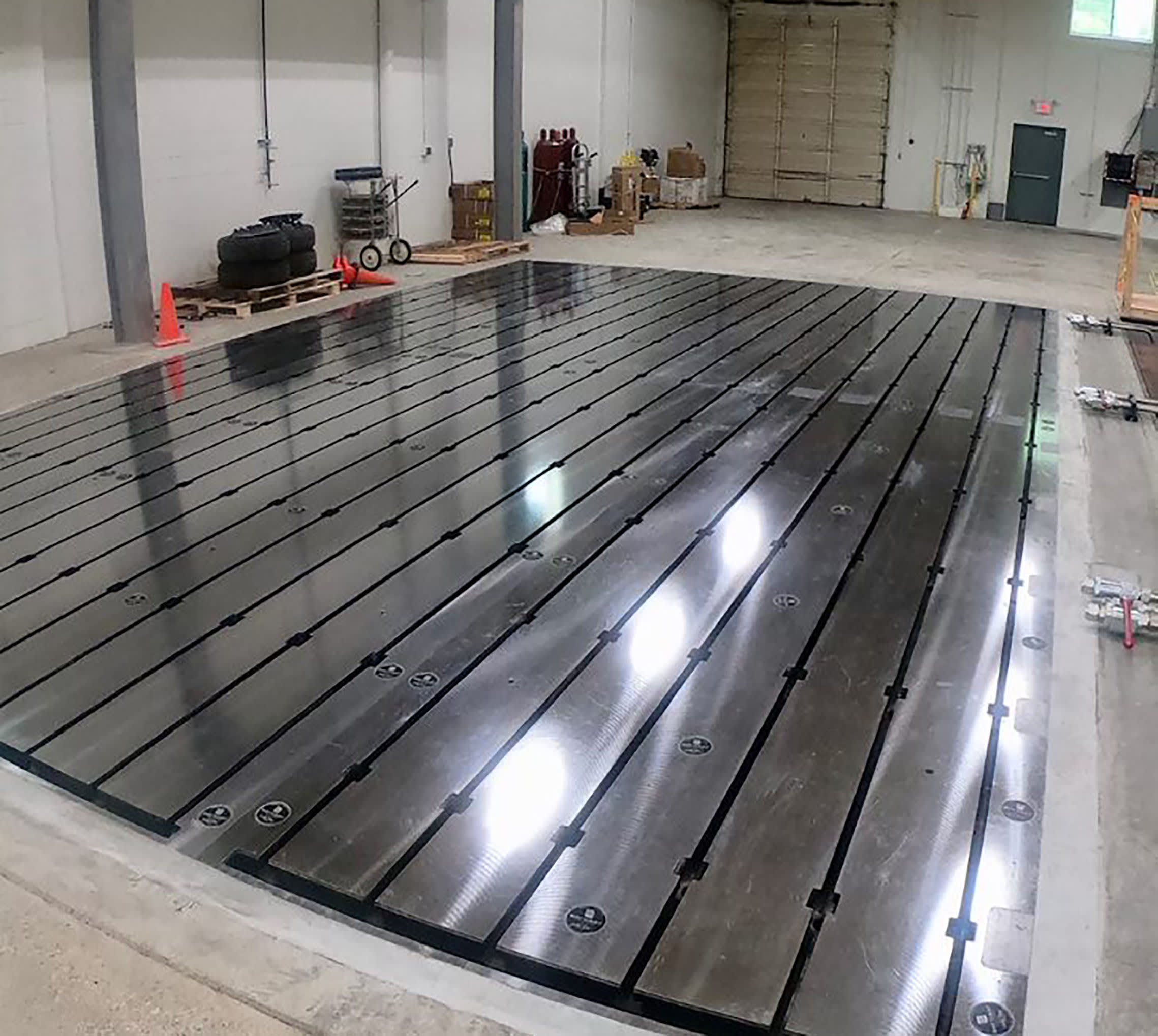
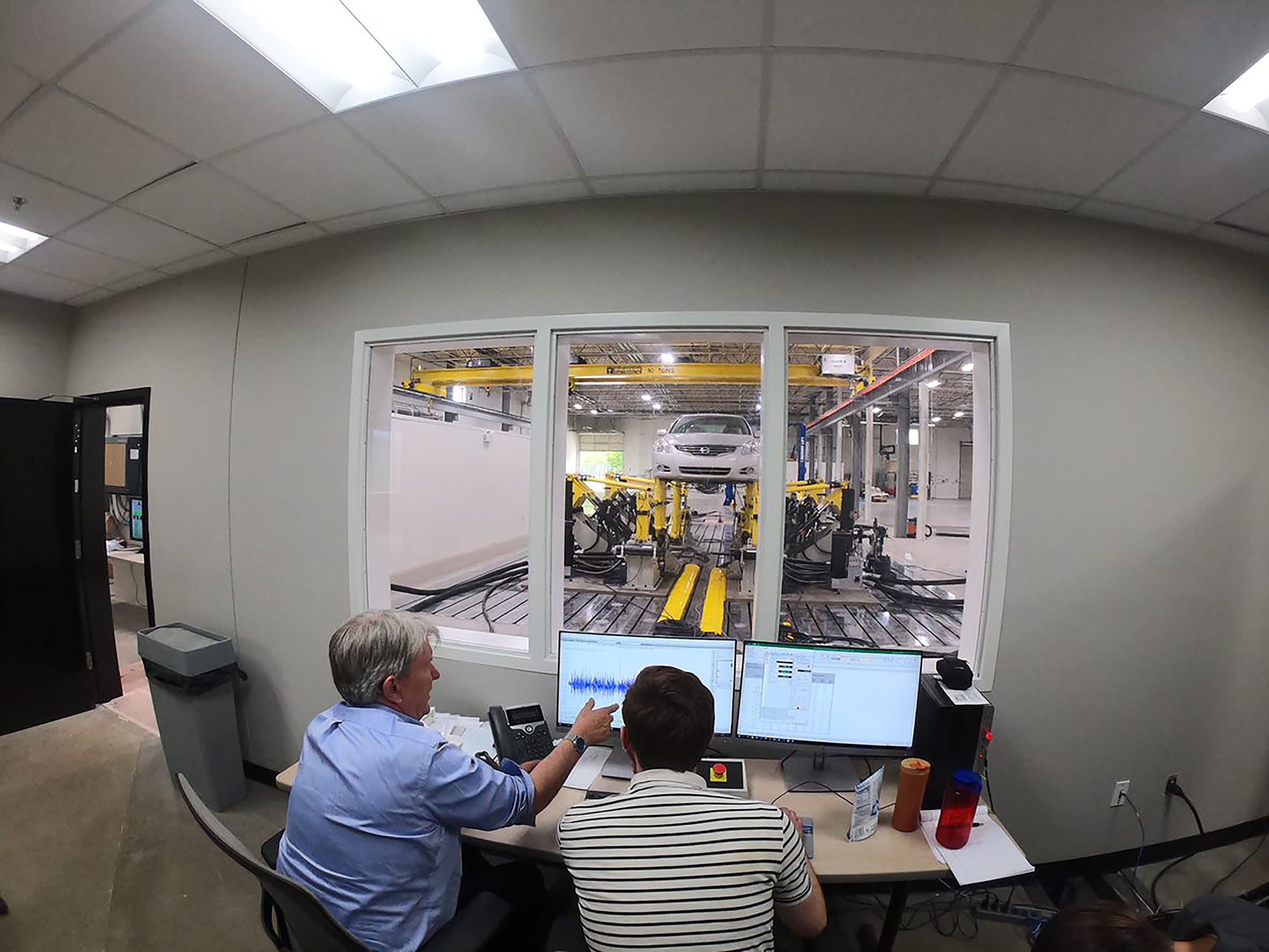
In addition to the road simulator, Roush’s $6-million lab also features bedplates for component and subsystem durability testing; isolated control rooms; a 450 gallons-per-minute hydraulic pump and a cooling tower. Mike Valko, director of business development for Roush, said global automakers have similar testing capabilities in-house. “But Roush can help with overflow, time-constraint and change-of-scope testing needs,” said Valko.

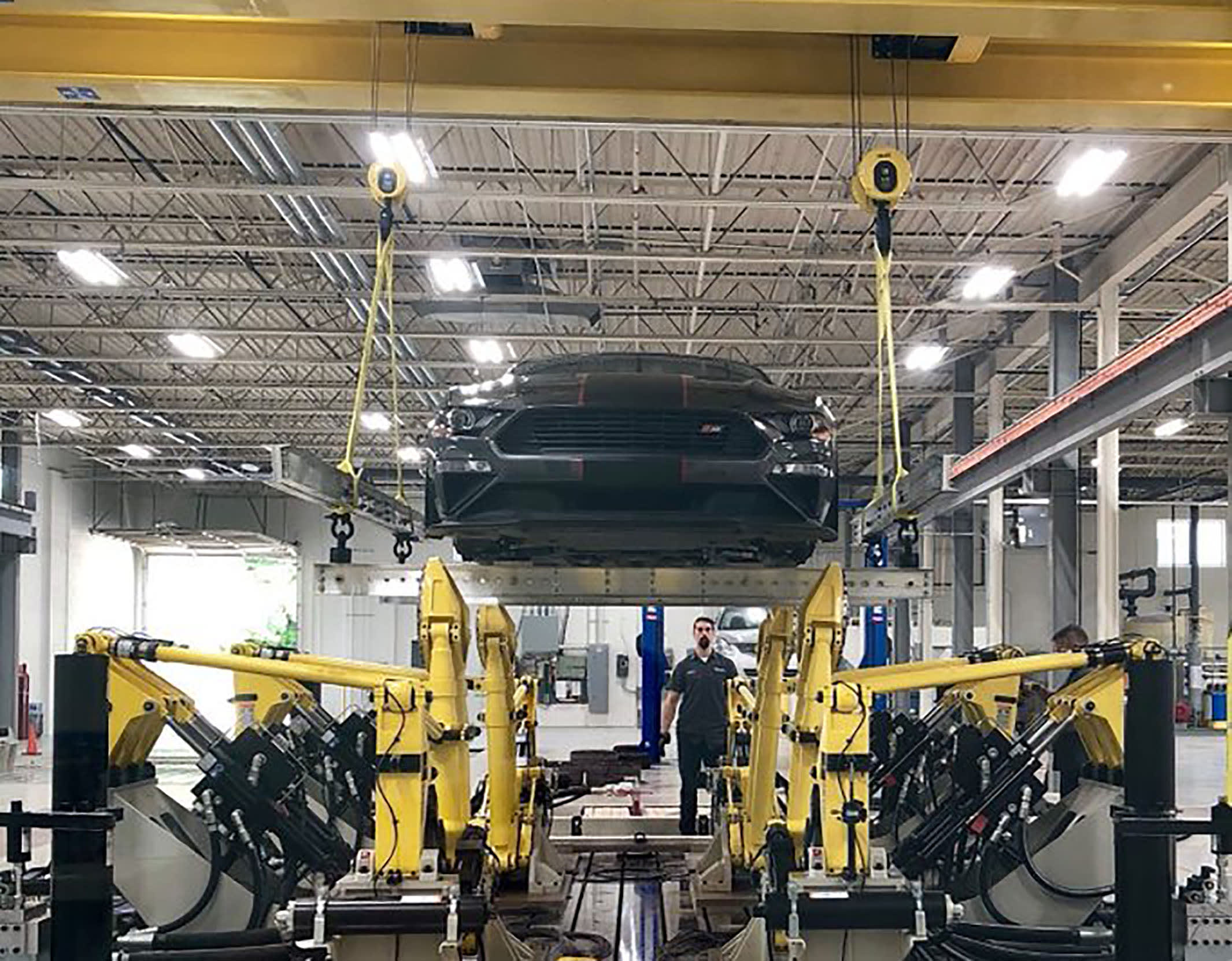
The MTS Systems Corp. Model 329 six-degrees of freedom, spindle-coupled road simulator can be programmed with drive files that replicate cobblestone surfaces, potholes, curb-strikes and other proving-ground events, according to Gerald Roesser, advanced durability lab manager. “A vehicle mule or prototype will accumulate miles faster and more aggressively during 24/7 testing time atop the road simulator than if all of the product development testing was done at a proving ground,” said Roesser, adding, “We’re really talking about early development work. This lab won’t replace the proving ground, as that will remain the vehicle validation method for automakers.”
With its 13,200-lb. (5987-kg) peak payload, the road simulator can move forward/backward, up/down and left/right—in addition to pitch, yaw and roll rotation. “Whether done by Roush or our customer, you need a vehicle or mule on the proving ground for a few days to get vehicle-specific, real-world data,” Roesser said. “But we are working on a concept where we’ll use virtual roads and modeling with hardware-in-the-loop to get the road loads, then we’ll play those loads through the road simulator.”
Before Roush opened its latest lab, the supplier typically outsourced vehicle durability work, noted Johnston. “We have durability labs for engines and transmissions, but this is our first dedicated lab for vehicle and component-level durability testing,” Johnston said, adding, “Over time, we will be known as the durability domain expert for component, subsystem and full-vehicle testing.”
More From SAE Media Group
ADAS & Autonomous Vehicle Engineering
The Road to Zero Prototypes
Autonomous Vehicle Engineering
New Digital Tools Driving Restructuring for Autonomy
Aerospace & Defense Tech Briefs
Industry Invited to Participate in AeroTech Aerospace and Defense Technical Program
Autonomous Vehicle Engineering
Making the Strategic Move into AV Testing
Autonomous Vehicle Engineering
Horiba MIRA’s Vision for World-Class AV Testing
Automotive Engineering
New Best Practice Establishes Commonly Defined Terms, Conceptual Framework for ADS ODD
Off-Highway Engineering
Design Tools Ensure Component Compatibility, Create Autonomous Driving Tests
Off-Highway Engineering
Commercial Vehicle ADAS: Testing, Testing and More Testing
Automotive Engineering
Racetrack Simulation Hits the (Public) Road
Autonomous Vehicle Engineering
'Road Race' for AV Testing May Be Slowing
Autonomous Vehicle Engineering
German University Installing Advanced Simulator to Study Autonomous-Vehicle Handover
Automotive Engineering
Automated Vehicle Safety Series Addresses Design, Testing, Verification, and Validation
Automotive Engineering
New Proving-Ground Tools Needed to Manage AV Testing
Automotive Engineering
Tenneco Opens Engineering, Simulation Center in Poland
Aerospace & Defense Tech Briefs
SAE International Extends Call for Abstracts, Seeks Submissions for AeroTech Conference
Automotive Engineering
Systems-engineering a New 4x4 Benchmark
Autonomous Vehicle Engineering
Speeding AV Testing with a Digital Twin
Off-Highway Engineering
Scalable Hardware-Software Interface Answers Overlooked AV Testing Need
Autonomous Vehicle Engineering
5G Cellular-Enabled Test Infrastructure for Autonomous Vehicles Launched at U.K.’s Millbrook
ADAS & Autonomous Vehicle Engineering
Simulation Vs. Organizational Inertia
Automotive Engineering
Virtual Validation on the Rise, but Physical Testing Remains Crucial
Autonomous Vehicle Engineering
Data Drives Driverless Truck Launch
Automotive Engineering
FCA Claims North America’s Most-Advanced Driving Simulator
Off-Highway Engineering
Addressing Electromagnetic Compatibility in the Context of Aircraft Electrification
Automotive Engineering
AB Dynamics Supports Germany’s PEGASUS Project Test of Multiple Autonomous Vehicle Control
Autonomous Vehicle Engineering
Complexity of Autonomous-Systems Simulation, Validation Soars to the Clouds
Aerospace & Defense Tech Briefs
Centre for Modelling & Simulation to Develop Digital Twins for GKN Aerospace Additive, Composite, and Industry 4.0 Technologies
Automotive Engineering
Zero Prototype Summit 2024: The Future Is Closer Than Ever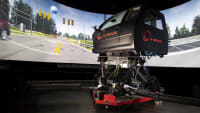
Automotive Engineering
Nvidia Partners with AdaCore to Secure Self-Driving Firmware
Autonomous Vehicle Engineering
GM Announces Door-To-Door Ultra Cruise ADAS
Top Stories
NewsSensors/Data Acquisition
 Microvision Aquires Luminar, Plans Relationship Restoration, Multi-industry Push
INSIDERRF & Microwave Electronics
 A Next Generation Helmet System for Navy Pilots
INSIDERWeapons Systems
 New Raytheon and Lockheed Martin Agreements Expand Missile Defense Production
NewsAutomotive
 Ford Announces 48-Volt Architecture for Future Electric Truck
INSIDERAerospace
 Active Strake System Cuts Cruise Drag, Boosts Flight Efficiency
ArticlesTransportation

Webcasts
Aerospace
 Cooling a New Generation of Aerospace and Defense Embedded...
Energy
 Battery Abuse Testing: Pushing to Failure
Power
 A FREE Two-Day Event Dedicated to Connected Mobility
Automotive
 Quiet, Please: NVH Improvement Opportunities in the Early Design Cycle
Electronics & Computers
 Advantages of Smart Power Distribution Unit Design for Automotive &...
Unmanned Systems
 Sesame Solar's Nanogrid Tech Promises Major Gains in Drone Endurance