




NASA's Orion Spacecraft Is Complete, Assembled, and Ready for Integration Ahead of Final Testing
With the Orion, a spacecraft like none other in its design and capability, the goal of humans again walking on the Moon is one giant leap closer.
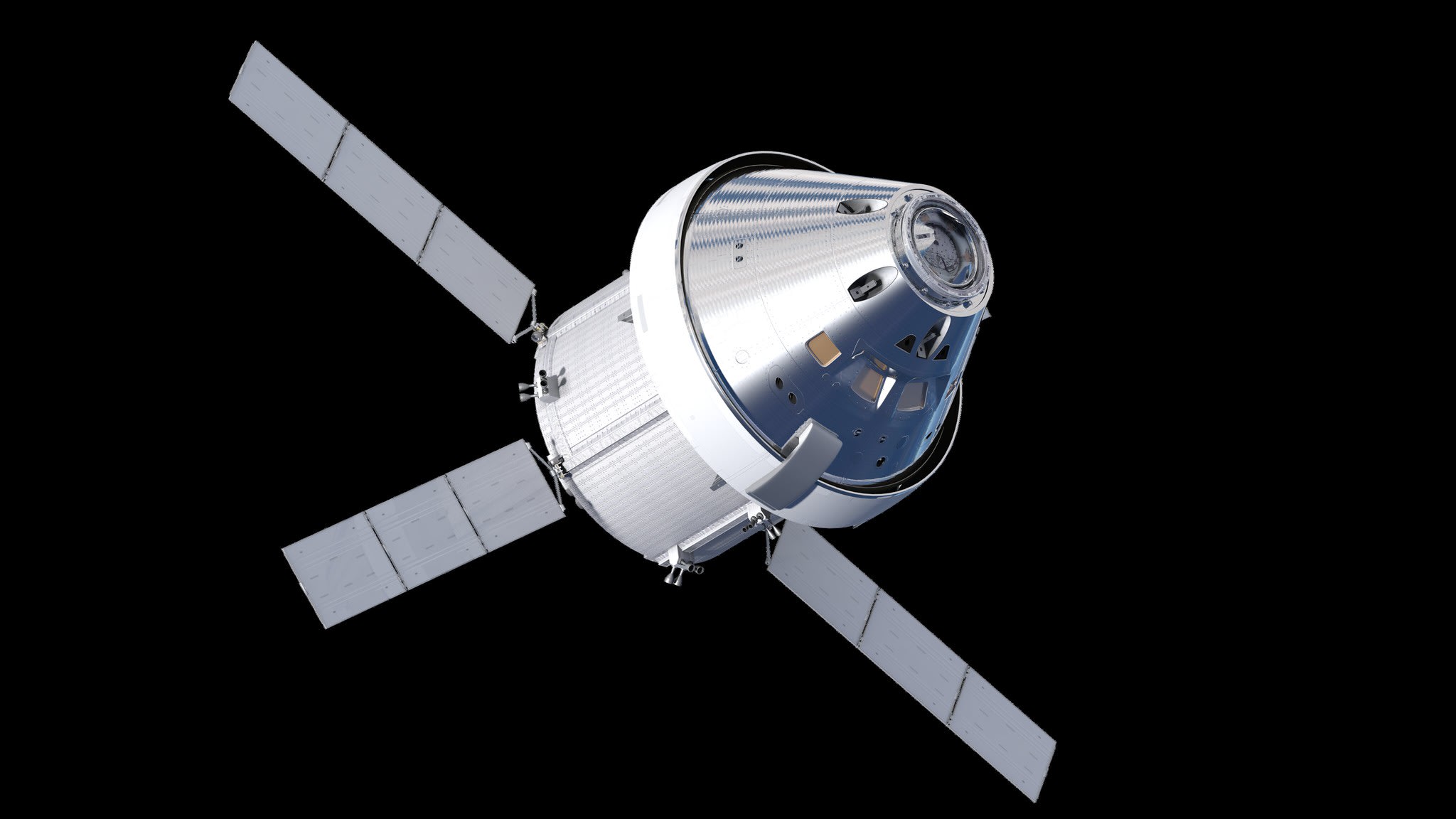
Lockheed Martin Corporation has finished building the capsule for NASA's Orion spacecraft – the spacecraft for the Artemis 1 mission to the Moon – which now sits atop the recently constructed Orion service module.
While the first mission will be uncrewed, it will pave the way for future missions where NASA astronauts revisit the lunar surface.
“Orion is a new class of spaceship, uniquely designed for long-duration deep space flight, that will return astronauts to the Moon and eventually take the first humans to Mars, and bring them all back safely,” says Lisa Callahan, vice president and general manager of Commercial Civil Space at Lockheed Martin. “Orion will accelerate scientific discovery of our solar system and will be the cornerstone of the defining space achievement of this era.”
The crew module and service module were stacked together earlier in the week in the Final Assembly and System Testing (FAST) cell where they are now being fully integrated, including connecting the physical retention bolts and the umbilical lines between the two modules. The FAST cell is also where the Apollo spacecraft were integrated.
William Kucinski is content editor at SAE International, Aerospace Products Group in Warrendale, Pa. Previously, he worked as a writer at the NASA Safety Center in Cleveland, Ohio and was responsible for writing the agency’s System Failure Case Studies. His interests include literally anything that has to do with space, past and present military aircraft, and propulsion technology.
Contact him regarding any article or collaboration ideas by e-mail at
More From SAE Media Group
Aerospace & Defense Tech Briefs
Northrop Grumman Tests, Qualifies Orion Launch Abort Motor for Flight in Cold Conditions
Aerospace & Defense Tech Briefs
Made in Space Is Set to Make in Space
Aerospace & Defense Tech Briefs
Orion Launch Abort System Passes Full-Stress Flight Test
Aerospace & Defense Tech Briefs
NASA Selects Power and Propulsion Module for Upcoming Lunar Gateway
Aerospace & Defense Tech Briefs
First Orion European Space Module Delivered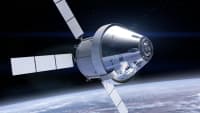
Aerospace & Defense Tech Briefs
3D Printed Spacecraft Parts
Aerospace & Defense Tech Briefs
“The Eagle Has Landed”
Aerospace & Defense Tech Briefs
NASA Budget Amendment to Help Send Americans to Moon by 2024, Then Mars
Tech Briefs
3D-Printed Parts Key to NASA’s Orion Mission

Tech Briefs
ARTEMIS: Back to the Moon
Aerospace & Defense Tech Briefs
Final Orion Capsule Parachute System Test Successful
Off-Highway Engineering
Rancho Cordova Business Park Hosts Self-Driving Olli Shuttle
Tech Briefs
NASA Shines on the Big Screen
Aerospace & Defense Tech Briefs
Dragonfly Will Be NASA’s Next Solar System Explorer
Aerospace & Defense Tech Briefs
Lockheed Martin Validates Heatshield for the Mars 2020 Rover Mission
Aerospace & Defense Tech Briefs
Astronaut Garbage Is a Serious Operational Concern When Travelling to the Moon and Mars
Aerospace & Defense Tech Briefs
Space Tango Takes Its Next Steps in Orbital Manufacturing
Tech Briefs
Wave Energy Modeling for Safer Space Travel
Aerospace & Defense Tech Briefs
Apollo Fusion Will Supply NASA JPL with MaSMi Hall Thrusters as Sole Licensed Manufacturer
Aerospace & Defense Tech Briefs
Jeff Bezos Lays out Blue Origin’s Moon Shot, Debuts Lunar Lander
Aerospace & Defense Tech Briefs
FADA-CATEC Uses 3D Printing to Slim down the CHEOPS Satellite
Tech Briefs
ARTEMIS I: Our Return to the Moon Begins
Off-Highway Engineering
NASA Opens the International Space Station for Commercial Business

Tech Briefs
A Turning Point in Space Exploration
Aerospace & Defense Tech Briefs
NASA and AeroVironment Are Building a Helicopter for Mars
Aerospace & Defense Tech Briefs
NASA Invests in Aerospace Start-Up, University Projects on CubeSat Platform
Top Stories
NewsSensors/Data Acquisition
 Microvision Aquires Luminar, Plans Relationship Restoration, Multi-industry Push
INSIDERRF & Microwave Electronics
 A Next Generation Helmet System for Navy Pilots
INSIDERWeapons Systems
 New Raytheon and Lockheed Martin Agreements Expand Missile Defense Production
NewsAutomotive
 Ford Announces 48-Volt Architecture for Future Electric Truck
INSIDERAerospace
 Active Strake System Cuts Cruise Drag, Boosts Flight Efficiency
ArticlesTransportation

Webcasts
Aerospace
 Cooling a New Generation of Aerospace and Defense Embedded...
Energy
 Battery Abuse Testing: Pushing to Failure
Power
 A FREE Two-Day Event Dedicated to Connected Mobility
Automotive
 Quiet, Please: NVH Improvement Opportunities in the Early Design Cycle
Electronics & Computers
 Advantages of Smart Power Distribution Unit Design for Automotive &...
Unmanned Systems
 Sesame Solar's Nanogrid Tech Promises Major Gains in Drone Endurance