NASA Opens the International Space Station for Commercial Business

NASA is opening the International Space Station (ISS) for commercial business to accelerate U.S. science and technology innovation and accelerate the development of commercial space economy in low-Earth orbit. The ISS has supported human life in space for over 18 years and allowed astronauts to conducting thousands of experiments in areas such as human research, biology, and physical science, as well as advanced technology development. Many of these experiments, conducted on the ISS National Lab , have been research and development with commercial objectives.
The agency is now acknowledging that new opportunities are needed to move beyond research and development, and the station will play an essential role in enabling those opportunities for new commercial markets needed to build a sustainable ecosystem in low-Earth orbit. The shift towards commercialization runs parallel to the agency’s Artemis program goals of landing a woman on the Moon by 2024 – which will also involve significant support from traditional and New Space companies.
In addition to continuing research and testing in low-Earth orbit for its lunar exploration plans, NASA will also begin working with the private sector to test technologies, train astronauts, and strengthen the burgeoning space economy. Providing expanded opportunities aboard ISS to manufacture, market, and promote commercial products and services will help catalyze and expand space exploration markets for many businesses. However, NASA’s ultimate goal is forming partnerships that could relate toward favorably lower costs as they begin to purchase services and capabilities from New Space providers.
Read more: What does NASA do with a space station originally developed for a now-cancelled mission?
NASA's plan addresses both the supply-side and demand-side for a new economy, enabling use of government resources for commercial activities, creating the opportunity for private astronaut missions to the space station, enabling commercial destinations in low-Earth orbit, identifying and pursuing activities that foster new and emerging markets, and quantifying NASA's long-term demand for activities in low-Earth orbit.
William Kucinski is content editor at SAE International, Aerospace Products Group in Warrendale, Pa. Previously, he worked as a writer at the NASA Safety Center in Cleveland, Ohio and was responsible for writing the agency’s System Failure Case Studies. His interests include literally anything that has to do with space, past and present military aircraft, and propulsion technology.
Contact him regarding any article or collaboration ideas by e-mail at
More From SAE Media Group
Aerospace & Defense Tech Briefs
Can the Air Force Reach a 24-Hour Launch Window?
Aerospace & Defense Tech Briefs
New Zealand and LeoLabs Establish the First Low-Earth Orbit Regulatory Platform
Automotive Engineering
Made in Space to Increase Material Portfolio After Two Years of Printing in Space
Aerospace & Defense Tech Briefs
Lockheed Martin’s “Non-Operational” Space Fence Detects Indian Anti-Satellite Operations While Still in Test Mode
Aerospace & Defense Tech Briefs
Techstars and Starburst Start New Space Technology Business Accelerator
Aerospace & Defense Tech Briefs
Space Launch Providers Submit Proposals for National Security Space Launch Program
Aerospace & Defense Tech Briefs
What Does NASA Do with a Space Station Originally Developed for a Now-Cancelled Mission?
Aerospace & Defense Tech Briefs
Made in Space Is Set to Make in Space
Aerospace & Defense Tech Briefs
Space Tango Takes Its Next Steps in Orbital Manufacturing
Aerospace & Defense Tech Briefs
Firefly Aerospace Is the Latest Addition to Florida’s “Space Coast”
Automotive Engineering
OneWeb Ramps up Satellite Production with New Round of Funding
Aerospace & Defense Tech Briefs
NASA Selects Power and Propulsion Module for Upcoming Lunar Gateway
Aerospace & Defense Tech Briefs
National Space Council Receives Report on Human Spaceflight in Low-Earth Orbit
Aerospace & Defense Tech Briefs
OmegA Rocket Sustains Explosion During First Static Test, Northrop Grumman Maintains Test Was a Success
Aerospace & Defense Tech Briefs
First Orion European Space Module Delivered
Aerospace & Defense Tech Briefs
Astronaut Garbage Is a Serious Operational Concern When Travelling to the Moon and Mars
Aerospace & Defense Tech Briefs
NASA Invites Proposal from Space-Based Large-Scale 3D-Printing Company
Aerospace & Defense Tech Briefs
Orion Launch Abort System Passes Full-Stress Flight Test
Tech Briefs
A Turning Point in Space Exploration
Aerospace & Defense Tech Briefs
NASA Budget Amendment to Help Send Americans to Moon by 2024, Then Mars
Aerospace & Defense Tech Briefs
Late Paul Allen’s Stratolaunch Company Cancels Launch Vehicle Projects
Aerospace & Defense Tech Briefs
FADA-CATEC Uses 3D Printing to Slim down the CHEOPS Satellite
Aerospace & Defense Tech Briefs
Three Stages of Separation: Bidding Farewell to the Delta II Launch Vehicle
Aerospace & Defense Tech Briefs
Northrop Grumman Wins $792M to Deliver Intermediate, Heavy Versions of OmegA Space Launch Vehicle
Aerospace & Defense Tech Briefs
Delta II’s Final Flight a Success
Aerospace & Defense Tech Briefs
Apollo Fusion Will Supply NASA JPL with MaSMi Hall Thrusters as Sole Licensed Manufacturer
Aerospace & Defense Tech Briefs
“The Eagle Has Landed”
Aerospace & Defense Tech Briefs
JAXA Launches HTV7 Unmanned Cargo Spacecraft on Resupply Mission to ISS
Aerospace & Defense Tech Briefs
Blue Origin Mission 9 a Success
Aerospace & Defense Tech Briefs
Orbex Debuts Innovative Smallsat Launch Vehicle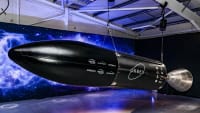
Top Stories
NewsSensors/Data Acquisition
 Microvision Aquires Luminar, Plans Relationship Restoration, Multi-industry Push
INSIDERRF & Microwave Electronics
 A Next Generation Helmet System for Navy Pilots
INSIDERWeapons Systems
 New Raytheon and Lockheed Martin Agreements Expand Missile Defense Production
NewsAutomotive
 Ford Announces 48-Volt Architecture for Future Electric Truck
INSIDERAerospace
 Active Strake System Cuts Cruise Drag, Boosts Flight Efficiency
ArticlesTransportation

Webcasts
Aerospace
 Cooling a New Generation of Aerospace and Defense Embedded...
Energy
 Battery Abuse Testing: Pushing to Failure
Power
 A FREE Two-Day Event Dedicated to Connected Mobility
Automotive
 Quiet, Please: NVH Improvement Opportunities in the Early Design Cycle
Electronics & Computers
 Advantages of Smart Power Distribution Unit Design for Automotive &...
Unmanned Systems
 Sesame Solar's Nanogrid Tech Promises Major Gains in Drone Endurance
Similar Stories
INSIDERManned Systems
 SpaceX to Develop ISS Deorbit Vehicle for NASA
NewsManufacturing & Prototyping
 Space Tango Takes Its Next Steps in Orbital Manufacturing
NewsAutomotive
 NASA Selects Power and Propulsion Module for Upcoming Lunar Gateway
NewsAerospace
 National Space Council Receives Report on Human Spaceflight in Low-Earth Orbit
NewsRF & Microwave Electronics
 What Does NASA Do with a Space Station Originally Developed for a Now-Cancelled...