




JAXA and Toyota Partner, Focus on Future Lunar Mobility
Japan Aerospace Exploration Agency and Toyota Motor Corp. collaboration on space mobility and exploration is latest evidence of increased technology transfer and cooperation among aerospace and automotive industry players.

Officials at the Japan Aerospace Exploration Agency ( JAXA ) and Toyota Motor Corp. in Tokyo have taken a first step toward collaborating on international space exploration, having agreed to accelerate their ongoing joint study of a manned, pressurized rover powered by fuel cell technologies to enable lunar mobility.
International space exploration is centered on the moon and Mars, and requires coordination of unmanned missions, such as the recent touchdown by the asteroid probe Hayabusa2 on the asteroid Ryugu, and manned missions, such as those involving humans using pressurized rovers to conduct activities on the moon. When it comes to challenging missions, such as lunar or Martian exploration, various countries are competing to advance their technologies, but also advancing their cooperative efforts, officials affirm.
“At JAXA, we are pursuing international coordination and technological studies toward Japan’s participation in international space exploration. We aim to contribute through leading Japanese technologies that can potentially generate spin-off benefits. Having Toyota join us in the challenge of international space exploration greatly strengthens our confidence,” JAXA President Hiroshi Yamakawa says.
“Manned rovers with pressurized cabins are an element that will play an important role in full-fledged exploration and use of the lunar surface. For this, we would like to concentrate our country’s technological abilities and conduct technological studies,” Yamakawa adds. “Through our joint studies going forward, we would like to put to use Toyota’s excellent technological abilities related to mobility, and we look forward to the acceleration of our technological studies for the realization of a manned, pressurized rover.”
“The automotive industry has long done business with the concepts of ‘hometown’ and ‘home country’ largely in mind. However, from now on, in responding to such matters as environmental issues of global scale, the concept of ‘home planet’, from which all of us come, will become a very important concept,” Toyota President Akio Toyoda explains. “Going beyond the frameworks of countries or regions, I believe that our industry, which is constantly thinking about the role it should fulfill, shares the same aspirations of international space exploration.
“Cars are used in all of Earth’s regions, and, in some regions, cars play active roles as partners for making sure that people come back alive. And I think that coming back alive is exactly what is needed in this project,” Toyoda adds. “I am extremely happy that, for this project, expectations have been placed on the thus-far developed durability and driving performance of Toyota vehicles and on our fuel cell environmental technologies.”
Read more: Toyota takes up challenge of space, brings electrified, automated vehicle technologies
Courtney E. Howard is editorial director and content strategist at SAE International. Contact her by e-mail at
More From SAE Media Group
Aerospace & Defense Tech Briefs
JAXA MINERVA-II1 Rovers Achieve Asteroid Landing, Autonomy, Image and Data Capture
Aerospace & Defense Tech Briefs
SAE International Extends Call for Abstracts, Seeks Submissions for AeroTech Conference
Aerospace & Defense Tech Briefs
Industry Invited to Participate in AeroTech Aerospace and Defense Technical Program
Aerospace & Defense Tech Briefs
AIA Predicts Flying Air Taxis, Supersonic Air Travel, and Space Industry for 2050


Aerospace & Defense Tech Briefs
NASA Budget Amendment to Help Send Americans to Moon by 2024, Then Mars
Tech Briefs
Lightweight Crane Technology for the Moon
Aerospace & Defense Tech Briefs
SAE International Issues, Revises Technical Reports for Aerospace Engineering
Tech Briefs
Force/Torque Sensor Helps Rover Sample Mars
Aerospace & Defense Tech Briefs
Space Tango Takes Its Next Steps in Orbital Manufacturing
Aerospace & Defense Tech Briefs
New Zealand and LeoLabs Establish the First Low-Earth Orbit Regulatory Platform
Tech Briefs
The Rise of the Celestial Assembly Line
Tech Briefs
Robotic Arm Will Head to the Moon
Aerospace & Defense Tech Briefs
Battery Technology Is Still the Key Barrier to Better Urban Air Mobility
Tech Briefs
Tensegrity Robots to the Rescue
Aerospace & Defense Tech Briefs
Mars Rover Electric Motors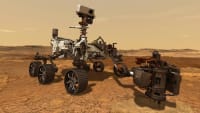

Tech Briefs
Rad-Hard Avionics for Moon Rover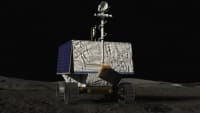
Aerospace & Defense Tech Briefs
NASA Invites Proposal from Space-Based Large-Scale 3D-Printing Company

Aerospace & Defense Tech Briefs
Made in Space Is Set to Make in Space
Aerospace & Defense Tech Briefs
Dragonfly Will Be NASA’s Next Solar System Explorer

Automotive Engineering
Honda Unveils Solid-State Battery Demonstration Production Line

Aerospace & Defense Tech Briefs
Radiation-Hardened ICs
Top Stories
INSIDERManufacturing & Prototyping
 How Airbus is Using w-DED to 3D Print Larger Titanium Airplane Parts
INSIDERManned Systems
 FAA to Replace Aging Network of Ground-Based Radars
NewsTransportation
 CES 2026: Bosch is Ready to Bring AI to Your (Likely ICE-powered) Vehicle
NewsSoftware
 Accelerating Down the Road to Autonomy
EditorialDesign
 DarkSky One Wants to Make the World a Darker Place
INSIDERMaterials
 Can This Self-Healing Composite Make Airplane and Spacecraft Components Last...
Webcasts
Defense
 How Sift's Unified Observability Platform Accelerates Drone Innovation
Automotive
 E/E Architecture Redefined: Building Smarter, Safer, and Scalable...
Power
 Hydrogen Engines Are Heating Up for Heavy Duty
Electronics & Computers
 Advantages of Smart Power Distribution Unit Design for Automotive...
Unmanned Systems
 Quiet, Please: NVH Improvement Opportunities in the Early Design...
