




Parker Aerospace and GKN Aerospace to Develop Passive Cooling Solutions for Next-Generation Aircraft Engines
The two companies signed a technology development agreement for integrating existing macrolamination technology directly into aerostructures.
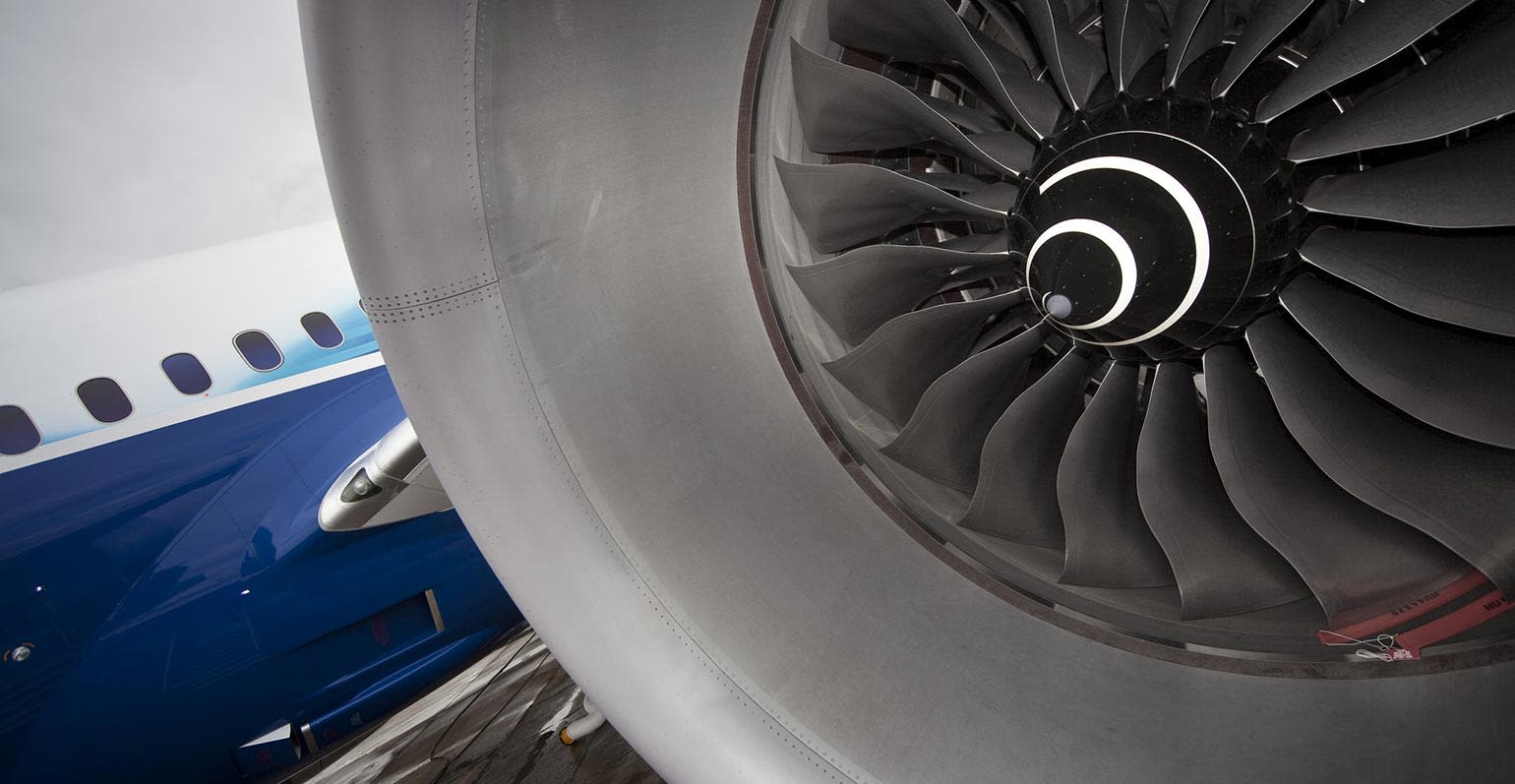
Parker Aerospace , a business group of Cleveland-based Parker Hannifin Corporation, has reached a collaborative technology development agreement with GKN Aerospace Sweden AB to bring structurally integrated thermal management solutions to advanced aerospace engines using macrolamination techniques.
The agreement will leverage the thermal analysis and macrolamination manufacturing capabilities of Parker’s Gas Turbine Fuel Systems Division and GKN’s engine-structure design and manufacturing expertise to develop integrated engine static-structure thermal management technologies.
“Parker Aerospace is proud to bring its macrolamination pedigree from decades of fuel spray nozzle development, in collaboration with GKN Aerospace engine design and testing capabilities,” says Director of Business Development Shawn Isham from Parker’s Gas Turbine Fuel Systems Division . “Together, our companies will develop integrated structural thermal management solutions for current and future high-bypass turbine engines.”
In terms of static-structure thermal management, macrolamination shares the “high surface area to volume ratio” approach of traditional “plate-fin” heat exchanger designs. However, where plate-fin designs employ finned chambers sandwiched between two surfaces, macrolamination achieves that forming microstructures – possibly carbon nanotubes or graphene nanocomposites – onto single sheets of cooling material. Those sheets are then fused to secondary material with high thermal conductivity.
This technique improves heat rejection efficiency over traditional plate-fin designs and has already gained traction in the aerospace and defense (A&D) microelectronics industry (e.g., circuit boards and heatsinks) where size comes at a premium. Furthermore, regarding integration into engine nacelles, macrolaminated materials retain structural load-bearing properties.
“Structurally integrated thermal management solutions will be a key enabler for advanced engine architectures requiring more heat sink capability with limited weight impact,” says GKN Engine Systems Vice President of Business Development Alex Guruprasad.
GKN, based in Trollhättan, Sweden, is responsible for design, development, manufacture, assembly, and certification of numerous turboprop and turbofan solutions for major customers like Boeing , Spirit AeroSystems , and Pratt & Whitney . Additionally, the company’s maintenance, repair, and overhaul (MRO) service client list is even more extensive.
As airline operators push for more efficient engines, the development of integrated macrolaminated passive cooling systems may even impact existing aircraft engines and nacelles.
William Kucinski is content editor at SAE International, Aerospace Products Group in Warrendale, Pa. Previously, he worked as a writer at the NASA Safety Center in Cleveland, Ohio and was responsible for writing the agency’s System Failure Case Studies. His interests include 'literally anything that has to do with space,' past and present military aircraft, and propulsion technology. And also sportscars.
Contact him regarding any article or collaboration ideas by e-mail at
More From SAE Media Group
Aerospace & Defense Tech Briefs
Ceramic Matrix Composites in Aircraft Engines Projected to Double over Five Years, Stratview Research Predicts
Aerospace & Defense Tech Briefs
Mitsubishi Heavy Industries Aero Engines Completes Assembly of First Pratt & Whitney GTF PW1200G Engine
Aerospace & Defense Tech Briefs
2050 Aircraft Engine Designs Go Radical, Part 1
Aerospace & Defense Tech Briefs
Maintaining the Data-Rich Pratt & Whitney GTF Engine
Aerospace & Defense Tech Briefs
Pratt & Whitney Receives $437M for Continued Adaptive Engine Development
Aerospace & Defense Tech Briefs
Maintainers Design a $400 Maintenance Fixture to save the U.S. Air Force $500k per Year
Aerospace & Defense Tech Briefs
GE Aviation Delivers Improved Turbine Engine During U.S. Army Preliminary Design Review
Aerospace & Defense Tech Briefs
Boeing’s 777X Finally Gets Its Engines
Aerospace & Defense Tech Briefs
SAE International Extends Call for Abstracts, Seeks Submissions for AeroTech Conference
Aerospace & Defense Tech Briefs
Lockheed Martin and Arconic Collaborate on 3D Printing and Advanced Aerospace Materials
Aerospace & Defense Tech Briefs
Safran and MTU Aero Engines to Co-Develop Engine for Sixth-Generation FCAS Fighter
Aerospace & Defense Tech Briefs
Rolls-Royce to Work with Airframe Manufacturers, Seek Partners for EVTOL Project
Aerospace & Defense Tech Briefs
Boeing Completes Assembly of the First 777X
Aerospace & Defense Tech Briefs
UAV Turbines Designs Purpose-Built Microturbine Engine for Class 3 and 4 UAVs
Automotive Engineering
Pratt & Whitney Develops Digitally Curated Maintenance Solutions for General Aviation
Aerospace & Defense Tech Briefs
Aircraft, Engine Orders Reach $98B, Focus on Flying Farther, Faster, Greener at Farnborough Airshow
Aerospace & Defense Tech Briefs
Early Growing Pains Have Not Stopped Pratt & Whitney’s GTF Engine Orders

Aerospace & Defense Tech Briefs
Researchers Work to Uncover Turboelectric Propulsion’s Unknown Challenges
Aerospace & Defense Tech Briefs
FAA, SAE International Focus on Engine Fire Protection System Standards for Aerospace
Aerospace & Defense Tech Briefs
SAE International Issues, Revises Technical Reports for Aerospace Engineering
Automotive Engineering
UAV Turbines to Tackle 200-Hp Class UAV Engines for U.S. Army
Aerospace & Defense Tech Briefs
GE Aviation and DM3D to Ramp up 3D-Printed Fan Blade Production for GE9X Engine
Aerospace & Defense Tech Briefs
New Boeing, Safran Joint Venture Dedicated to Developing Aircraft Auxiliary Power Units
Aerospace & Defense Tech Briefs
Fanjet Evolution — the Next Steps
Automotive Engineering
SAE International Releases New Process for Measuring Aerosols in Aircraft Exhaust
Aerospace & Defense Tech Briefs
Parker Aerospace Wins Cessna Denali Bleed Air Control System Contract
Aerospace & Defense Tech Briefs
Government, Industry Invest $450M to Advance U.K. Civil Aerospace Research, Technology, Manufacturing
Aerospace & Defense Tech Briefs
Stratos Aircraft Evolves Carbon-Fiber Very Light Jet, Offers Limited Number of Kit Aircraft
Tech Briefs
Meringue-Like Material Reduces Aircraft Noise
Top Stories
INSIDERManufacturing & Prototyping
 How Airbus is Using w-DED to 3D Print Larger Titanium Airplane Parts
INSIDERManned Systems
 FAA to Replace Aging Network of Ground-Based Radars
NewsTransportation
 CES 2026: Bosch is Ready to Bring AI to Your (Likely ICE-powered) Vehicle
NewsSoftware
 Accelerating Down the Road to Autonomy
EditorialDesign
 DarkSky One Wants to Make the World a Darker Place
INSIDERMaterials
 Can This Self-Healing Composite Make Airplane and Spacecraft Components Last...
Webcasts
Defense
 How Sift's Unified Observability Platform Accelerates Drone Innovation
Automotive
 E/E Architecture Redefined: Building Smarter, Safer, and Scalable...
Power
 Hydrogen Engines Are Heating Up for Heavy Duty
Electronics & Computers
 Advantages of Smart Power Distribution Unit Design for Automotive...
Unmanned Systems
 Quiet, Please: NVH Improvement Opportunities in the Early Design...
