




Printer Patent Ruling Could Impact Automated Vehicle Sales

Most of us (aside from some lawyers and activists) have become accustomed to simply clicking ‘OK’ or ‘Accept’ the first time we use a new device or piece of software. We don’t actually read the legal verbiage that accompanies that acknowledgement. Thus companies have gotten into the consumer-hostile habit of placing all manner of legal restrictions on our use of those systems.
Now the decision by a small company that refurbishes printer cartridges could impact the ability of consumers to eventually purchase automated vehicles.
What exactly do laser printers have to do with self-driving cars? More than you might think. On May 31, 2017, the U.S. Supreme Court issued a 7-1 decision in the case of Impression Products v. Lexmark International that significantly reduced the ability of patent holders to abuse their government-granted monopolies. Lexmark, like many printer companies (and increasingly, manufacturers in other business verticals) has placed restrictions on its products that may be used by customers in support of its business model.
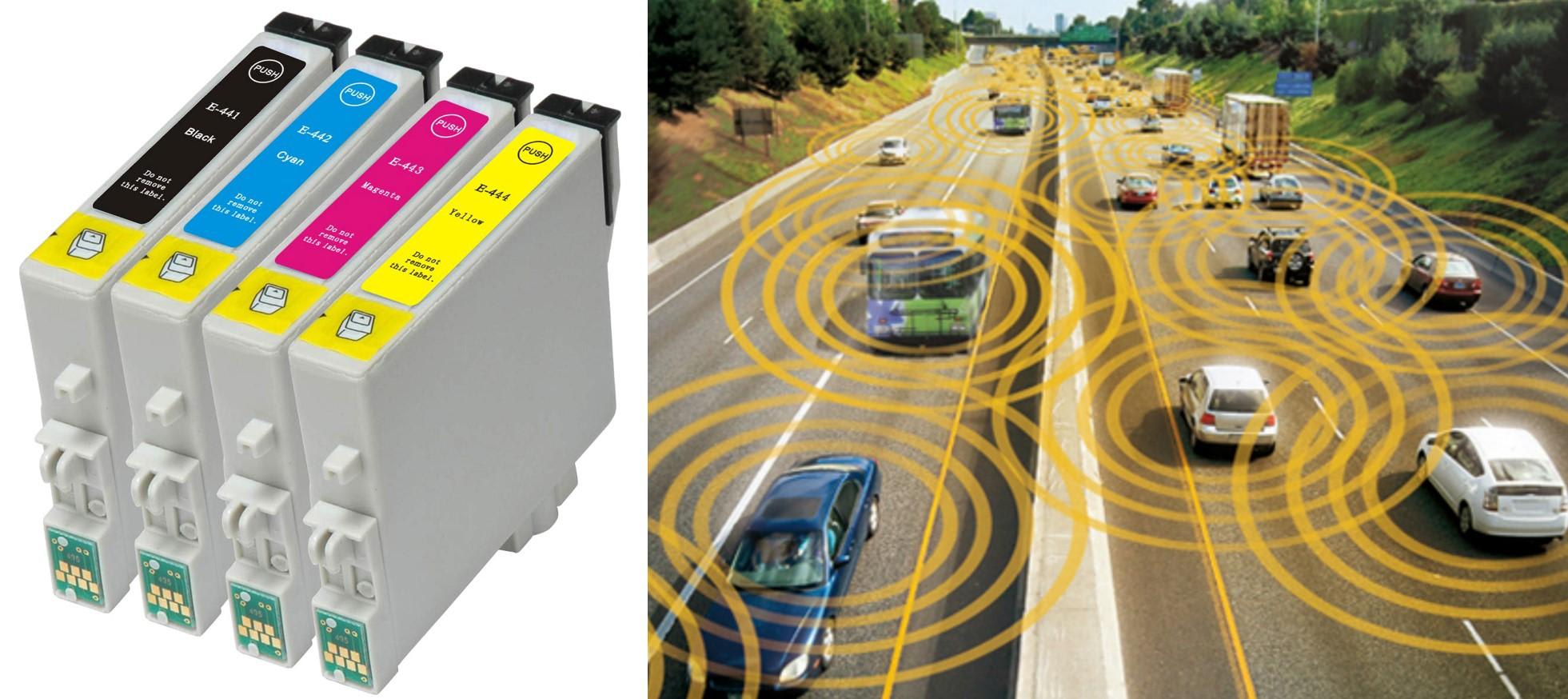
If you’ve bought a printer you’ve noticed the mechanical hardware is typically inexpensive while consumables such as ink and toner are expensive. This has led to a thriving business of third-party companies refurbishing empty cartridges, refilling and reselling them at more affordable prices. Manufacturers and other companies like Juicero and Keurig have resorted to digital rights-management schemes in an attempt to lock out third parties. But consumers manage to find work-arounds.
In the Supreme Court case, Lexmark claimed its end-user license agreement (EULA) prohibited resale or reuse of it toner cartridges based on its patents. Reaffirming the first-sale doctrine, the court ruled that once an item is sold, further patent rights are exhausted. Once a customer exits the store with a printer or toner cartridge, they are free to do what they want with it—including modifying, repairing or refilling it, without paying the original manufacturer again.
For the auto industry, this means that anyone who purchases a vehicle has the right to do the same— which brings us back to self-driving cars. While the liability rules around automated driving systems are still far from clear, it seems almost certain that the OEMs and suppliers will ultimately be responsible if and when one of these systems makes a wrong decision. Proper maintenance and service of the sensor and actuation systems, along with software updates, will be crucial to the reliable performance of these vehicles.
Automakers have been battling against state legislative efforts to ensure a right-to-repair by third parties for many years of existing products. Giving the ruling in the Lexmark case, it is likely to be much more difficult to make the case that customers should not be able to modify or repair vehicles with third party parts in the future. Thus, along with the expected high costs and limited initial capabilities of automated vehicles (the ability to operate in poor weather or on unmarked roads) manufacturers will almost certainly want to keep these vehicles under their control.
While some premium brands such as BMW, Tesla and Volvo have indicated that they will sell at least partially automated vehicles to the public, others like Ford and Waymo have said that they are focusing on the mobility-service market. This will almost certainly include in-house operated services like Ford’s Chariot as well as placing automated vehicles in third party services, such as Lyft and Uber, where they can retain ownership.
The legal landscape around automated driving will continue to evolve in the coming years. Chances are that many laws and judicial opinions that don’t seem to be directly related will nonetheless play a part in shaping the mobility future.
More From SAE Media Group
Automotive Engineering
SAE Convergence 2016: Automakers, Suppliers Firm That Autonomous Driving Not Decades Away
Automotive Engineering
Daimler and Uber Team up to Bring More Self-Driving Cars to the Road
Automotive Engineering
Google's Krafcik Talks Self-Driving Vehicle Development
Automotive Engineering
Autonomous Vehicle Challenge Ramps up Competition at Convergence
Automotive Engineering
Reality Check for Robot Cars
Automotive Engineering
Sharpening the Focus on OBD-II Security
Automotive Engineering
Delphi Showcasing Next-Gen Autonomous System at CES 2017
Automotive Engineering
ZF and Hella Launch Sensor-Systems Development Partnership
Automotive Engineering
China’s New “Automotive Dragons” Faraday and Baidu Target EV, Autonomous Leadership
Off-Highway Engineering
Commercial Vehicles in a Digital World
Automotive Engineering
America’s Latest AV Testing Site Adds Cloud Provider
Automotive Engineering
SAE Publishes Terminology Standard for Automated Driving Systems
Automotive Engineering
Self-Parking Vehicle Via Valeo Valet
Automotive Engineering
Driver Still Has a Seat in Delphi's Automated-Driving Vision


Automotive Engineering
Nvidia’s New Level 2+ Autonomy Platform Is Making Cars Safer Today
Automotive Engineering
Delphi Adds to Autonomy Arsenal
Automotive Engineering
WCX17: Former Transportation Secretary Warns Against Potential CAFE Pullback
Automotive Engineering
700 Miles, Hands-Free!
Automotive Engineering
Lidar Heats up as Sensor Demand Rises
Automotive Engineering
Connected Cars Unleash Supply Chain Change
Automotive Engineering
Nader: Are Glitch-Free Autonomous Vehicles Possible?
Automotive Engineering
CES 2017: Faraday Future Shows Its First Vehicle—the FF 91
Automotive Engineering
Continental Demonstrates New Sensing Technologies for SAE Level 4 Capability
Automotive Engineering
Elektrobit Lends Software to Baidu’s Apollo Autonomous Driving Project
Automotive Engineering
Deep Learning Could Help Safely Automate Cars
Automotive Engineering
Bosch Inaugurates New Technical Center in Pittsburgh
Automotive Engineering
Ford Promises Full-Autonomous Car in 2021
Automotive Engineering
OEMs Continue to Diversify MaaS, Expand UX
Top Stories
INSIDERManufacturing & Prototyping
 How Airbus is Using w-DED to 3D Print Larger Titanium Airplane Parts
INSIDERManned Systems
 FAA to Replace Aging Network of Ground-Based Radars
NewsTransportation
 CES 2026: Bosch is Ready to Bring AI to Your (Likely ICE-powered) Vehicle
NewsSoftware
 Accelerating Down the Road to Autonomy
EditorialDesign
 DarkSky One Wants to Make the World a Darker Place
INSIDERMaterials
 Can This Self-Healing Composite Make Airplane and Spacecraft Components Last...
Webcasts
Defense
 How Sift's Unified Observability Platform Accelerates Drone Innovation
Automotive
 E/E Architecture Redefined: Building Smarter, Safer, and Scalable...
Power
 Hydrogen Engines Are Heating Up for Heavy Duty
Electronics & Computers
 Advantages of Smart Power Distribution Unit Design for Automotive...
Unmanned Systems
 Quiet, Please: NVH Improvement Opportunities in the Early Design...
