




Double-Digit Weight Loss Possible for Heavy-Duty Truck Drivelines
The solid-core axle and gearbox shafts on commercial trucks are targeted for weight reduction in an ongoing research project sponsored by two industry groups.
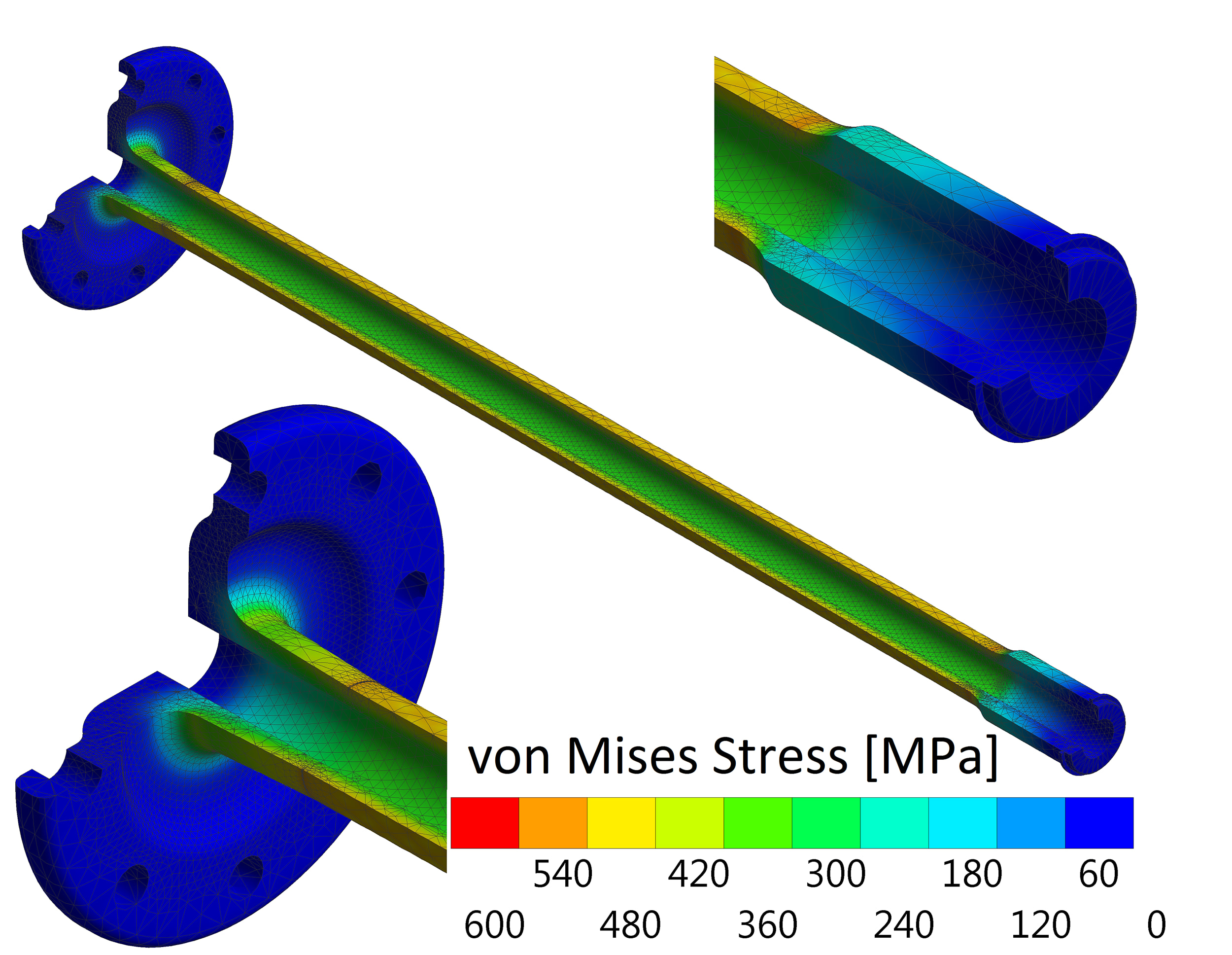
“This project is about increasing the fuel efficiency of heavy-duty trucks with the intent of reducing weight in the powertrain, which accounts for approximately 48% of a heavy-duty vehicle’s weight distribution,” said Gracious Ngaile, professor in the Department of Mechanical & Aerospace Engineering at North Carolina State University.
Ngaile spoke with Truck & Off-Highway Engineering during the Steel Market Development Institute’s 2017 Great Designs in Steel conference in Livonia, MI.
The weight-loss targets are the solid cores of the input shaft, output shaft and countershaft of a transmission/gearbox as well as the axle shafts used on Class 7 and 8 commercial vehicles.
For the gearbox shafts, a per shaft weight reduction of 10 to 15% is possible. “With a gearbox shaft, the principal load is the torque that’s needed to turn the gears. So why should a solid shaft be used? If you take out the central core, you reduce the weight,” he said.
According to Ngaile, the research analysis indicates that a truck with a tandem rear axle and three gearbox countershafts could have its weight reduced by a total of approximately 38.4 kg (84.6 lb) by using hollow shaft geometry.
The estimated weight loss per part is 5.6 to 7.35 kg (12.3 to 16.2 lb) for the axle shaft, 1.75 kg (3.85 lb) for the input shaft, 1.7 to 2.2 kg (3.7 to 4.8 lb) for the output shaft, and 0.5 kg (1.1 lb) for the countershaft.
In the recently completed phase one of the project, Ngaile and a team of NCSU undergraduate and graduate students used FEA (finite element analysis) to investigate different ways to reduce part weight. Forging companies and truck manufacturers provided information for the study that’s sponsored by the American Iron and Steel Institute and FIEF, a support organization of the Forging Industry Association.

NCSU’s research team has proposed a methodology for making lightweight steel axle shafts that use conventional tooling and forging presses/equipment at similar cycle times and at a competitive price. “Otherwise, it probably won’t go anywhere in terms of implementation,” he said.
A proposed forging sequence for producing a hollow axle shaft entails heating a section of a tubular blank via induction heating; upsetting the heated section into a solid rod; and shaping the solid section into a flange or a desired shape by further upsetting. A proposed sequence for forging pinion gear shafts from tubular blanks needs experimental verifications to access the feasibility of the process.
Phase two of the project is focused on prototype parts production by a forging company. “We’ll also make lab-scale prototypes at NCSU,” said Ngaile.
Lightweighting of commercial vehicle drive axles is also a focus in the Class 1 through Class 3 truck segments. Driveline supplier American Axle & Manufacturing will soon enter production with a new drive-axle family, called Quantum, that offers up to a 30% mass reduction for 2500- and 3500-series live axles. For more information see feature in the May 2017 Automotive Engineering magazine, p. 28.
More From SAE Media Group
Automotive Engineering
Axellent Progress
Off-Highway Engineering
Allison Purpose-Builds More Powerful TerraTran Transmission
Off-Highway Engineering
Dana Brings CVP Technology to Lighter-Duty Equipment
Off-Highway Engineering
Daimler Launches Intelligent Truck Axle with Active Oil Regulation
Off-Highway Engineering
Paccar Announces TX-18 Automated Transmission
Automotive Engineering
Magna Shows off Electric Offroad Powertrain, In-Cabin Tech
Off-Highway Engineering
Marmon-Herrington Launches Infinitely Variable Transmission, Variable Power Divider at ConExpo
Automotive Engineering
Inside the Bolt EV
Automotive Engineering
Hub-Motoring in Lordstown’s Novel Endurance
Off-Highway Engineering
Variable Transmission Platform
Automotive Engineering
GKN Spreads Premium Propshaft Tech to Quiet Pickup Cabins
Automotive Engineering
Bollinger Motors Reveals Second-Gen Class-3 EV Prototypes
Automotive Engineering
GKN Readies New 2-Speed E-Axle for 2020
Automotive Engineering
GKN Turns the CV Joint Inside-Out
Automotive Engineering
Inside Tremec’s Corvette Dual-Clutch Transmission
Off-Highway Engineering
Dana Rexroth Tests Latest-Generation Hydromechanical Variable Transmission
Off-Highway Engineering
Dana Rexroth Completes Validation Testing on R2 HVT
Automotive Engineering
Wheel-Hub-Motor Innovations in Flux
Off-Highway Engineering
Engineering the World’s Fastest Tractor
Off-Highway Engineering
Eaton Unveils DCT for Medium-Duty Trucks and Buses
Automotive Engineering
FEV Shows Compact DCT for FWD Vehicles
Tech Briefs
Are In-Wheel Motor Systems Catching On?
Off-Highway Engineering
Fan Drive Systems
Off-Highway Engineering
Miserly Power Systems
Off-Highway Engineering
Medium-Duty Engines, Transmissions Shift Focus to Software
Tech Briefs
EV vs. ICE: How Does Wire Harness Design Differ?
Automotive Engineering
GKN Spins a New Compact AWD Disconnect System for Small SUVs
Automotive Engineering
EV Motor Development Is on the Move
Off-Highway Engineering
PACCAR Launches Lightest Heavy-Duty Automated Transmission for On-Highway CVs
Automotive Engineering
ZF Introduces Complete E-Drive System for Passenger, Commercial Vehicles
Top Stories
INSIDERManufacturing & Prototyping
 How Airbus is Using w-DED to 3D Print Larger Titanium Airplane Parts
INSIDERManned Systems
 FAA to Replace Aging Network of Ground-Based Radars
NewsTransportation
 CES 2026: Bosch is Ready to Bring AI to Your (Likely ICE-powered) Vehicle
NewsSoftware
 Accelerating Down the Road to Autonomy
EditorialDesign
 DarkSky One Wants to Make the World a Darker Place
INSIDERMaterials
 Can This Self-Healing Composite Make Airplane and Spacecraft Components Last...
Webcasts
Defense
 How Sift's Unified Observability Platform Accelerates Drone Innovation
Automotive
 E/E Architecture Redefined: Building Smarter, Safer, and Scalable...
Power
 Hydrogen Engines Are Heating Up for Heavy Duty
Electronics & Computers
 Advantages of Smart Power Distribution Unit Design for Automotive...
Unmanned Systems
 Quiet, Please: NVH Improvement Opportunities in the Early Design...
