




Bolt EV Seat Design Cuts Weight, Delights Taller Passengers
Stepping into the back seat of Chevrolet’s 2017 Bolt EV, one attribute of the car is immediately evident: the designers and engineers didn’t neglect the outsized physical dimensions of tall passengers.
In fact, even those whose height and inseam length are well beyond the 90th percentile—that would include the author—will appreciate the Bolt EV’s surprisingly easy ingress and egress. That’s because the car’s front seats were designed with the back-seaters in mind, as well as being designed to reduce mass.
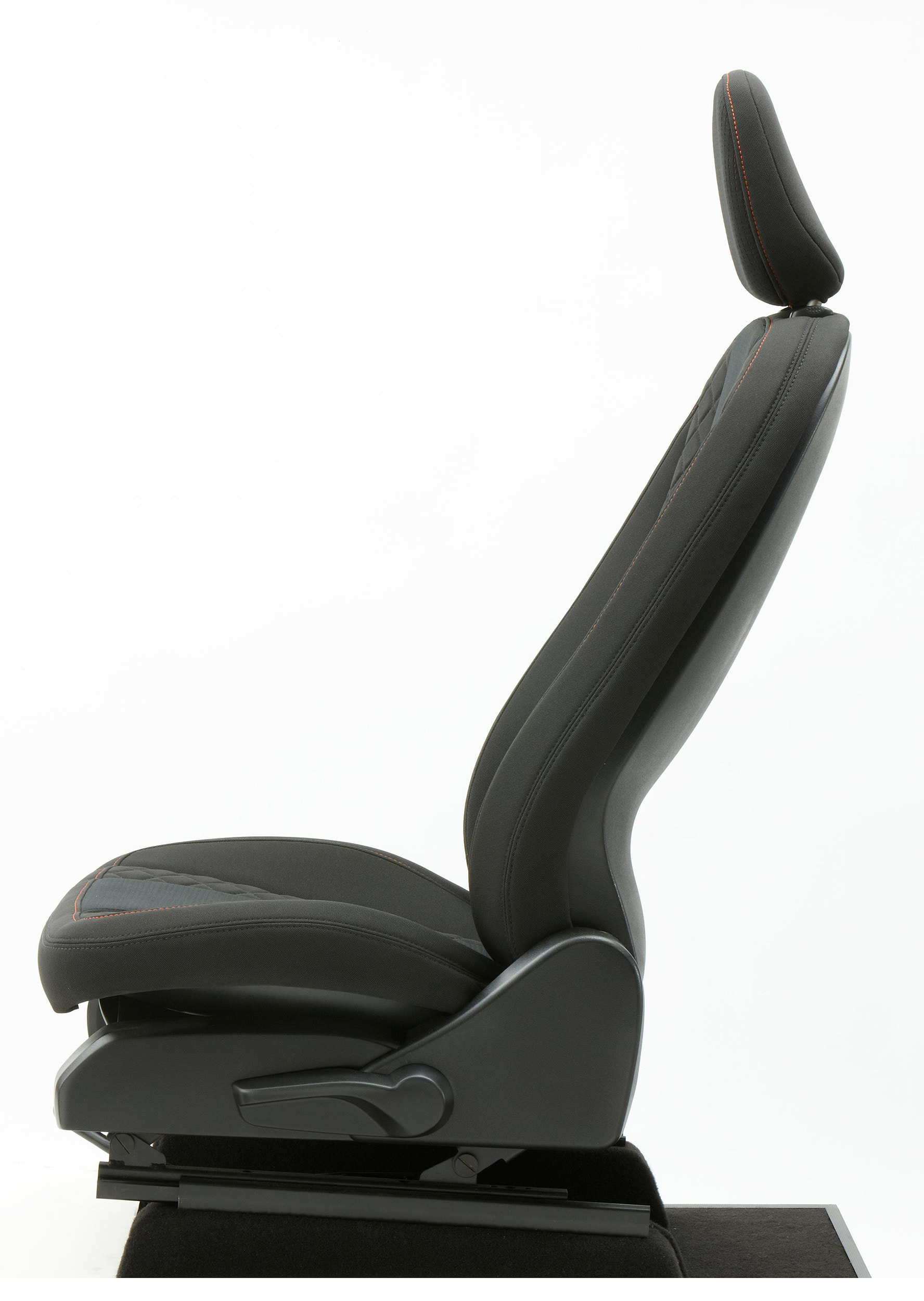
Bolt EV’s front seats were designed in house by GM. They’re known internally as UTSB—Ultra Thin Seatback. The seats are designed and engineered in combination with the similarly well-considered rear seat system (both supplied by Magna Seating) to improve the interior spaciousness of a vehicle that feels larger inside than its compact exterior form would indicate. The front seats are engineered with a light steel seat frame over which a flexible plastic shell is fitted. The shell is lined with 0.4-0.6-in-thick (10-15 mm) foam.
Swing your torso and legs into the rear seat area, as Automotive Engineering did during a pre-production test drive last winter, and the Bolt’s rear knee room feels extra special for a B-segment vehicle. The rear seat back still has a metal structure, and includes a sculpted back panel to provide increased rear seat leg room. Behind the fold-flat 60/40 rear seat, the Bolt offers 16.9 ft3 of cargo space—more than the current B-segment leader in this metric, the 2016 Honda Fit.
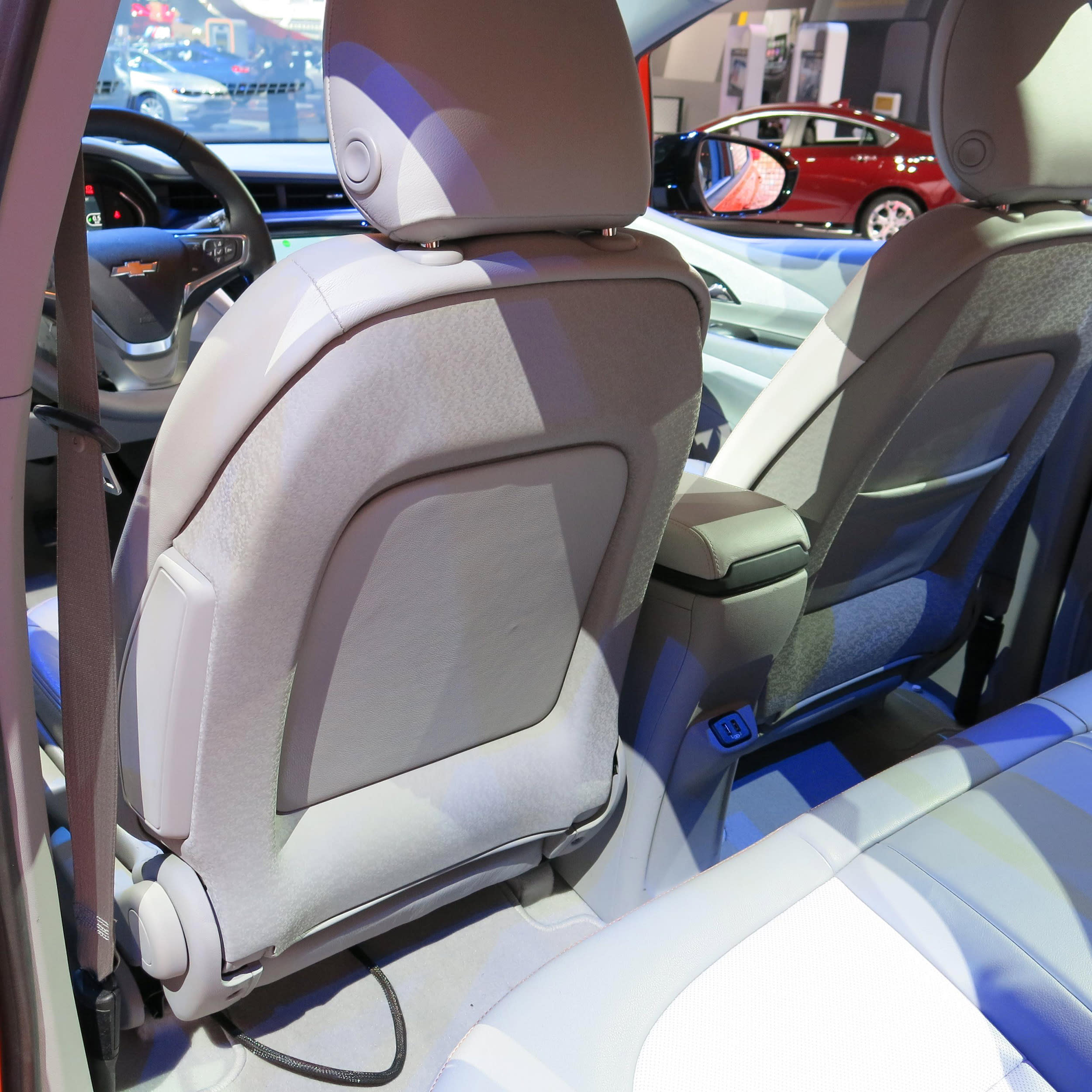
The front seats’ backside fascias are molded with a concave surface geometry in their center so that taller backseat passengers are not always required to ask the driver and front seat passenger to slide their seats forward. Pam Fletcher, GM’s Executive Chief Engineer for Electrified Vehicles, explained that the Bolt EV “was designed with ride-sharing as a potential consideration.” Think GM’s investment in Lyft.
According to the Bolt’s Chief Engineer, Josh Tavel, the UTSB front seats also are lighter overall than comparable GM seats as used on the Chevy Sonic, for example, but he was not yet prepared to reveal the exact mass delta. The front seats also incorporate the side airbag modules as a design element.
Magna Seating is responsible for the Bolt seats’ foam and trim design. The company also handles complete assembly of the seats at its Detroit plant, which also produces seats for the Chevrolet Volt.
Magna has itself been a pioneer in developing lightweight, thin-profile seat designs. It first exhibited a thin-section lightweight (less than 22 lb/9.9 kg) vehicle seat in 2000, on GM’s 80-mpg Precept hybrid concept car. The company’s latest FutureForm concept is claimed to offer a 20% mass reduction versus comparable production seats, along with a nearly 2-in (50 mm) improvement in rear-seat passenger leg room, the company claims.
More From SAE Media Group
Automotive Engineering
2023 Cadillac Lyriq Executive Chief Engineer: New EV Her ‘North Star’
Automotive Engineering
Acura TLX Is Honda’s New Body-Build Benchmark
Automotive Engineering
OEMs Continue to Diversify MaaS, Expand UX
Automotive Engineering
Peugeot Seeks International Appeal with Quartz Concept
Automotive Engineering
Ford Refines Interior, Exterior on 2025 Explorer
Automotive Engineering
Rolls-Royce Reveals a Vision of Its Future
Automotive Engineering
Engineering the 2022 Toyota Tundra
Automotive Engineering
Mercedes' Concept Stresses Connectivity, Record-Breaking Aerodynamics
Automotive Engineering
Honda Shows Radical Project 2&4
Automotive Engineering
Magna Seating Debuts Sedan Slouch Concept
Automotive Engineering
Lexus Unveils Concept Flagship Crossover
Automotive Engineering
Lexus Unveils A-Segment Crossover Concept
Autonomous Vehicle Engineering
Origin of the Species
Automotive Engineering
PSA's E-TENSE Shows Design Cues for Future DS Models
Automotive Engineering
Integrating a Plug-In Hybrid Jeep
Automotive Engineering
Nissan Shows Gripz Crossover Concept
Automotive Engineering
Q80 Inspiration Concept Previews Future Top-Range Infiniti, New Engine Family
Automotive Engineering
China Luxury Market Requirements Drive New Lincoln Continental Design, Engineering
Automotive Engineering
Divine Concept Hints at DS Brand Future
Automotive Engineering
VW’s Carbon-Fiber XL Sport Concept Sports Ducati V2 Motorcycle Engine
Automotive Engineering
Mazda Hazumi B-Segment Concept Previews Mazda2
Automotive Engineering
Infiniti Concept Conjures a New-Tech Q45
Automotive Engineering
Honda Surprises with Civic Concept
Automotive Engineering
Buick Stuns, Delights NAIAS with Avista Concept
Automotive Engineering
Infiniti Q60 Concept Previews Next Coupe
Automotive Engineering
Nissan Debuts Tech-Laden 2022 Ariya EV SUV

Automotive Engineering
Lucid Motors Unveils Air Electric Luxury Car
Automotive Engineering
Unstoppable Formula-SAE Team Leader Earns Rumbaugh Award
Automotive Engineering
New 40%-Scale Wind Tunnel Increases GM's Aero-Development Capacity
Top Stories
INSIDERManufacturing & Prototyping
 How Airbus is Using w-DED to 3D Print Larger Titanium Airplane Parts
INSIDERManned Systems
 FAA to Replace Aging Network of Ground-Based Radars
NewsTransportation
 CES 2026: Bosch is Ready to Bring AI to Your (Likely ICE-powered) Vehicle
NewsSoftware
 Accelerating Down the Road to Autonomy
EditorialDesign
 DarkSky One Wants to Make the World a Darker Place
INSIDERMaterials
 Can This Self-Healing Composite Make Airplane and Spacecraft Components Last...
Webcasts
Defense
 How Sift's Unified Observability Platform Accelerates Drone Innovation
Automotive
 E/E Architecture Redefined: Building Smarter, Safer, and Scalable...
Power
 Hydrogen Engines Are Heating Up for Heavy Duty
Electronics & Computers
 Advantages of Smart Power Distribution Unit Design for Automotive...
Unmanned Systems
 Quiet, Please: NVH Improvement Opportunities in the Early Design...
