




Lucid Motors Unveils Air Electric Luxury Car
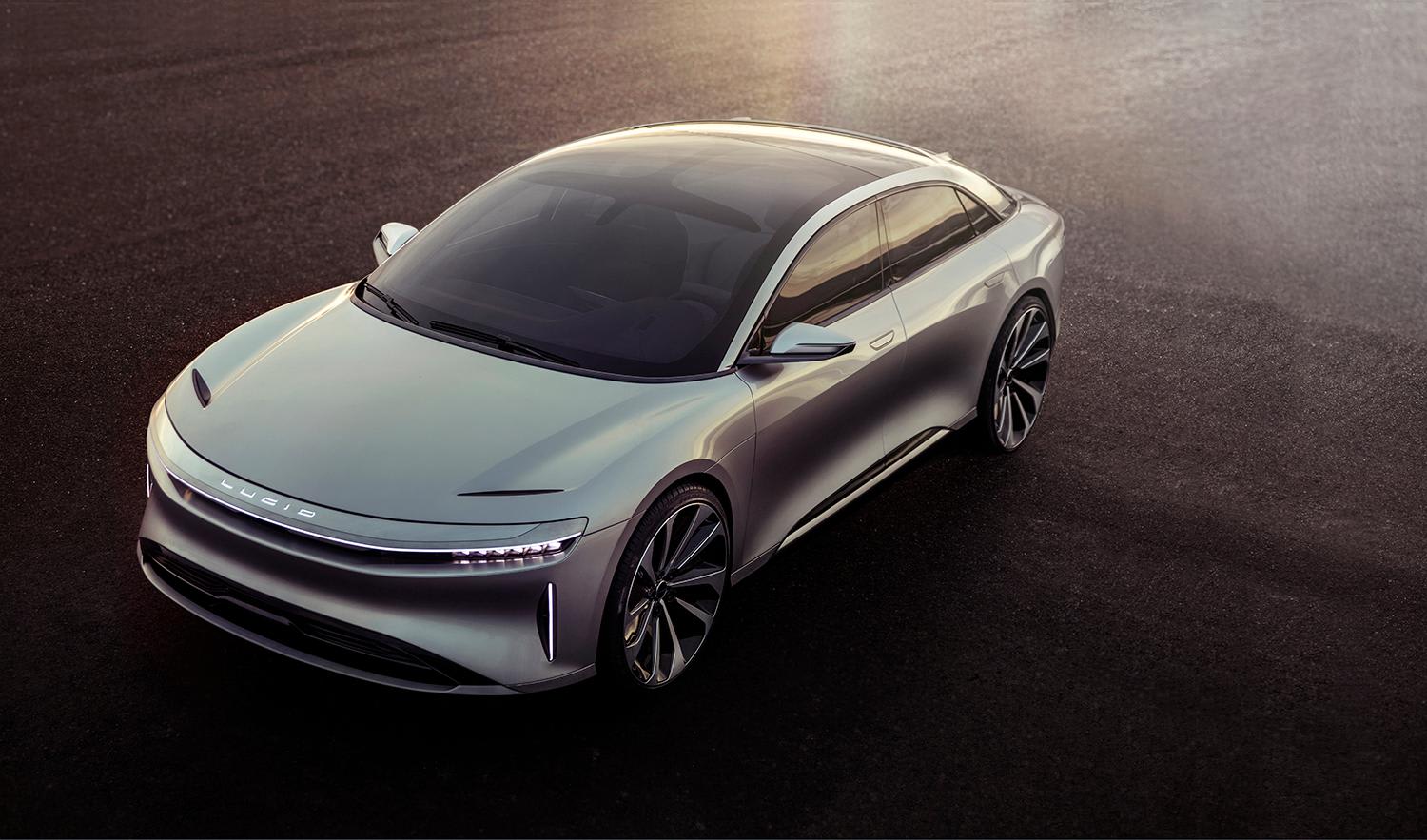
Lucid Motors, the latest electric-vehicle startup to tilt at Tesla, unveiled the production version of its first model, the Air luxury sedan that boasts a twin-motor driveline and high-density battery pack that can generate a claimed 1000 horsepower, 2.5-s 0-to-60 mph acceleration and driving range up to 400 mi (644 km).
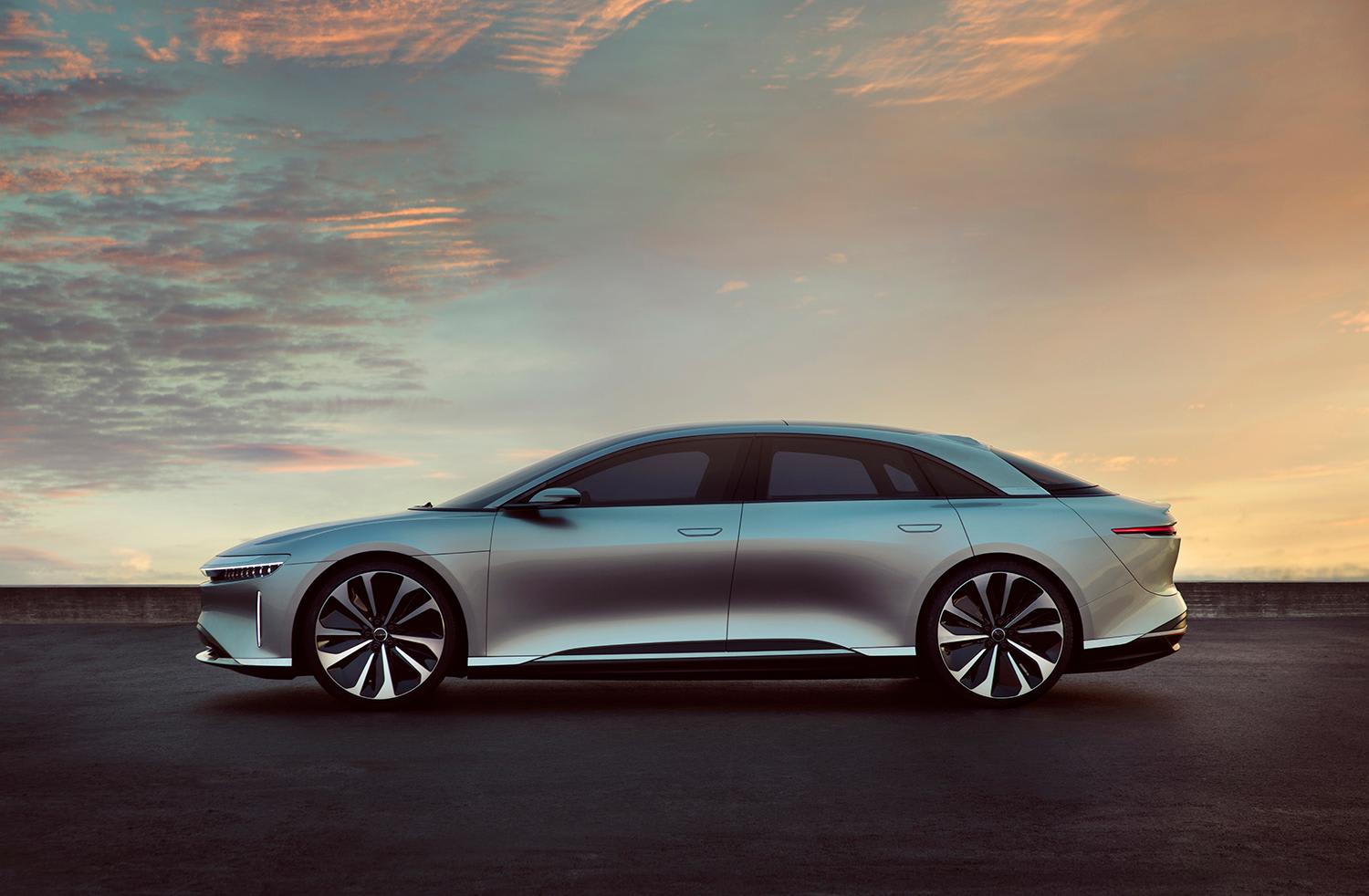

The Air is at least two years away from showrooms (whatever that might entail), however: production is earmarked to begin in late 2018 at the company’s recently inaugurated factory site in Arizona. The company promises sales would begin shortly thereafter. The car initially will cost more than $100,000, but Lucid intends to eventually sell a less luxury-oriented (and presumably reduced-performance) version for around $65,000, a starting price more in line with obvious competitor Tesla’s current Model S.
Revealing the Air near its Menlo Park, CA, headquarters, Lucid said the car will first be offered with a choice of battery capacities: a 100 kW·h “base” version and a 130 kW·h pack. The unique lithium-ion battery chemistry, developed in cooperation with Samsung SDI, was ten years in development, Lucid said; the form factor is cylindrical and is claimed to offer outstanding long-term capacity for repetitive fast-charging. Lucid recently announced it will be the exclusive battery-pack supplier to the global Formula E racing series.
Unique driveline, suspension technology

Head of design Derek Jenkins, who most recently worked at Mazda, delivered in the Air a smooth and rounded 4-door hatchback that appears upscale and futuristic without seeming overtly radical. The company did not supply any definitive figures regarding dimensions, but said in its press material distributed in conjunction with the Air’s launch: “Lucid’s vehicles transcend long established vehicle segment boundaries to accommodate the interior space of a full-size luxury vehicle in a midsize footprint.”

Meanwhile, Lucid’s chief technology officer is Peter Rawlinson—who before joining Lucid was the lead engineer for the Tesla Model S—but few engineering details were provided regarding the Air’s weight or chassis, other than a mention of an air-spring suspension with “regenerative valve technology.” The drive motor is said is to be integrated with a transmission. Lucid said of the unit: “Entirely developed in-house, the resulting solution is smaller, more efficient and more power-dense than competitors, while potentially more reliable.”
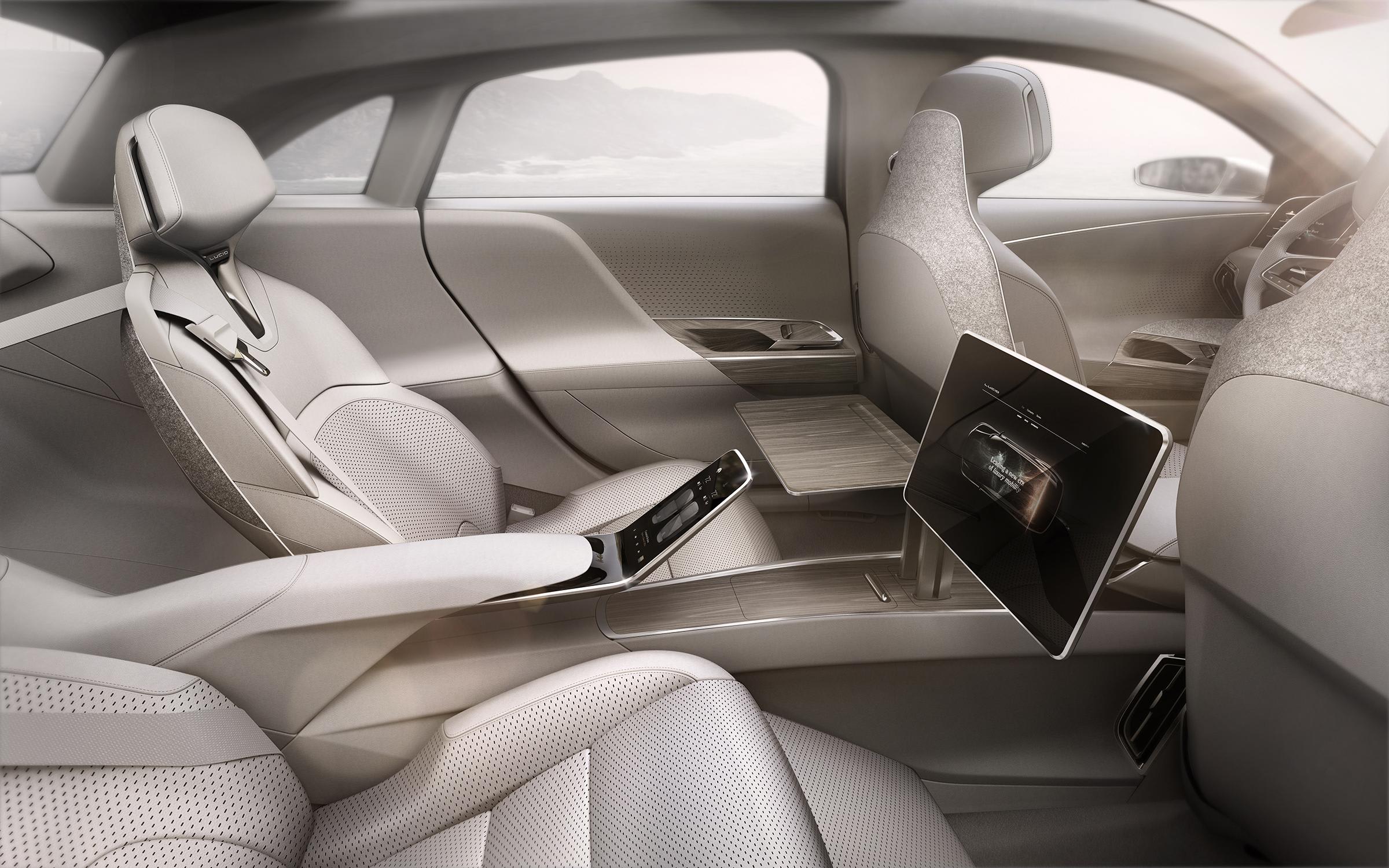
The Air’s interior, shown only in photos as a finished concept, is meant to accommodate four, with twin deeply-reclining rear seats. A 29-speaker audio system is said to help fill the white-noise void left by the absence of a combustion engine and its associated mechanicals.
Lucid also said the Air will be built to accommodate full-range autonomous-driving capability: “Lucid vehicles will be delivered autonomous-ready with a comprehensive sensor suite able to scale to complete autonomy through ongoing software upgrades,” the company said in a release.
More From SAE Media Group
Automotive Engineering
Making over the World’s Leading Hybrid
Automotive Engineering
2023 Cadillac Lyriq Executive Chief Engineer: New EV Her ‘North Star’
Automotive Engineering
Jaguar Reveals Its 2040 Future and Electrifies the E-Type
Automotive Engineering
Audi All-Electric Concept to Take on Tesla Model X
Off-Highway Engineering
Western Star Adds ‘Weight Sensitive’ 47X to Vocational Lineup
Automotive Engineering
Volvo’s Polestar Powerhouse Plug-In Hybrid
Automotive Engineering
Q80 Inspiration Concept Previews Future Top-Range Infiniti, New Engine Family
Automotive Engineering
Lotus Just Unveiled the World’s Most Powerful Car
Automotive Engineering
Engineering the 2022 Toyota Tundra
Automotive Engineering
Infiniti Concept Conjures a New-Tech Q45
Automotive Engineering
Lexus Unveils Concept Flagship Crossover
Tech Briefs
EV vs. ICE: How Does Wire Harness Design Differ?

Automotive Engineering
Peugeot Seeks International Appeal with Quartz Concept
Automotive Engineering
Mazda Hazumi B-Segment Concept Previews Mazda2
Automotive Engineering
2019 Suzuki Jimny
Automotive Engineering
2025 Lucid Air Review: Unnecessarily Fast, Astonishingly Efficient
Automotive Engineering
5 More HP for 2026 Kia Sportage: First Drive
Automotive Engineering
Innovative ‘Afreecar’ Wins SAE’s 2021 Create the Future Design Award
Automotive Engineering
Divine Concept Hints at DS Brand Future
Automotive Engineering
Toyota Stretches SUV Line-Up with World Debut of Grand Highlander
Automotive Engineering
SAE Eye on Engineering Quick Take: Telsa Model S Troubles
Automotive Engineering
2021 Toyota Supra 2.0
Automotive Engineering
Jaguar’s Making of a Sports Sedan
Automotive Engineering
Aston Martin Concept Is Part Crossover, Part GT
Automotive Engineering
Wraith Offers Rolls-Royce’s Most Dynamic Driving Experience
Tech Briefs
Making EVs Accessible for All
Automotive Engineering
First Drive: 2027 Mercedes-Benz CLA Hybrid
Automotive Engineering
PSA's E-TENSE Shows Design Cues for Future DS Models
Top Stories
INSIDERManufacturing & Prototyping
 How Airbus is Using w-DED to 3D Print Larger Titanium Airplane Parts
INSIDERManned Systems
 FAA to Replace Aging Network of Ground-Based Radars
NewsTransportation
 CES 2026: Bosch is Ready to Bring AI to Your (Likely ICE-powered) Vehicle
NewsSoftware
 Accelerating Down the Road to Autonomy
EditorialDesign
 DarkSky One Wants to Make the World a Darker Place
INSIDERMaterials
 Can This Self-Healing Composite Make Airplane and Spacecraft Components Last...
Webcasts
Defense
 How Sift's Unified Observability Platform Accelerates Drone Innovation
Automotive
 E/E Architecture Redefined: Building Smarter, Safer, and Scalable...
Power
 Hydrogen Engines Are Heating Up for Heavy Duty
Electronics & Computers
 Advantages of Smart Power Distribution Unit Design for Automotive...
Unmanned Systems
 Quiet, Please: NVH Improvement Opportunities in the Early Design...
