




Nissan Targets Cabin NVH, Makes Big Investment in Sentra Upgrade

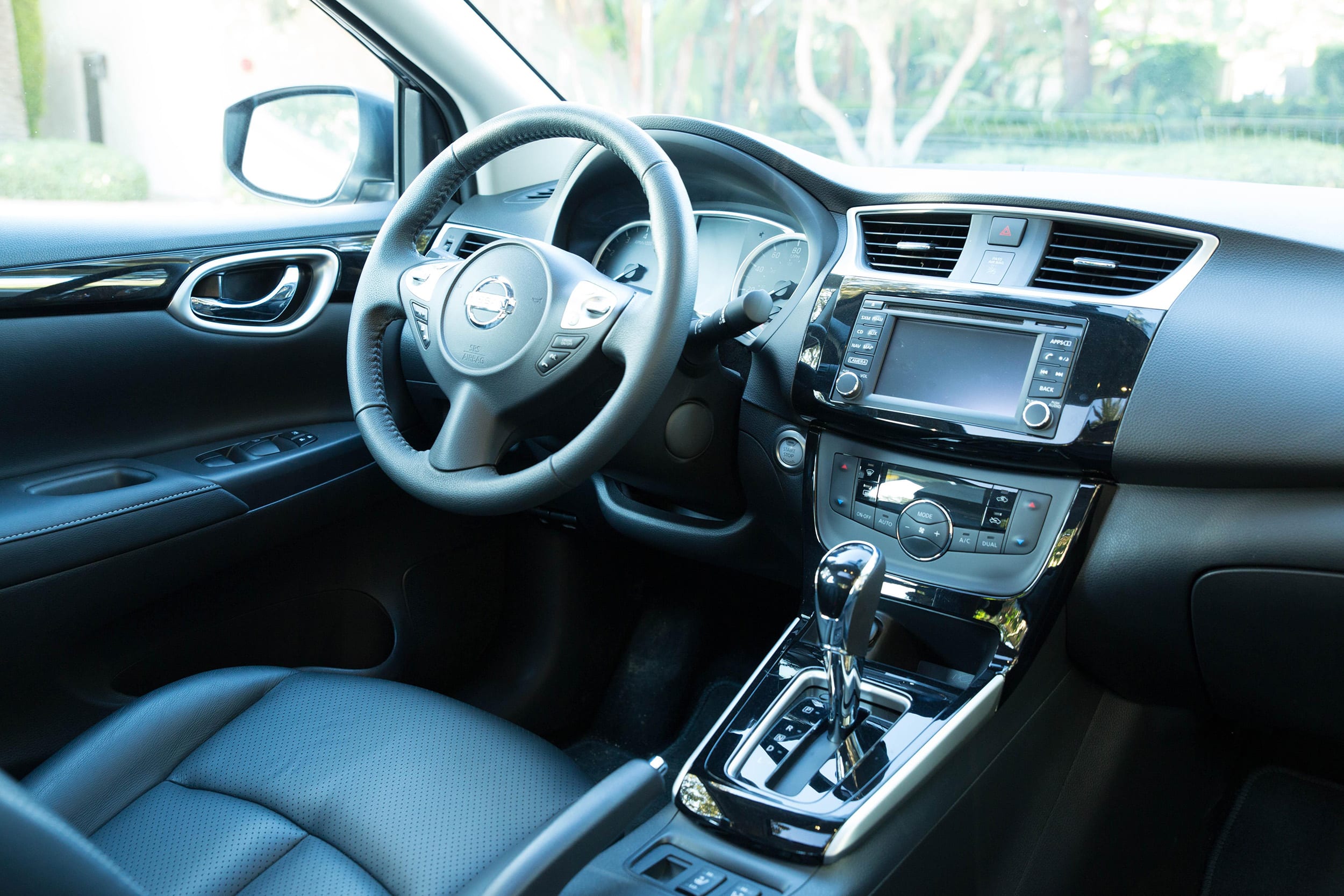
Significant updates to the seventh generation Sentra make the 2016 model Nissan’s quietest and most dynamic-driving compact sedan to date. The automaker invested more than three times its typical outlay for a mid-cycle refresh on Sentra, according to Chris Schwerkoske, a senior product planner.
The 2016 model contains more than 550 new parts involving the exterior, interior, suspension, and steering systems, Schwerkoske told Automotive Engineering.
With the Sentra revamp, Nissan aims "to remain a leader in the highly competitive compact car segment,” said Robert Mank, an engineer with Nissan Technical Center North America’s Marketability Engineering group.
He said the current generation Sentra was fully redesigned in 2013MY. Since that time, compact sedan makeovers have included full redesigns of the Mazda3 and Toyota Corolla in 2014MY, as well as the 2016MY debut of the 10th-generation Honda Civic.
Sentra's cabin noise was reduced through various changes, including replacing the prior non-laminated windshield with an acoustic windshield, and adding sound-reduction materials under the dash, inside the door trim, and underneath the floor carpet.
Explained Mank, “In specific cabin areas, material was added where there was no sound absorption material before, and in other areas we replaced material that wasn’t as high-performance as the Autozorb material.” Supplied by AIM Fiber Products, Autozorb is a lightweight, 100% polypropylene fibrous insulation blanket designed to provide interior acoustical and thermal protection.
Engine mounting changes contribute to the approximately 10% reduction in the new Sentra's engine noise, noted Mank. “The upper torque rod was removed to change the noise path of the engine," he said, "and lateral rubber stoppers were added to one of the lower engine mounts to compensate for the upper torque rod function.”
Software updates to the Xtronic continuously-variable transmission (CVT) also impede powertrain noise from reaching the cabin.
“Instead of the engine holding high rpm—which means more engine noise—the CVT now varies the rpm and delivers variable engine noise in a more linear way," Mank said. "Engine noise now more closely matches engine demand, which is similar to a standard-step automatic transmission.”
The 2016 Sentra shares design language with the midsize Altima and fullsize Maxima. That look is conveyed via Sentra’s new hood, fenders, grille, front and rear fascias, headlamps, tail lamps and wheel designs.
Suspension changes include 10% higher spring rates, re-tuned front struts and rear shocks, and stiffer rear bushings. The prior one-piece stamped steel front tunnel bracket was replaced with a four-piece boxed-type front tunnel bracket (initially developed for the Nissan Juke NISMO RS) to increase the body stiffness. According to Schwerkoske, “The 2016 car responds more quickly to driver inputs.”
Other changes impacting Sentra’s driving dynamics include new electric power steering controller mapping, a new steering column intermediate shaft with higher torsional stiffness than the predecessor, and new Continental 16-in tires for the SV trim. The new tires have a higher grip tread compound and increased sidewall stiffness compared to the prior 16-in Continentals.
“The overall goal with the suspension and steering changes was to enhance the ride comfort and the handling,” said Schwerkoske. The 2016 car has a more progressive steering feel, while steering effort has been reduced by 7%, which helps improve how the car behaves during parking maneuvers and other low-speed driving.
For the first time, Sentra is available with forward emergency braking, intelligent cruise control, and radar-based blind spot warning with rear cross traffic alert. Said Schwerkoske, “We’re bringing some of the premium driver assistance technologies that we launched with the Maxima to the Nissan Sentra."
More From SAE Media Group
Automotive Engineering
2026 Nissan Sentra Review: Putting the Pieces Together
Automotive Engineering
Nissan's Maxima Has Flowing Sports Car Lines, Upgraded 3.5-L V6 and CVT
Automotive Engineering
Honda’s All-New 2017 CR-V: Larger, Lighter, Turbocharged
Automotive Engineering
2019 Kia Forte Gets 'Smart' CVT
Automotive Engineering
New Toyota Avalon Gains Advanced Suspension, Lighting Systems
Automotive Engineering
Redesigned 2017 Infiniti Q60 Gets New Engine
Automotive Engineering
What We’re Driving: 2018 Toyota C-HR
Automotive Engineering
Hyundai Elantra Sport
Automotive Engineering
Scion Debuts IA and IM at New York
Automotive Engineering
Honda’s All-New Global 2016 Civic Targets Mercedes Refinement
Automotive Engineering
2021 Toyota Supra 2.0
Automotive Engineering
5 More HP for 2026 Kia Sportage: First Drive
Automotive Engineering
Camry's Mid-Cycle "Refresh" More Than Just Front and Rear Panels
Automotive Engineering
2018 Kia Stinger
Automotive Engineering
Honda Surprises with Civic Concept
Automotive Engineering
2026 Toyota RAV4 Review: All Hybrid, All the Time
Off-Highway Engineering
First Drive: Drifting in the Electric 2027 Mercedes GLC 400
Automotive Engineering
TRD Spells Capability for Toyota’s Latest Tundra
Automotive Engineering
Mitsubishi Puts NVH in 2016 Outlander's Crosshairs
Automotive Engineering
Most Powerful Production Mini Shows in Detroit
Automotive Engineering
Packaging Honda’s all-new Insight
Automotive Engineering
Mercedes’ New GLC Represents a Sportier Focus
Automotive Engineering
Ford Refines Interior, Exterior on 2025 Explorer
Automotive Engineering
Kia’s PBV Concepts Expand Commercial Possibilities
Automotive Engineering
Toyota Stretches SUV Line-Up with World Debut of Grand Highlander
Off-Highway Engineering
Honda's New Pioneer 1000 Side-By-Side Gets Purpose-Built 999-Cc Engine, Industry-First DCT
Automotive Engineering
Honda Enters Burgeoning Subcompact SUV Fray
Automotive Engineering
Hyundai Updates Its Tucson Compact Crossover
Automotive Engineering
2015 Chrysler 300 Gets Upgrades
Top Stories
INSIDERManufacturing & Prototyping
 How Airbus is Using w-DED to 3D Print Larger Titanium Airplane Parts
INSIDERManned Systems
 FAA to Replace Aging Network of Ground-Based Radars
NewsTransportation
 CES 2026: Bosch is Ready to Bring AI to Your (Likely ICE-powered) Vehicle
NewsSoftware
 Accelerating Down the Road to Autonomy
EditorialDesign
 DarkSky One Wants to Make the World a Darker Place
INSIDERMaterials
 Can This Self-Healing Composite Make Airplane and Spacecraft Components Last...
Webcasts
Defense
 How Sift's Unified Observability Platform Accelerates Drone Innovation
Automotive
 E/E Architecture Redefined: Building Smarter, Safer, and Scalable...
Power
 Hydrogen Engines Are Heating Up for Heavy Duty
Electronics & Computers
 Advantages of Smart Power Distribution Unit Design for Automotive...
Unmanned Systems
 Quiet, Please: NVH Improvement Opportunities in the Early Design...
