




Engineering Simulation Tool
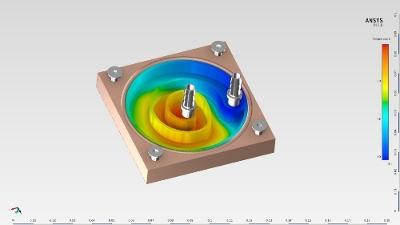
Engineers across disciplines will realize step-change improvements in the way they develop products using ANSYS 17.0. This next generation of ANSYS delivers 10× improvements to product development productivity, insight, and performance. Highlights of the release include: a comprehensive chip-package-system design workflow with new capabilities for automated thermal analysis and integrated structural analysis that enables customers to deliver smaller, higher-power density devices to market faster. The fluids suite includes advancements in physics modeling and innovations across the entire workflow and user environment design that accelerate time to results by up to 85% without compromising accuracy. Preprocessing has also improved by an order of magnitude. Using the direct-modeling tools in ANSYS 17.0, users can prepare their geometry for analysis faster than with traditional CAD. Save and load times for complex models, as well as the performance for common geometry editing functions, have increased by up to 100×. Geometry tools also boast tighter integration to ANSYS Workbench and offer productivity advancements for modeling fabricated and composite structures. Fluids pre-processing for complex systems has also improved dramatically. The process of preparing and meshing models with hundreds of parts has been reduced from days to hours. The release enables software engineers to be more productive with developing, testing, and certifying embedded software. For example, with printed circuit boards, engineers can now quickly import ECAD geometry and perform coupled thermal-structural analysis with power integrity and electronics cooling analyses to accurately predict stress, deformation, and fatigue. These capabilities enable engineers to design board layouts and thermal-management strategies for more reliable electronic components. As a result, complex boards and packages can be set up and solved in minutes, not hours or days. For more information, visit here .
More From SAE Media Group
Automotive Engineering
Unlocking DfAM’s Potential
Sensor Technology
Digital Twins for Industry
Tech Briefs
Product of the Month

Tech Briefs
Product of the Month
Medical Design Briefs
Advanced Design Tools for Additively Manufactured Medical Devices

Aerospace & Defense Tech Briefs
Using Advanced Computational Engineering Software to Meet Aerospace & Defense Industry Challenges



Medical Design Briefs
Breakthrough Analysis Tools
Medical Design Briefs
PRODUCT OF THE MONTH: Multiphysics 5.0 and Application Builder


Motion Design
New Products
Tech Briefs
Embracing Agile Product Development
Aerospace & Defense Tech Briefs
Surviving the Challenge of Thermal Design in Aerospace Electronics
Motion Design
Guiding the Way in Automotive Plants
Off-Highway Engineering
TE Connectivity Enhances Digital Platform with CT Data Analysis

Aerospace & Defense Tech Briefs
Analyzing Aircraft Antenna Placement and Performance with Unified Modeling and Simulation


Medical Design Briefs
Winter 2022 Resource Guide
Off-Highway Engineering
Siemens Improves Optimization for Engine Development
Automotive Engineering
Dimensional Metrology Beyond the CMM
Medical Design Briefs
Integrating Electrical Systems into 3D Mechanical Models
Medical Design Briefs
FEM Simulation Speeds Analysis of Durability for Replacement Joints
Top Stories
NewsSensors/Data Acquisition
 Microvision Aquires Luminar, Plans Relationship Restoration, Multi-industry Push
INSIDERRF & Microwave Electronics
 A Next Generation Helmet System for Navy Pilots
INSIDERWeapons Systems
 New Raytheon and Lockheed Martin Agreements Expand Missile Defense Production
NewsAutomotive
 Ford Announces 48-Volt Architecture for Future Electric Truck
INSIDERAerospace
 Active Strake System Cuts Cruise Drag, Boosts Flight Efficiency
ArticlesTransportation

Webcasts
Aerospace
 Cooling a New Generation of Aerospace and Defense Embedded...
Energy
 Battery Abuse Testing: Pushing to Failure
Power
 A FREE Two-Day Event Dedicated to Connected Mobility
Automotive
 Quiet, Please: NVH Improvement Opportunities in the Early Design Cycle
Electronics & Computers
 Advantages of Smart Power Distribution Unit Design for Automotive &...
Unmanned Systems
 Sesame Solar's Nanogrid Tech Promises Major Gains in Drone Endurance