




Testing of Low-Friction Seals
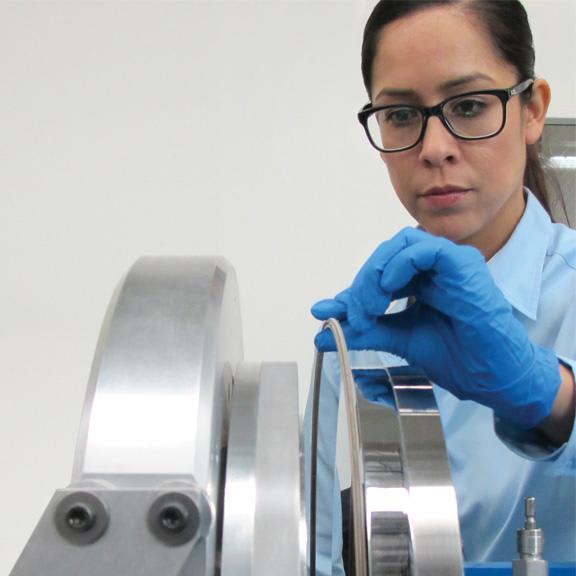
A new test service introduced by Bal Seal Engineering, Inc. offers verified performance results for the company’s low-friction spring-energized seals used in rotary/face applications. Rotary/face seals are frequently used in dynamic housings and mounts to protect electronics and other internal components from environmental contaminants that can compromise performance. To minimize stick-slip and meet motor torque requirements, the seals must exhibit very low friction—but they also must minimize leakage over long periods of exposure. Bal Seal’s seal test equipment measures friction and leak rate using customer-defined hardware tolerances and operating conditions, including pressure and speed. Fixtures can accommodate seals up to 22-in OD, and can be modified for larger seal dimensions. The fixtures can produce a range of pressures and exert specific frictional forces to accurately simulate a seal’s performance under real-world conditions. Rotating plates on the fixtures are connected to digital force testers, which measure the friction of rotation. A vacuum tester simulates airflow over the housing. The tester pulls a vacuum across the plates, creating suction inside the seal to measure the leak rate across its surface. Both friction and leak rate are measured simultaneously. Bal Seal’s low-friction spring-energized seals, which are machined from polymer-filled polytetrafluoroethylene (PTFE) materials, exhibit a low dynamic coefficient of friction. The seals minimize “stiction” to facilitate smooth rotation and bi-directional motion, and they can be used against a range of material hardnesses/finishes. They are energized with a Bal Spring canted coil spring, which ensures even wear and longer service life.
More From SAE Media Group
Aerospace & Defense Tech Briefs
Aerospace Gimbals Test Service
Motion Design INSIDER
Lehigh Researchers Make Sand That Flows Uphill

Robotics & Automation INSIDER
Gripper Robot Can Grasp Objects from Very Fine to Large

Motion Control & Automation Technology
Tabletop Robot

Motion Design INSIDER
Friction That Cools
Tech Briefs
Product of the Month
Tech Briefs
Ultrathin Pressure Sensor Attaches to Skin
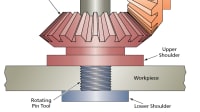

Tech Briefs
Breaking Down the NB Rotary Ball Spline
Motion Design
Linear Bearings: What You Need to Know
Test & Measurement Tech Briefs
Friction Tester
Motion Control & Automation Technology
Stages
Automotive Engineering
Venting for EV Battery Packs
Motion Design
Square Structural Joint with Robotic Assembly Tool
Motion Design
Tiny, Fully Functional Water-Strider and Mini-Bug Robots

Motion Design INSIDER
Hexagonal Electrohydraulic Modules Shape-Shift into Versatile Robots
Aerospace Manufacturing and Machining
Aerospace Work Platforms — More than Meets the Eye

Tech Briefs
Take the Tolomatic Design Journey
Tech Briefs
Origami-Inspired Material Softens Impact Forces
Tech Briefs
3D Printing a Mini Vacuum Pump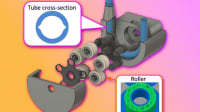
Medical Design Briefs
Using Dynamic Weld Mode Welder to Tackle Hard-to-Handle Plastic Part Applications
Tech Briefs
Providing Robots a Soft Touch Using 3D Printing
Motion Design
Smart Design for Pneumatics Proves Vital
Top Stories
INSIDERRF & Microwave Electronics
 FAA to Replace Aging Network of Ground-Based Radars
NewsManufacturing & Prototyping
 Rewriting the Engineer’s Playbook: What OEMs Must Do to Spin the AI Flywheel
Road ReadyTransportation
 2026 Toyota RAV4 Review: All Hybrid, All the Time
NewsDesign
 CES 2026: Bosch is Ready to Bring AI to Your (Likely ICE-powered) Vehicle
INSIDERManned Systems
 F-22 Pilot Controls Drone With Tablet
EditorialLighting Technology

Webcasts
Energy
 Powering America’s EV Future: Connect, Collaborate, Innovate
Power
 E/E Architecture Redefined: Building Smarter, Safer, and Scalable...
Power
 Hydrogen Engines Are Heating Up for Heavy Duty
Electronics & Computers
 Advantages of Smart Power Distribution Unit Design for Automotive...
Transportation
 Quiet, Please: NVH Improvement Opportunities in the Early Design...
