




Autonomous Vehicle Engineering - November 2019
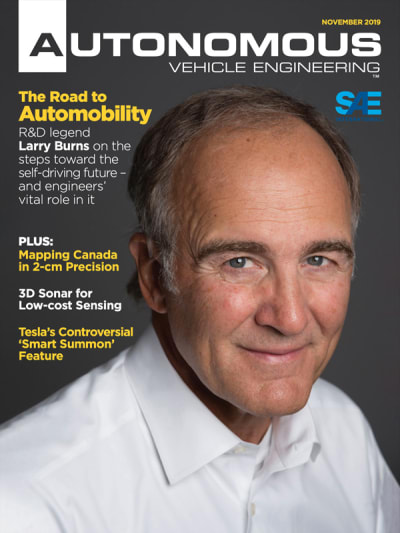
Inside this issue
Overview
The latest issue of Autonomous Vehicle Engineering delves into the transformative landscape of the automotive industry, particularly focusing on the advancements in autonomous vehicles (AVs) and electric vehicles (EVs). This edition highlights the ongoing evolution of vehicle technology, the challenges faced by traditional automakers, and the promising innovations that are shaping the future of transportation.
One of the key features of this issue is the coverage of SAE International’s Demo Days program, which provided a platform for everyday people to experience high-level automated vehicles on real roads. The program generated significant interest, with 1,395 surveys collected from participants. Remarkably, 88% of respondents maintained a positive perception of AVs after their rides, reinforcing the idea that firsthand experience can significantly influence public opinion. This finding suggests that as more individuals engage with AV technology, acceptance and enthusiasm may grow, countering the notion that familiarity breeds contempt.
The issue also addresses the broader implications of autonomous and electric vehicles on various industries. It emphasizes that incumbents in sectors affected by automobility must adapt to the changes brought about by AVs and EVs. Companies are urged to align their strategies with emerging technologies, invest in new capabilities, and divest from outdated resources to remain competitive. The editorial stresses the importance of embracing the inevitable shift towards automobility, suggesting that those who fail to adapt may face significant losses.
In addition to the insights from the Demo Days program, the magazine explores the unpredictability of the new mobility landscape. The global economy's fluctuations have impacted EV startups, particularly those backed by Chinese investments, which have shown signs of distress. The issue highlights the challenges faced by companies like General Motors’ Cruise, which has adjusted its timelines for deploying robotaxis, reflecting the complexities of bringing high-level autonomy to market. The commentary from industry leaders, such as Argo AI’s CEO, underscores the reality that achieving full autonomy is still a distant goal.
The magazine also features a range of articles that delve into specific technological advancements and research in the field of autonomous vehicles. One notable article discusses the role of remote drivers in monitoring AVs, particularly in complex situations where human intervention may be necessary. This hybrid approach combines the benefits of automation with the oversight of human operators, enhancing safety and reliability.
Another article focuses on the development of high-definition maps using artificial intelligence, showcasing a Montreal-based company’s efforts to create precise navigation tools for AVs. This technology is crucial for enabling safe and efficient autonomous driving, as accurate mapping is essential for vehicles to understand their surroundings and make informed decisions.
The issue also addresses the psychological aspects of riding in automated vehicles, particularly the phenomenon of motion sickness. Research aimed at understanding and mitigating motion sickness in AVs is highlighted, as it is a significant factor that can affect user experience and acceptance of autonomous technology.
Furthermore, the magazine discusses innovative sensing technologies, such as 3D sonar, which can detect objects that may be overlooked by more expensive sensors. This advancement represents a cost-effective solution for enhancing the safety and functionality of AVs, making autonomous driving more accessible to a broader range of manufacturers.
The editorial section emphasizes the need for the automotive industry to remain agile and responsive to the rapid changes in technology and consumer expectations. It calls for collaboration among stakeholders, including automakers, technology providers, and regulatory bodies, to navigate the complexities of the evolving mobility landscape.
In conclusion, this issue of Autonomous Vehicle Engineering provides a comprehensive overview of the current state of the automotive industry, focusing on the advancements and challenges associated with autonomous and electric vehicles. It highlights the importance of public perception, technological innovation, and strategic adaptation for companies aiming to thrive in this dynamic environment. As the industry moves forward, the insights shared in this edition will be invaluable for understanding the trajectory of automobility and the role of engineering in shaping the future of transportation.
Articles
-
Features
Dial ‘M’ for Mobility: Smartphone as Steering Wheel
Mapping Canada — Centimeter by Centimeter
The AV Industry Searches for a Near-Term Business Case
Far and Away: Remote Drivers Monitor Autonomous Vehicles
UofM Research Hopes to Eliminate That Queasy Feeling
SAE Survey: Riding in Automated Vehicle Reinforces Positive Perceptions
Stories
Top Stories
INSIDERAerospace
 How Airbus is Using w-DED to 3D Print Larger Titanium Airplane Parts
NewsAutomotive
 Microvision Aquires Luminar, Plans Relationship Restoration, Multi-industry Push
INSIDERManufacturing & Prototyping
 A Next Generation Helmet System for Navy Pilots
INSIDERDefense
 New Raytheon and Lockheed Martin Agreements Expand Missile Defense Production
ArticlesAR/AI
 Accelerating Down the Road to Autonomy
Road ReadyDesign

Webcasts
Automotive
 Advantages of Smart Power Distribution Unit Design for Automotive...
Unmanned Systems
 Quiet, Please: NVH Improvement Opportunities in the Early Design...
Defense
 Cooling a New Generation of Aerospace and Defense Embedded...
Power
 Battery Abuse Testing: Pushing to Failure
Power
 A FREE Two-Day Event Dedicated to Connected Mobility
