




Autonomous Vehicle Engineering - May 2020
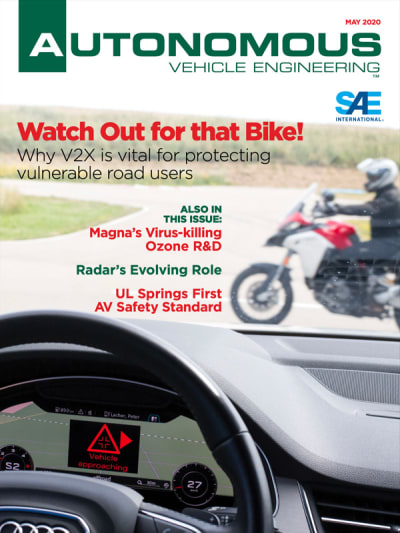
Inside this issue
Overview
The May 2020 issue of "Autonomous Vehicle Engineering" delves into the evolving landscape of autonomous vehicles (AVs) and the technologies that underpin them. This issue highlights several key themes, including the criticality of electronic and electrical (E/E) systems in AVs, the importance of vehicle-to-everything (V2X) communication, and the ongoing challenges posed by the COVID-19 pandemic.
E/E Architecture Challenges: The magazine opens with a discussion on the complexity of E/E architectures in modern vehicles. As automotive manufacturers integrate more electronic control units, sensors, and actuators, the challenges associated with these systems grow. The issue emphasizes the need for automotive original equipment manufacturers (OEMs) and suppliers to adapt their business models to address these complexities effectively. A webinar is mentioned that focuses on these challenges and their implications for the industry.
V2X Communication: A significant portion of the issue is dedicated to V2X communication, particularly its role in enhancing safety for vulnerable road users (VRUs) such as motorcyclists. The magazine reports on the advancements made by companies like Ducati and Audi, which have been demonstrating direct cellular vehicle-to-everything (CV2X) communication since 2018. This technology is expected to be rolled out in stages for motorcycles, showcasing the industry's commitment to improving safety through connectivity.
Radar Technology in AVs: The issue also explores the evolving role of radar technology in advanced driver-assistance systems (ADAS) and the future of AVs. The automotive radar sensor market is experiencing significant growth, with a compound annual growth rate of 21%. This growth places increased demands on chip design, testing, and module deployment, highlighting the need for innovation in radar technology to support the safe operation of AVs.
Health and Safety in the Pandemic Era: In light of the COVID-19 pandemic, the magazine addresses the heightened concerns regarding cleanliness and safety in vehicles. The editorial discusses the new safety paradigm that has emerged, where vehicle cleanliness is now a priority for consumers. The article reflects on the rituals that families have adopted, such as disinfecting surfaces in their vehicles after outings, and raises questions about the air quality within vehicles. This shift in consumer behavior underscores the importance of health considerations in the design and operation of AVs.
Innovative Solutions for Shared Vehicles: The issue features an article on Magna's virus-killing ozone generator technology, which is being evaluated for its potential to sanitize shared vehicle interiors. This innovation could play a crucial role in ensuring the safety of passengers in shared mobility services, addressing public health concerns while promoting the adoption of AVs.
Regulatory Developments: Another significant topic covered is the new unitary patent system in Europe, which aims to simplify the patent process for innovators in the AV space. This regulatory change, along with a flurry of AV legislation, is expected to benefit companies looking to bring innovative solutions to market.
Partnerships and Collaborations: The magazine highlights the partnership between GM, Honda, and Cruise Automation, which has led to the development of an innovative AV set to enter production in 2022. The chief engineer, Jason Fischer, shares insights into the collaborative efforts that have driven this project forward, emphasizing the importance of teamwork in advancing AV technology.
Safety Standards: The issue concludes with a discussion on the publication of UL 4600, the first safety standard for AVs. This standard is not a test but aims to provide a framework for how AV companies can demonstrate the safety of their vehicles. The establishment of such standards is crucial for building consumer trust and ensuring the safe deployment of AV technologies.
Overall, the May 2020 issue of "Autonomous Vehicle Engineering" provides a comprehensive overview of the current state of the AV industry, addressing both the technological advancements and the challenges that lie ahead. It emphasizes the importance of safety, innovation, and regulatory support in shaping the future of transportation. As the industry continues to evolve, the insights shared in this issue will be invaluable for stakeholders looking to navigate the complexities of autonomous vehicle development and deployment.
Articles
-
Features
Magna Fighting COVID-19 with Ozone
New EU Patent System Could Unify and Simplify Process
V2X Communication, Not Automation, to Usher in Next Road-Safety Revolution
Underwriters Labs Publishes First AV Safety Standard
Stories
Top Stories
INSIDERAerospace
 How Airbus is Using w-DED to 3D Print Larger Titanium Airplane Parts
NewsAutomotive
 Microvision Aquires Luminar, Plans Relationship Restoration, Multi-industry Push
INSIDERManufacturing & Prototyping
 A Next Generation Helmet System for Navy Pilots
INSIDERDefense
 New Raytheon and Lockheed Martin Agreements Expand Missile Defense Production
ArticlesAR/AI
 Accelerating Down the Road to Autonomy
Road ReadyDesign

Webcasts
Automotive
 Advantages of Smart Power Distribution Unit Design for Automotive...
Unmanned Systems
 Quiet, Please: NVH Improvement Opportunities in the Early Design...
Defense
 Cooling a New Generation of Aerospace and Defense Embedded...
Power
 Battery Abuse Testing: Pushing to Failure
Power
 A FREE Two-Day Event Dedicated to Connected Mobility
Aerospace

Similar Stories
ArticlesUnmanned Systems
 Underwriters Labs Publishes First AV Safety Standard
NewsImaging
 Xcelerating Innovation, Honda-Style
Technology ReportAR/AI
 CES 2020: Bosch Unveils Electronic Sun Visor
NewsElectronics & Computers
 Radar’s Evolving Role in ADAS and the AV Future
Q&ATest & Measurement
 Electrifying Opportunities at IAV
