




Method Measures a Drone’s Ability to Recover

Flying cars, drones, and other urban aerial mobility vehicles have potential to provide efficient transportation and delivery solutions but what happens if a drone breaks down over a city park or in the middle of a crowded street? Researchers at the University of Illinois Urbana-Champaign developed a method to measure vehicles’ ability to recover and complete its mission safely.
Called quantitative resilience of a control system, the method establishes the capabilities of a system after it experiences an adverse event. One scenario examined the ability to recover from the loss of an actuator — when an engine, rudder, or other part gets damaged and you no longer have control over a portion of your system.
The other cases looked at situations in which all of the actuators still work but not at full power. The method establishes how to still control the system as safely as possible after such a thing happens.
More From SAE Media Group
Aerospace INSIDER
MQ-1C Completes First Air-Launched Effect Flight Demonstration
Aerospace & Defense Tech Briefs
Morphing Aircraft Systems

Aerospace INSIDER
AI Algorithms Fly Uncrewed XQ-58A Valkyrie Drone for Three Hour Sortie
Aerospace INSIDER
Helsing Unveils New Autonomous Fighter Jet 'CA-1 Europa'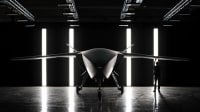
Aerospace INSIDER
Drone Traffic Management System Wins NASA Invention of the Year

Aerospace INSIDER
A-10 Warthog to Get New Mission Computer
NASA Spinoff
Flying in the Fast Lane with Air Traffic Software


Tech Briefs
Bringing Hybrid Power to the Rescue
Aerospace INSIDER
NASA Software Sets Stage for Future Flights

Aerospace INSIDER
AFMC Completes First Ever Flight of F-35 with F-22 Software
NASA Spinoff
Swarming Technology Lets Drones Work as a Team
Motion Design
New Products
Aerospace & Defense Tech Briefs
Drone Control System
Aerospace & Defense Tech Briefs
5 Startups Developing AI for Defense Application
Tech Briefs
Weaving Data Fabric with AI


Aerospace INSIDER
L3Harris Starts Low Rate Production Of New F-16 Viper Shield

Aerospace INSIDER
UAV Software Prioritizes Human Safety
Aerospace INSIDER
Making UAVs Self-Sufficient

NASA Spinoff
Pumping Out State-of-the-Art Design
Top Stories
INSIDERManufacturing & Prototyping
 How Airbus is Using w-DED to 3D Print Larger Titanium Airplane Parts
INSIDERManned Systems
 FAA to Replace Aging Network of Ground-Based Radars
NewsTransportation
 CES 2026: Bosch is Ready to Bring AI to Your (Likely ICE-powered) Vehicle
NewsSoftware
 Accelerating Down the Road to Autonomy
EditorialDesign
 DarkSky One Wants to Make the World a Darker Place
INSIDERMaterials
 Can This Self-Healing Composite Make Airplane and Spacecraft Components Last...
Webcasts
Defense
 How Sift's Unified Observability Platform Accelerates Drone Innovation
Automotive
 E/E Architecture Redefined: Building Smarter, Safer, and Scalable...
Power
 Hydrogen Engines Are Heating Up for Heavy Duty
Electronics & Computers
 Advantages of Smart Power Distribution Unit Design for Automotive...
Unmanned Systems
 Quiet, Please: NVH Improvement Opportunities in the Early Design...
