




Using Electric Vehicle Batteries for Solar Energy Farms
Battery reuse systems could be profitable for both electric vehicle companies and grid-scale solar operations.
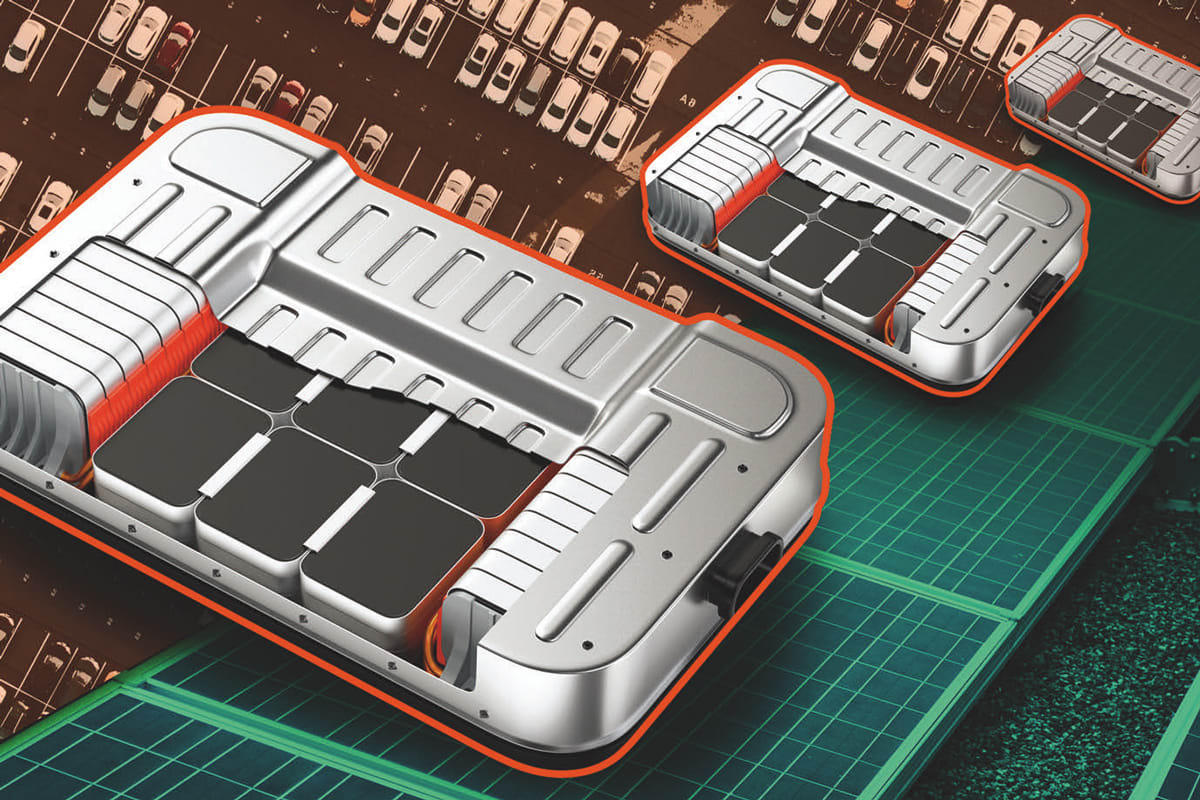
As electric vehicles rapidly grow in popularity, there soon will be a wave of used batteries whose performance is no longer sufficient for vehicles that need reliable acceleration and range. New research shows that these batteries could still have a useful and profitable second life as backup storage for grid-scale solar photovoltaic installations, where they could perform for more than a decade in this less demanding role.
As a test case, researchers examined a hypothetical grid-scale solar farm in California. They studied the economics of several scenarios: building a 2.5-megawatt solar farm alone, building the same array along with a new lithium-ion battery storage system, and building it with a battery array made of repurposed EV batteries that had declined to 80 percent of their original capacity — the point at which they would be considered too weak for continued vehicle use. They found that the new battery installation would not provide a reasonable net return on investment but a properly managed system of used EV batteries could be a good, profitable investment as long as the batteries cost less than 60 percent of their original price.
The study used a semiempirical model of battery degradation, trained using measured data, to predict capacity fade in the lithium-ion batteries under different operating conditions and found that the batteries could achieve maximum lifetimes and value by operating under relatively gentle charging and discharging cycles — never going above 65 percent of full charge or below 15 percent. This finding challenges some earlier assumptions that running the batteries at maximum capacity initially would provide the most value.
The study made a conservative assumption that the batteries would be retired from their solar-farm backup service after they had declined down to 70 percent of their rated capacity, from their initial 80 percent (the point when they were retired from EV use). Continuing to operate down to 60 percent of capacity or even lower might prove to be safe and worthwhile.
The actual economics of such a project could vary widely depending on the local regulatory and rate-setting structure; for example, some local rules allow the cost of storage systems to be included in the overall cost of a new renewable energy supply for rate-setting purposes, while others do not.
For more information, contact Karl-Lydie Jean-Baptiste at
More From SAE Media Group
Battery Technology
Advancing Battery Technology: THE 2021 BATTERY SHOW Preview
Off-Highway Engineering
Sinonus Carbon-Fiber Structural Batteries Would Reduce Weight While Adding Range


Battery Technology
New Approach Makes Lighter, Safer Lithium-Ion Batteries
Tech Briefs
Machine Learning Method for Battery Development
Automotive Engineering
Battery Safety for a Zero-Incident Future
Tech Briefs
Grid Friendly™ Charger Controller
Automotive Engineering
Hydrogen Industry Vet Says Fuel Cells Still a ‘Go’

Green Design & Manufacturing
Testing Smart Energy-Management Systems
Battery Technology
Cobalt-Free Cathodes for Lithium-Ion Batteries
Tech Briefs
Technique Merges Solar Cell and Liquid Battery

Battery & Electrification Technology
Technique Merges Solar Cell and Liquid Battery

Sensor Technology
Solar PV and Lithium-Ion Battery Hybrids for the IIoT — A User's Guide
Aerospace & Defense Tech Briefs
Modern Military Energy Storage Technology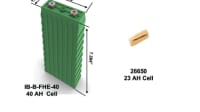
Automotive Engineering
Making H2 Fuel Cells Happen

Battery Technology
Enhancing Hybrid Flow Battery Electrodes with Nanomaterials
Automotive Engineering
‘Laxatives’ May Ease Challenge of Lithium-Ion Alternative
Off-Highway Engineering
Battery Innovation Key for Commercial and Off-Highway EVs
Battery Technology
Using Multiphysics to Predict and Prevent EV Battery Fire
Automotive Engineering
Nano-Based Ultracap Tech Boosts EV Power Density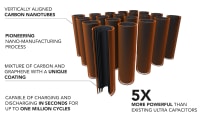

Battery Technology
Powering Tomorrow: Battery and Electrification Summit Preview
Battery Technology
An Immersive Solution for Thermally Safer EV Batteries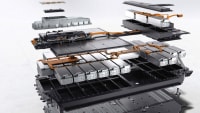
Battery Technology
New Materials Move Li-Ion Batteries Toward the Solid-State Endgame
Top Stories
INSIDERDefense
 New Raytheon and Lockheed Martin Agreements Expand Missile Defense Production
NewsAutomotive
 Ford Announces 48-Volt Architecture for Future Electric Truck
INSIDERManufacturing & Prototyping
 Active Strake System Cuts Cruise Drag, Boosts Flight Efficiency
ArticlesTransportation
 Accelerating Down the Road to Autonomy
INSIDERMaterials
 How Airbus is Using w-DED to 3D Print Larger Titanium Airplane Parts
Road ReadyTransportation

Webcasts
Electronics & Computers
 Cooling a New Generation of Aerospace and Defense Embedded...
Power
 Battery Abuse Testing: Pushing to Failure
Connectivity
 A FREE Two-Day Event Dedicated to Connected Mobility
Automotive
 Quiet, Please: NVH Improvement Opportunities in the Early Design Cycle
Transportation
 Advantages of Smart Power Distribution Unit Design for Automotive &...
Aerospace
 Sesame Solar's Nanogrid Tech Promises Major Gains in Drone Endurance