




Keeping Drones Flying When a Motor Fails

For drones with four propellers – also known as quadcopters – the failure of one motor is a big problem. When one rotor fails, the drone begins to spin on itself like a ballerina. This high-speed rotational motion means that once it starts spinning, the drone is no longer able to estimate its position in space and eventually crashes.
University of Zurich researchers used information from onboard cameras to stabilize the drone and keep it flying autonomously after one rotor suddenly gives out. The cameras can be used to keep damaged quadcopters in the air and flying stably, even without GPS. Algorithms combine information from the two cameras to track the drone’s position relative to its surroundings, enabling the onboard computer to control the drone as it flies – and spins – with only three rotors.
More From SAE Media Group
Aerospace INSIDER
Training Drones for Acrobatic Maneuvers
Tech Briefs
Insect-Inspired Arms Improve Drones
Aerospace INSIDER
NASA and Partners Demonstrate Unmanned Aircraft Technologies
Tech Briefs
Anti-Phase Noise Suppression Rotor Technologies
Tech Briefs
Algorithms Improve Quadrotor Drone Performance
Aerospace INSIDER
Smart Parachute Rescues Drones
Aerospace INSIDER
Drone Traffic Management System Wins NASA Invention of the Year
Aerospace INSIDER
NASA Technologies Improve Drone Design
Aerospace & Defense Tech Briefs
MUSHER Demonstrates Manned-Unmanned Aircraft Teaming Applications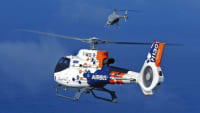
Tech Briefs
AUVSI XPONENTIAL 2019: A Real Thrill Ride
Aerospace & Defense Tech Briefs
Fabrication and Testing of High-Speed Single-Rotor and Compound-Rotor Systems
Tech Briefs
Aircraft Vertical Takeoff and Landing
Tech Briefs
AUVSI XPONENTIAL 2019: A Flying Sea Glider
Aerospace & Defense Tech Briefs
AI Algorithms Fly Valkyrie XQ-58A
Aerospace INSIDER
Platform Converts Standard Aircraft to UAV, and Back
Aerospace INSIDER
NASA’s New UAV is 80% 3D-Printed
Tech Briefs
Multirotor Aircraft Noise Reduction
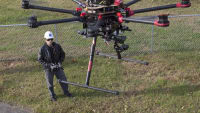
Aerospace & Defense Tech Briefs
Rising Star Awards: Women in Engineering Aerospace Winner - Heather Cummings
Aerospace INSIDER
Crashing Into Safe Autonomous Flight
Tech Briefs
Unmanned Aerial Systems Traffic Management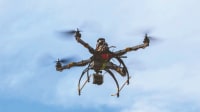
Aerospace & Defense Tech Briefs
PHASA-35 Stratospheric Flight
Tech Briefs
A Drone Takes Off in UCSD's 'Aerodrome'
Aerospace INSIDER
Drone Flies Freely with Independently Controlled Wings
Aerospace INSIDER
Army’s “Robo-Raven” UAV Flies with Flapping Wings
Aerospace INSIDER
GA-ASI Announces Gray Eagle 25M for Multi-Domain Operations
Aerospace & Defense Tech Briefs
VISTA X-62
Aerospace & Defense Tech Briefs
Airbus to Fly Prototype eVTOL This Year
Top Stories
INSIDERDefense
 New Raytheon and Lockheed Martin Agreements Expand Missile Defense Production
NewsAutomotive
 Ford Announces 48-Volt Architecture for Future Electric Truck
INSIDERManufacturing & Prototyping
 Active Strake System Cuts Cruise Drag, Boosts Flight Efficiency
ArticlesTransportation
 Accelerating Down the Road to Autonomy
INSIDERMaterials
 How Airbus is Using w-DED to 3D Print Larger Titanium Airplane Parts
Road ReadyTransportation
Webcasts
Electronics & Computers
 Cooling a New Generation of Aerospace and Defense Embedded...
Power
 Battery Abuse Testing: Pushing to Failure
Connectivity
 A FREE Two-Day Event Dedicated to Connected Mobility
Automotive
 Quiet, Please: NVH Improvement Opportunities in the Early Design Cycle
Transportation
 Advantages of Smart Power Distribution Unit Design for Automotive &...
Aerospace
 Sesame Solar's Nanogrid Tech Promises Major Gains in Drone Endurance