




Army Tests Next-Generation Fighting System

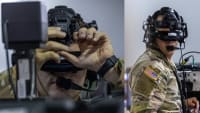
The Army-led team of developers creating the Integrated Visual Augmentation System (IVAS) recently wrapped up the third major milestone testing and demonstration event where soldiers and Marines put the system through a number of field exercises. IVAS is designed to enhance the lethality and survivability of the Army’s Close Combat Force through a combination of technologies and augmented reality capabilities delivered in the form of a Heads-Up Display device, much like the famed HoloLens developed by Microsoft, which is, in fact, partnering with the Army to develop and produce the system.
IVAS is one of the Army Future Command’s 31 original signature modernization efforts, headed by the Soldier Lethality Cross Functional Team (SL CFT) at Fort Benning, Ga., under the leadership of Brig. Gen. David Hodne, who also serves as the Chief of Infantry. It’s a single platform that allows the soldier to fight, rehearse, and train, because it leverages networked information sharing and mixed and augmented reality technologies. IVAS is one of the SL CFT’s efforts to help resolve an erosion in combat superiority between U.S. and near-peer competitors around the world as identified in the 2018 National Defense Strategy.
Whereas U.S. forces once “owned the night” in respect to combat overmatch in conditions of limited visibility, Hodne said, two decades of consistent and concentrated conflict across the Middle East has resulted in a parity among the world’s most capable combatants.
“Overmatch has always been defined in terms of two things; our lethality and our protection must exceed the lethality and protection of our adversaries,” Hodne said as he addressed a group of Army senior leaders and Congressional representatives who attended the IVAS demonstration. “In order to restore overmatch, we must restore lethality, and lethality means we can see, designate and move quickly through hours of limited visibility. In an environment where we share the night, the folks who can move faster, decide faster and think faster are the ones who have the advantage on today and tomorrow’s battlefield.”
This event was the third in a series of four comprehensive large-scale tests, formally known as Soldier Touch Points (STPs) scheduled at pivotal junctures in the 28-month program to bring together stakeholders from across the Army’s modernization enterprise with industry partners to assess technologies added or upgraded since the previous STP and test the latest system prototype in the field. This time around, participants from the 82nd Airborne Division and a contingent of Marines conducted company-size training events using the first militarized prototype of the IVAS. Events included land navigation, live fire, mission planning, rapid target acquisition, trench clearing, after action review using augmented reality, and more.
The team employs a Soldier Centered Design methodology that involves soldiers at every step of the process, from design to development, thereby reducing the traditional 10-year acquisitions timeline to roughly 28 months and eliminating the historical probability of fielding a system soldiers reject. Soldier Centered Design means IVAS is designed and built by the soldiers who give the constructive, candid feedback developers use to turn over new prototypes and upgrade systems constantly.
The program, which remains on track to deliver the first IVAS in the fourth quarter of FY21, is funded through Other Transaction Authorities (OTA) and Middle Tier Acquisition Rapid Prototyping authorities to accelerate the development process by more than four years as compared to the DoD 5000 process.
More From SAE Media Group
Aerospace & Defense Tech Briefs
Nano-Unmanned Aerial Vehicle
Aerospace INSIDER
New Drones and Software Selected for DoD's Replicator 1.2
Aerospace & Defense Tech Briefs
Beyond Catch and Release

Aerospace & Defense Tech Briefs
Small Arms Trainers
Defense INSIDER
Sky Devils Provide Critical Link to Soldiers
Aerospace & Defense Tech Briefs
When It Comes to Fifth-Generation Assets, Air Force Values Virtual Training over Live Flying

Defense INSIDER
Conference to Focus on Counter-Drone Technology
Aerospace Manufacturing and Machining INSIDER
Army Seeks to Expand 3D Printing to the Tactical Edge

Defense INSIDER
Military Tests New Chemical Agent Detection Systems
Aerospace & Defense Tech Briefs
Drone Swarms: A Transformational Technology
Aerospace & Defense Tech Briefs
Amphibious Combat Vehicle C4 UAS
Aerospace & Defense Tech Briefs
U.S. Army Tests Innovative Autonomous Tactical Vehicle Prototype

Defense INSIDER
JPADS Brings New Sustainment Capability to Future Fight
Aerospace & Defense Tech Briefs
Multi-Mission UAS (MMU) Systems
Defense INSIDER
DoD Signs New Strategy for Countering Unmanned Systems
Aerospace & Defense Tech Briefs
Autonomous Air Defense Production

Aerospace & Defense Tech Briefs
Control Platform Toolkit

Aerospace & Defense Tech Briefs
Textron Systems, Textron Aviation Defense Demonstrate Simulated Manned-Unmanned Teaming Capability


Defense INSIDER
Mounted Troops to Get High-Tech Situational Awareness Tools

Top Stories
INSIDERManufacturing & Prototyping
 How Airbus is Using w-DED to 3D Print Larger Titanium Airplane Parts
INSIDERManned Systems
 FAA to Replace Aging Network of Ground-Based Radars
NewsTransportation
 CES 2026: Bosch is Ready to Bring AI to Your (Likely ICE-powered) Vehicle
NewsSoftware
 Accelerating Down the Road to Autonomy
EditorialDesign
 DarkSky One Wants to Make the World a Darker Place
INSIDERMaterials
 Can This Self-Healing Composite Make Airplane and Spacecraft Components Last...
Webcasts
Defense
 How Sift's Unified Observability Platform Accelerates Drone Innovation
Automotive
 E/E Architecture Redefined: Building Smarter, Safer, and Scalable...
Power
 Hydrogen Engines Are Heating Up for Heavy Duty
Electronics & Computers
 Advantages of Smart Power Distribution Unit Design for Automotive...
Unmanned Systems
 Quiet, Please: NVH Improvement Opportunities in the Early Design...
