




Army Researchers Augment Combat Vehicles With AI
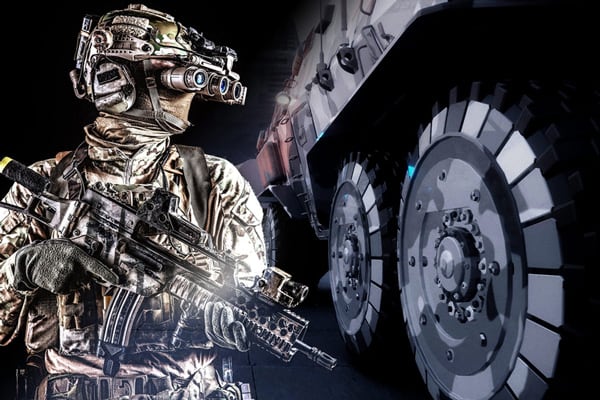
When soldiers enter a new environment, their mission demands they stay one step ahead of the enemy; however, they may find it challenging to maintain a high level of alertness if they're driving a combat vehicle across unfamiliar or dangerous terrain.
The U.S. Army Combat Capabilities Development Command’s Army Research Laboratory designated several research programs as essential for future soldier capabilities. Of these major flagship programs, the Artificial Intelligence for Maneuver and Mobility (AIMM) Essential Research Program, endeavors to reduce soldier distractions on the battlefield through the integration of autonomous systems in Army vehicles.
Dr. John Fossaceca, AIMM program manager, said he seeks to develop the foundational capabilities that will enable autonomy in the next generation of combat vehicles. This include the construction of a robotic combat vehicle that operates independently of the main combat vehicle.
“The main purpose of this essential research program is to build autonomous systems that help the Army effectively execute Multi-Domain Operations,” Fossaceca said. “We don’t want soldiers to be operating these remote-controlled vehicles with their heads down, constantly paying attention to the vehicle in order to control it. We want these systems to be fully autonomous so that these soldiers can do their jobs and these autonomous systems can work as teammates and perform effectively in the battlefield.”
Considerations that go into the development of military autonomous vehicles differ significantly compared to those intended for commercial use. Manufacturers typically design commercial self-driving cars to operate on pristine roads, where heavy traffic and crowds of pedestrians play a significant factor in its capabilities. In contrast, the Army often faces environments with diverse terrains and areas that may not even have a road to travel on, such as forests or deserts.
As a result, this research intends to fill the gaps to cover these unique situations that soldiers face. Autonomy in the next generation combat vehicle will not only help soldiers make decisions but also clearly explain the rationale behind its suggestions so that a soldier can either approve the choice or intervene if necessary, Fossaceca said.
More From SAE Media Group
Aerospace & Defense Tech Briefs
Autonomous Ground Reconnaissance Vehicles

Off-Highway Engineering
Kodiak Adapts Autonomous Tech for Military Vehicles
Motion Design INSIDER
Autonomous Bus Sounds: It’s All About When, Not How
Aerospace & Defense Tech Briefs
Autonomous Navigation Kits

Tech Briefs
EV vs. ICE: How Does Wire Harness Design Differ?

Motion Design INSIDER
Can Self-Driving Cars Navigate Roundabouts?
Aerospace & Defense Tech Briefs
New Cyber Algorithm Shuts Down Malicious Robotic Attacks
Motion Design INSIDER
AI Helps Robots Manipulate Objects with Their Whole Bodies
Aerospace & Defense Tech Briefs
Assessing the Effectiveness of a Combat UGV Swarm in Urban Operations

Defense INSIDER
Army Receives New Robot Combat Vehicle Prototypes
Defense INSIDER
Innovation Shaping the Future Battlespace
Motion Design
Improving Autonomous Robotic Systems
Robotics & Automation INSIDER
AI Yields ‘Athletically Intelligent’ Robotic Dog
Defense INSIDER
Algorithms for Autonomous Marine Vehicles
Motion Design INSIDER
Roboticists Go Off Road to Compile Data That Could Train Self-Driving ATVs
Motion Design INSIDER
What Robots Can Learn from Sea Stars
Defense INSIDER
AUSA 2023: Are Robotics the Future of Army Combat Vehicles?
Tech Briefs
Approach Makes Unmanned Agents Self-Sufficient
Aerospace & Defense Tech Briefs
Armored Multi-Purpose Vehicle Rapid Capability Kit Upgrades
Tech Briefs
Giving Autonomous Vehicles the Ability to Reason
Aerospace & Defense Tech Briefs
Autonomous “Wingman” Vehicles
Top Stories
NewsSensors/Data Acquisition
 Microvision Aquires Luminar, Plans Relationship Restoration, Multi-industry Push
INSIDERRF & Microwave Electronics
 A Next Generation Helmet System for Navy Pilots
INSIDERWeapons Systems
 New Raytheon and Lockheed Martin Agreements Expand Missile Defense Production
NewsAutomotive
 Ford Announces 48-Volt Architecture for Future Electric Truck
INSIDERAerospace
 Active Strake System Cuts Cruise Drag, Boosts Flight Efficiency
ArticlesTransportation

Webcasts
Aerospace
 Cooling a New Generation of Aerospace and Defense Embedded...
Energy
 Battery Abuse Testing: Pushing to Failure
Power
 A FREE Two-Day Event Dedicated to Connected Mobility
Automotive
 Quiet, Please: NVH Improvement Opportunities in the Early Design Cycle
Electronics & Computers
 Advantages of Smart Power Distribution Unit Design for Automotive &...
Unmanned Systems
 Sesame Solar's Nanogrid Tech Promises Major Gains in Drone Endurance