




Defense Tech Briefs - October 2013

Inside this issue
Supplements
Overview
The October 2013 issue of Defense Tech Briefs (Volume 7, Number 5) presents a comprehensive overview of advancements in defense technology, particularly focusing on aerospace engineering and innovative materials. This edition features several key articles and insights that highlight the ongoing evolution of technology in military and aerospace applications.
Key Features
-
Using Polyimide in 3D Thin Film Multilayer Circuitry: This article discusses the application of polyimide materials in the development of 3D thin film multilayer circuitry. Polyimide is known for its excellent thermal stability and electrical insulation properties, making it ideal for complex electronic systems in aerospace applications. The use of 3D multilayer designs allows for more compact and efficient circuit layouts, which are crucial for modern avionics and other defense systems.
-
Field Configurable MIL-DTL-55181 Power Distribution: The issue also covers advancements in power distribution systems, specifically the MIL-DTL-55181 standard. This feature emphasizes the importance of field-configurable power distribution systems that can adapt to various operational needs. Such systems enhance the reliability and flexibility of power management in military equipment, ensuring that power can be efficiently allocated to different components as required.
-
Designing Thermal Management Systems for Smaller, Lighter Avionics: As avionics systems become more compact and lightweight, effective thermal management becomes increasingly critical. This article explores innovative approaches to thermal management that can accommodate the reduced size and weight of modern avionics. Techniques discussed include advanced materials and design strategies that help dissipate heat efficiently, thereby improving the performance and longevity of electronic components.
Technology Focus
The issue also delves into various technology-focused articles that highlight cutting-edge research and applications:
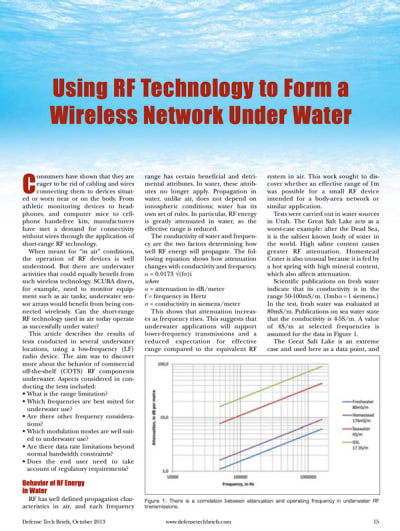
RF & Microwave Technology: This section discusses the use of RF technology to establish wireless networks underwater, showcasing the potential for improved communication in challenging environments. Additionally, an oil pipeline fault detection system is presented, which utilizes microwave frequencies to determine material permittivity, aiding in the early detection of faults.
-
Camelina-Based Biofuel: An article highlights the advantages of using camelina-based biofuels in turboprop engines. This biofuel alternative is explored for its potential to reduce emissions and reliance on traditional fossil fuels, aligning with broader sustainability goals in aviation.
-
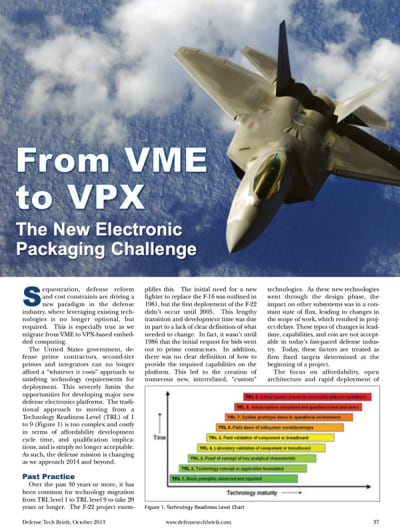
Embedded Technology: The transition from VME to VPX electronic packaging is examined, addressing the challenges and opportunities presented by new packaging technologies in embedded systems.
Application Briefs and Updates
The magazine includes application briefs that provide insights into practical implementations of the technologies discussed. These briefs cover a range of topics, from data acquisition systems to portable data recorders designed for measuring sand grain fracture after blasts, showcasing the diverse applications of advanced technologies in defense.
Editorial and Technology Updates
The editorial section provides context for the ongoing developments in defense technology, emphasizing the importance of innovation in maintaining operational readiness and effectiveness. The technology update segment highlights recent advancements and trends in the field, ensuring that readers are informed about the latest research and developments.
Conclusion
Overall, the October 2013 issue of Defense Tech Briefs serves as a valuable resource for professionals in the defense and aerospace sectors. It encapsulates the latest advancements in materials, power distribution, thermal management, and embedded technologies, all of which are crucial for the future of military and aerospace applications. The insights provided in this issue not only reflect current trends but also set the stage for future innovations that will shape the landscape of defense technology.
This edition is a testament to the ongoing commitment to research and development in the field, ensuring that military capabilities continue to evolve in response to emerging challenges and opportunities.
Features
-
Application Briefs
-
Articles
Using Polyimide In 3D Thin Film Multilayer Circuitry
Field Configurable MIL-DTL-55181 Power Distribution
Designing Thermal Management Systems for Smaller, Lighter Avionics
Tech Briefs
-
Physical Sciences
Evaluating a Data Clustering Approach for Lifecycle Facility Control
Portable Data Recorder for Measuring Sand Grain Fracture After Blasts
Products
-
Articles
Top Stories
INSIDERManufacturing & Prototyping
 How Airbus is Using w-DED to 3D Print Larger Titanium Airplane Parts
INSIDERManned Systems
 FAA to Replace Aging Network of Ground-Based Radars
NewsTransportation
 CES 2026: Bosch is Ready to Bring AI to Your (Likely ICE-powered) Vehicle
NewsSoftware
 Accelerating Down the Road to Autonomy
EditorialDesign
 DarkSky One Wants to Make the World a Darker Place
INSIDERMaterials
 Can This Self-Healing Composite Make Airplane and Spacecraft Components Last...
Webcasts
Defense
 How Sift's Unified Observability Platform Accelerates Drone Innovation
Automotive
 E/E Architecture Redefined: Building Smarter, Safer, and Scalable...
Power
 Hydrogen Engines Are Heating Up for Heavy Duty
Electronics & Computers
 Advantages of Smart Power Distribution Unit Design for Automotive...
Unmanned Systems
 Quiet, Please: NVH Improvement Opportunities in the Early Design...
