




Streamlining Jet Engine Design

Argonne National Lab scientists developed a numerical modeling tool that helps researchers better understand Rotating Detonation Engines that could one day propel the next generation of airplanes and rockets. The computer simulations are combined with X-ray experiments to help engine designers understand the fundamental physics that, ultimately, affect engine performance, thrust, and emissions.
With the right boundary conditions, scientists can build models that predict a host of engine behavior — involving pressure, temperatures, mass, speed and so on — that may be immeasurable during experiments.
More From SAE Media Group
Aerospace INSIDER
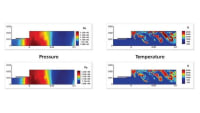
Software Accelerates Hypersonic Engine Development


Aerospace INSIDER
Accelerating Climate-Compatible Aircraft Design with AI
Aerospace & Defense Tech Briefs
Using Advanced Computational Engineering Software to Meet Aerospace & Defense Industry Challenges
Aerospace Manufacturing and Machining INSIDER
Argonne and Raytheon to Collaborate on Aircraft Engine Design



Aerospace Manufacturing and Fabrication
Quality Control for Additive Manufacturing Parts Using Non-Destructive Testing
Aerospace Manufacturing and Machining INSIDER
How Airbus is Leveraging Digital Twins for a Smarter Approach to Manufacturing
Medical Design Briefs
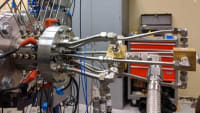
Breakthrough Analysis Tools
Aerospace Manufacturing and Machining INSIDER
New HPC4EI Project to Create 'Digital Twin' Models for Aerospace Manufacturing
NASA Spinoff
Software Toolkit Steadies Rockets


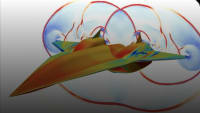
Aerospace Manufacturing and Machining
Lightweighting Parts Using 3D Metal Printing

Battery Technology
Using Multiphysics to Predict and Prevent EV Battery Fire



Motion Control and Automation Technology INSIDER
Second, Smaller Rotor Increases Wind Turbine Efficiency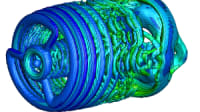
Top Stories
INSIDERRF & Microwave Electronics
 FAA to Replace Aging Network of Ground-Based Radars
NewsManufacturing & Prototyping
 Rewriting the Engineer’s Playbook: What OEMs Must Do to Spin the AI Flywheel
Road ReadyTransportation
 2026 Toyota RAV4 Review: All Hybrid, All the Time
NewsDesign
 CES 2026: Bosch is Ready to Bring AI to Your (Likely ICE-powered) Vehicle
INSIDERManned Systems
 F-22 Pilot Controls Drone With Tablet
EditorialLighting Technology

Webcasts
Energy
 Powering America’s EV Future: Connect, Collaborate, Innovate
Power
 E/E Architecture Redefined: Building Smarter, Safer, and Scalable...
Power
 Hydrogen Engines Are Heating Up for Heavy Duty
Electronics & Computers
 Advantages of Smart Power Distribution Unit Design for Automotive...
Transportation
 Quiet, Please: NVH Improvement Opportunities in the Early Design...
