




Spatiotemporal Imaging Exploiting Structured Sparsity
Overcoming the conventional limits of spatiotemporal imaging by applying compressed sensing and sparse representations to reduce the amount of data acquired while maintaining high image resolution.
Spatiotemporal imaging contains a large class of imaging problems, which involve collecting a sequence of data sets to resolve both the spatial and temporal (or spectral) distributions of some physics quantity. This capability is exploited in numerous different fields such as remote sensing, security surveillance systems, astronomical imaging, and biomedical imaging. One typical example is hyperspectral imaging, which is a powerful technology for remotely inferring the material properties of the objects in a scene of interest. Ultrasonic and thermal imaging are other important examples of spatiotemporal imaging where high spatial resolution is needed for urban planning, military planning, intelligence and disaster monitoring and evaluation.

While spatiotemporal imaging has great potential, acquiring and processing data comes with significant practical challenges. First, spatiotemporal images are extremely high-dimensional which limits fast data acquisition. Second, physical design constraints of the acquisition devices (such as size and weight limitations of the satellite) limit attaining higher spatial resolution. As a result, there is a tradeoff between spatial and temporal (or spectral) resolution when designing a system. For example, expensive multiple detector arrays are usually required for recording multispectral bands. By lowering the spatial resolution of each detector, more bands may be contained on the sensor for the same cost. Similar trade-offs are observed in many other spatiotemporal imaging modalities.
This project studies the feasibility of applying compressed sensing and sparse representations, a recently emerged signal processing technique, to achieve reduction of data acquisition while maintaining high image resolution. The objective of the project is to develop an innovative solution to overcome the conventional limits of spatiotemporal imaging by considering sparsely-sampled data and developing an advanced image reconstruction method utilizing compressed sensing technique.
Effects and capabilities of the method are further investigated and evaluated by applying it to the functional Magnetic Resonance Imaging (fMRI) and Dynamic Contrast-Enhanced (DCE-MRI) breast imaging as case studies. The project performs extensive analysis and evaluation of the proposed imaging method on the existing experimental data acquired by Prof. Dr. Gary H. Glover at Stanford University, Lucas center for MR imaging, Radiological Sciences laboratory, approved by the Stanford ethics review board. In addition, the project demonstrates the applicability of the proposed method in different imaging modality applications such as dynamic contrast-enhanced breast imaging, through the international research collaboration between PI and Dr. Wei Huang, Oregon Health and Science University, Advanced Imaging Research Center.
This work was done by Dr. Hien M. Nguyen of the Vietnamese – German University for the Air Force Research Laboratory.For more information, download the Technical Support Package (free white paper) here under the Photonics category. AFRL-0275
This Brief includes a Technical Support Package (TSP).
Spatiotemporal Imaging Exploiting Structured Sparsity
(reference AFRL-0275) is currently available for download from the TSP library.
Don't have an account?
More From SAE Media Group

Photonics & Imaging Technology
Detecting Threats Beyond the Limits of Human, Sensor Sight
Photonics & Imaging Technology
Researchers Use Inkjet Printing to Make a Portable Multispectral 3D Camera

Tech Briefs
Drones Use Machine Learning to Detect Landmines
Aerospace & Defense Tech Briefs
Adding Context to Full-Motion Video for Improved Surveillance and Situational Awareness

Photonics & Imaging Technology
Hunting New Mining Deposits with Hyperspectral Imaging
Aerospace & Defense Tech Briefs
SaraniaSat Wins $5M NASA InVEST Contract for Hyperspectral Thermal Imager
Photonics & Imaging Technology
Hyperspectral Imaging: Making Rich Colors More Visible
Tech Briefs
Super-Resolution Image Reconstruction (SRIR)
Photonics & Imaging Technology
Measuring Aging, Fat and Water Content in Meat Products Using Hyperspectral Imaging
Aerospace & Defense Tech Briefs
Lockheed Martin’s Next-Gen, 360-Degree Vision System Flies on the Bell V-280 Valor
Tech Briefs
3D Camera Merges Depth and Spectral Data

Tech Briefs
Sub-Pixel Spatial Resolution Interferometry
Photonics & Imaging Technology
Extended Dynamic Range Camera Imaging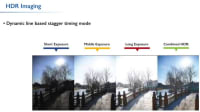
Photonics & Imaging Technology
Inspection of Bulk Material with Trilinear Line-Scan and Prism Cameras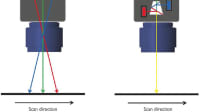
Photonics & Imaging Technology
Machine Vision Camera Trends: 2019 and Beyond
Aerospace & Defense Tech Briefs
Automated Atmospheric Correction of Nanosatellites Using Coincident Ocean Color Radiometer Data
Tech Briefs
5Ws of the Quanta Image Sensor
Photonics & Imaging Technology
Hyperspectral Imaging – Teaching Robots to See
Aerospace & Defense Tech Briefs
Simulation of Active Imaging Systems
Aerospace & Defense Tech Briefs
Panoramic Thermal Imaging Technology
Aerospace & Defense Tech Briefs
Designing for Compressive Sensing: Compressive Art, Camouflage, Fonts, and Quick Response Codes
Photonics & Imaging Technology
Thermal Imaging — Making Hidden Details Visible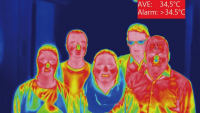
Photonics & Imaging Technology
Seeing Like a Butterfly: Optical Invention Enhances Camera Capabilities
Tech Briefs
Seeing Around Corners to Detect Object Shapes
Photonics & Imaging Technology
Space-Based Hyperspectral Imaging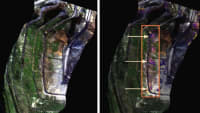
Photonics & Imaging Technology
Optical Neural Network Could Lead to Intelligent Cameras
Overview
The document is a final report titled "Spatiotemporal Imaging Exploiting Structured Sparsity," authored by Thanh Hien Nguyen from the Vietnamese-German University. It outlines research conducted from December 7, 2016, to December 6, 2018, focusing on the application of compressed sensing and sparse representations in imaging technologies. The research was supported by the Air Force Office of Scientific Research (AFOSR) and aimed to address the limitations of conventional imaging methods.
The primary objective of the study was to demonstrate the feasibility of using compressed sensing techniques to reduce data acquisition requirements while maintaining high image resolution. This approach is particularly relevant in fields such as functional MRI (fMRI) and dynamic contrast-enhanced breast cancer imaging, where high-quality imaging is crucial for accurate diagnosis and analysis.
The report details the successful validation of the proposed methods through two case studies: one involving fMRI brain connectivity decomposition and the other focusing on breast cancer imaging. These case studies illustrated the effectiveness of the compressed sensing approach in achieving high-resolution images with reduced data input, thereby enhancing the efficiency of imaging processes.
Throughout the project, significant educational achievements were noted, including the training of research assistants who contributed to the project’s success. Notably, one research assistant was accepted into a PhD program at the University of Iowa, highlighting the project's impact on academic development.
The report also mentions the submission of multiple conference papers, showcasing the collaborative efforts with institutions such as Stanford University and Oregon Health & Science University. These publications reflect the project's contributions to the scientific community and its relevance in advancing imaging technologies.
In summary, the document presents a comprehensive overview of the research conducted on spatiotemporal imaging using structured sparsity. It emphasizes the innovative application of compressed sensing techniques, the successful outcomes of the case studies, and the educational advancements achieved through the project. The findings have the potential to influence future developments in imaging technologies, particularly in medical and surveillance applications, by providing solutions that overcome traditional limitations in data acquisition and image quality.
Top Stories
NewsRF & Microwave Electronics
 Microvision Aquires Luminar, Plans Relationship Restoration, Multi-industry Push
INSIDERAerospace
 A Next Generation Helmet System for Navy Pilots
INSIDERDesign
 New Raytheon and Lockheed Martin Agreements Expand Missile Defense Production
INSIDERMaterials
 How Airbus is Using w-DED to 3D Print Larger Titanium Airplane Parts
NewsPower
 Ford Announces 48-Volt Architecture for Future Electric Truck
ArticlesAR/AI

Webcasts
Electronics & Computers
 Cooling a New Generation of Aerospace and Defense Embedded...
Automotive
 Battery Abuse Testing: Pushing to Failure
Power
 A FREE Two-Day Event Dedicated to Connected Mobility
Unmanned Systems
 Quiet, Please: NVH Improvement Opportunities in the Early Design Cycle
Automotive
 Advantages of Smart Power Distribution Unit Design for Automotive &...
Energy
 Sesame Solar's Nanogrid Tech Promises Major Gains in Drone Endurance